March 10, 2026: OpenAI introduced new ways to learn math and science in ChatGPT. These new features help learners understand complex math and science concepts through interactive visual explanations. The goal of this update is to make learning easier, clearer, and more engaging for students and learners around the world.
ChatGPT has already become one of the most widely used tools for learning. According to OpenAI, about 140 million people use ChatGPT every week to help them understand math and science concepts. People use ChatGPT to explore new topics, solve homework problems, prepare for exams, and understand concepts they previously found difficult.
Challenges in Learning Math and Science
Math and science can be difficult subjects for many learners because the concepts are often abstract and complex. Many formulas, equations, and scientific relationships are hard to understand when they are explained only with text or static examples.
A Gallup survey shows that more than half of adults in the United States say they struggle with math. The survey also found that many parents do not feel confident helping their children with math homework. These challenges highlight the need for better tools that help learners understand concepts more easily.
Also Read: OpenAI to Buy Promptfoo for AI Security
Interactive Visual Explanations
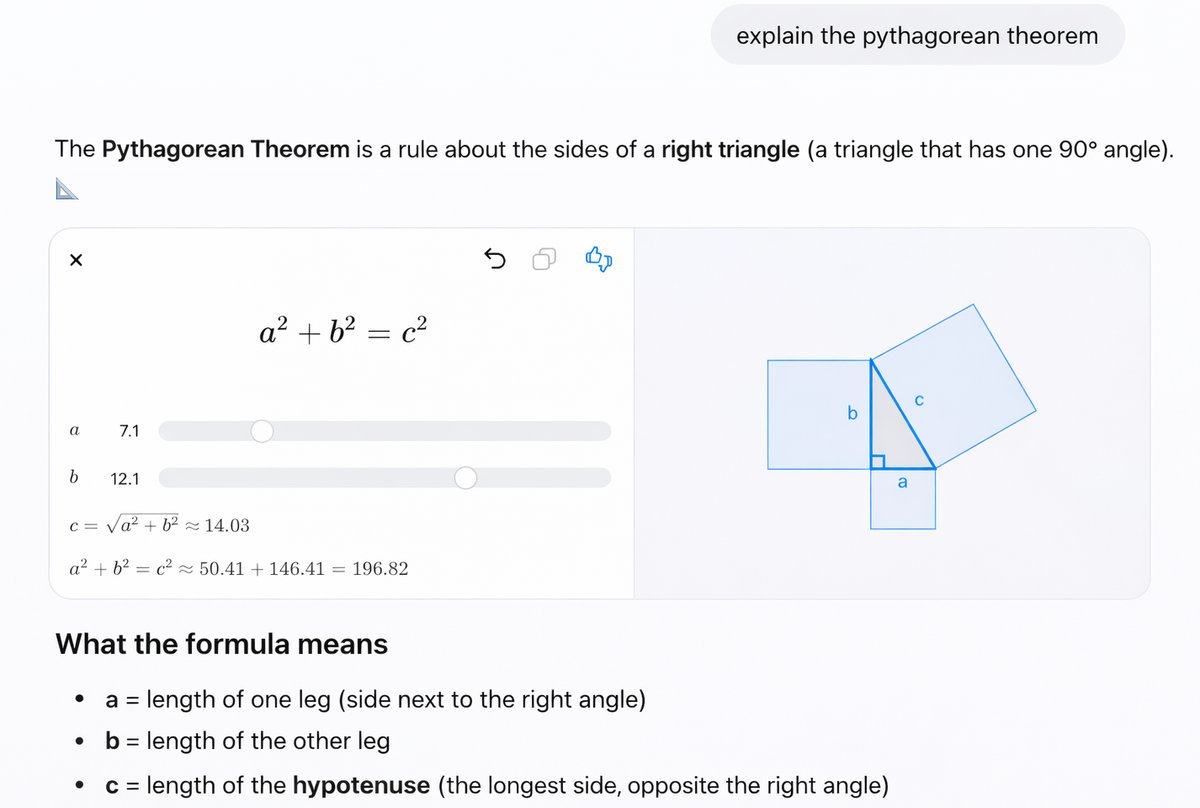
To help address these challenges, OpenAI introduced interactive visual explanations in ChatGPT. These explanations allow learners to see how formulas, variables, and relationships behave in real time. Instead of only reading about concepts, learners can interact with them and observe how they work.
When a learner asks ChatGPT about a math or science concept, ChatGPT can generate a visual learning module along with the explanation. This module allows learners to adjust variables and immediately see how the results change. This interactive approach helps learners better understand the relationships between variables and outcomes.
Example of a Mathematical Concept
One example of a concept learners can explore is the Pythagorean theorem, which explains the relationship between the sides of a right triangle.
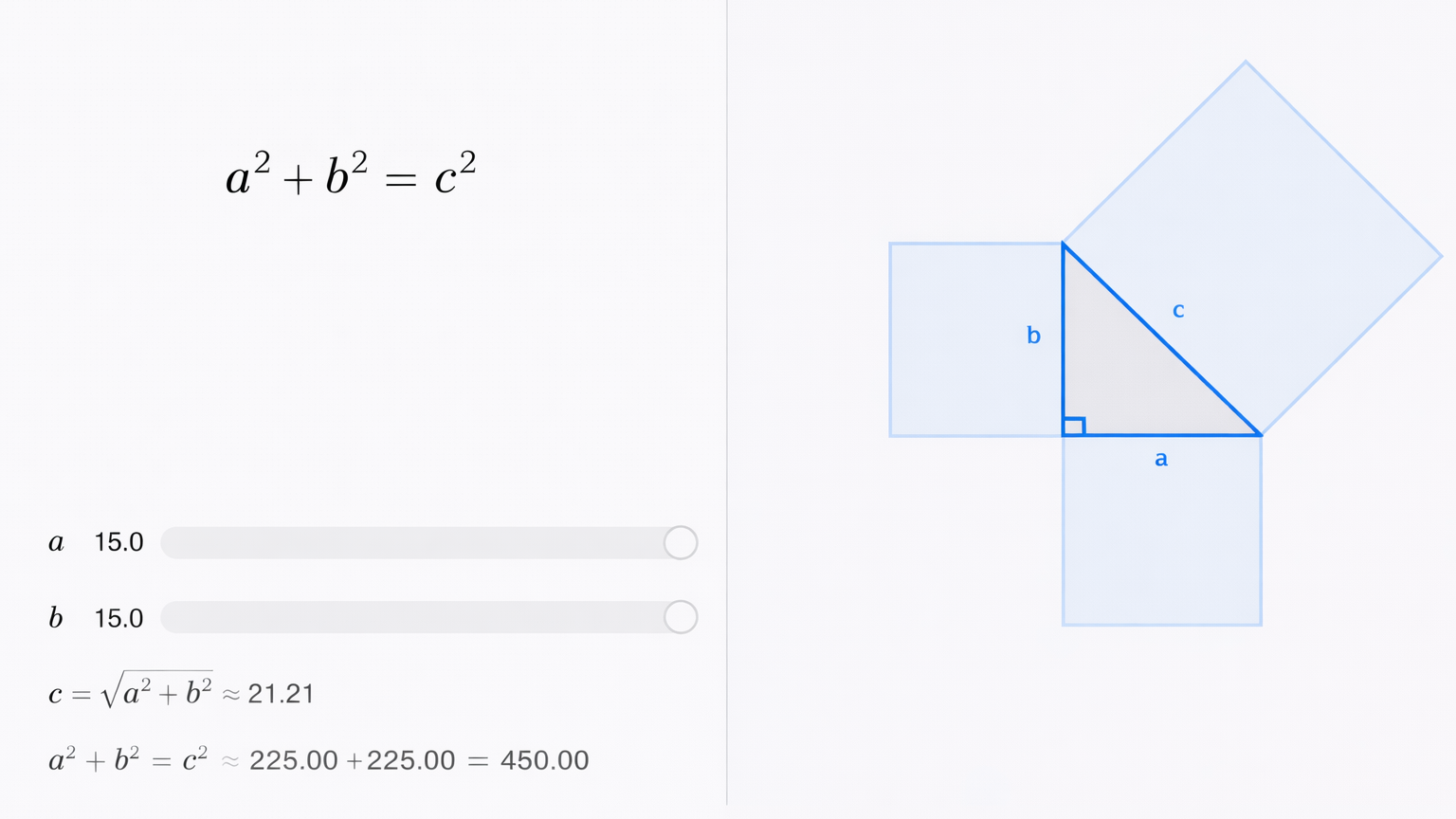
By adjusting the values of the triangle’s sides, learners can see how the relationship works and better understand the formula. This helps students understand not only the formula itself but also why it works.
Real-Time Exploration of Concepts
The new learning experience allows learners to explore math and science concepts in real time. Students can change values in formulas and immediately see how the results change. The visual explanations update instantly when variables are adjusted.
These interactive modules may include graphs, diagrams, and equations that respond immediately to changes. This helps learners observe how different variables influence results and understand how mathematical and scientific relationships behave.
Coverage of Core Math and Science Concepts
The new learning tools in ChatGPT begin with more than 70 core math and science concepts. These concepts are commonly taught in high school and college courses. ChatGPT guides learners through these topics by showing how formulas and relationships behave visually.
Examples of topics that learners can explore include the Pythagorean theorem, compound interest, Ohm’s law, the ideal gas law, the area of a circle, and lens equations. Each concept includes explanations and visual tools that help learners experiment and better understand how the concepts work.
Also Read: OpenAI to Launch AI Smart Speaker in Early 2027
Global Availability of the Feature
OpenAI announced that these interactive learning experiences are available globally across all ChatGPT plans starting March 10, 2026. This means that students, teachers, and learners around the world can access these tools directly inside ChatGPT.
Learners do not need any additional software or special platforms. They can simply ask ChatGPT about a concept and begin exploring it through interactive visual explanations.