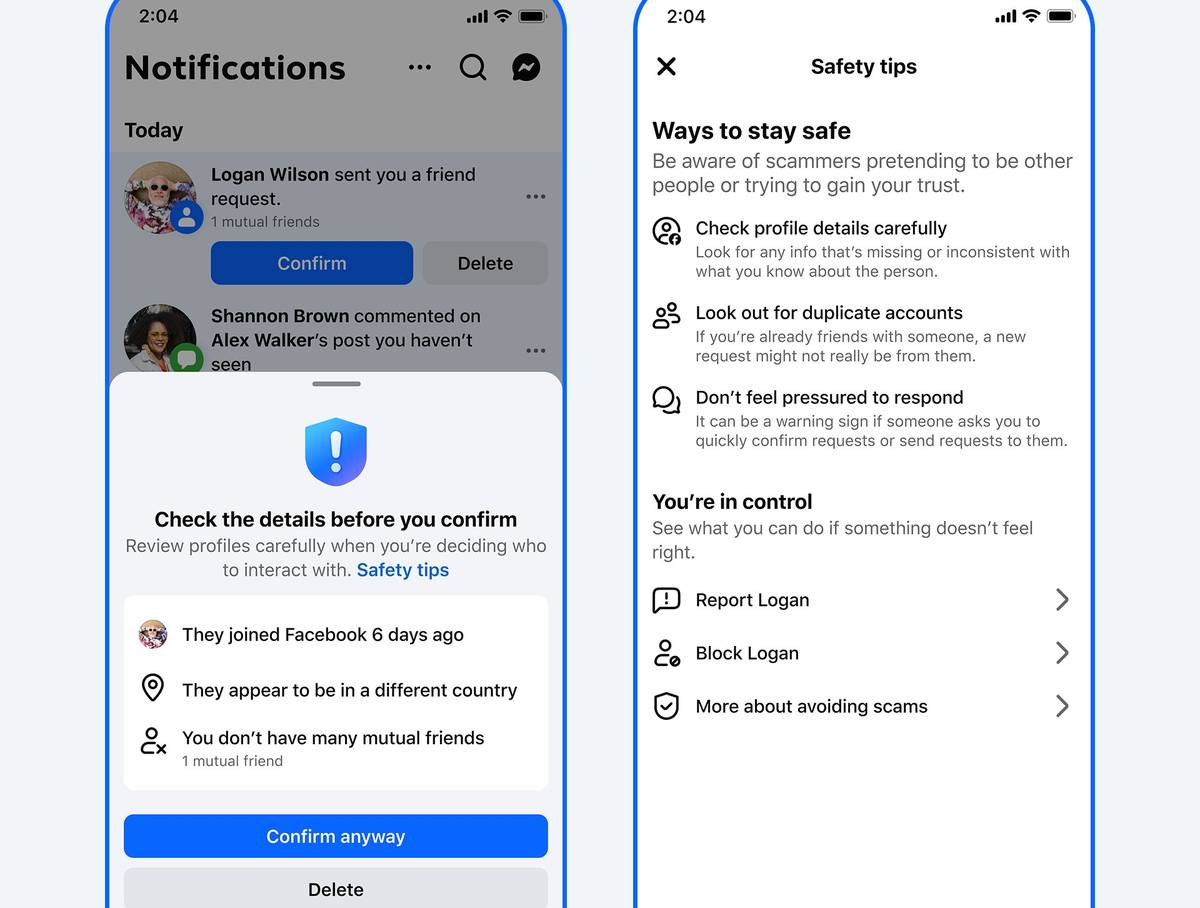
Online scams are increasing around the world as criminals use the internet and social media to trick people into sending money or sharing personal information. To address this growing problem, Meta is investing in new technologies, introducing anti-scam tools, and working with partners worldwide to protect users. These efforts aim to detect scams early, remove fraudulent accounts, and help people recognize suspicious activity before becoming victims.
The Growing Challenge of Online Scams
Scammers are constantly changing their tactics to avoid detection. Criminal groups often operate large-scale scam operations across multiple countries and use social media platforms, messaging apps, and advertisements to reach potential victims. These organized networks target people across borders and frequently run scams across multiple digital services at the same time.
As these operations become more sophisticated and widespread, technology companies must continuously improve their systems and collaborate with global partners to stop them. Without strong detection tools and coordinated action, these scam networks can quickly expand and reach thousands of potential victims.
New Technology to Detect Scammers
Advanced AI-Powered Detection
One of the most important tools in the fight against scams is artificial intelligence (AI). Advanced AI systems help detect suspicious activities such as fake accounts, impersonation attempts, and unusual messaging patterns. By analyzing large amounts of data and identifying behavioral signals linked to scams, these systems enable platforms to detect potential threats much earlier.
Early detection allows companies to take action before scams spread widely across platforms. This helps prevent scammers from reaching large numbers of people and reduces the chances of users becoming victims.
Scam Detection on Messaging Platforms
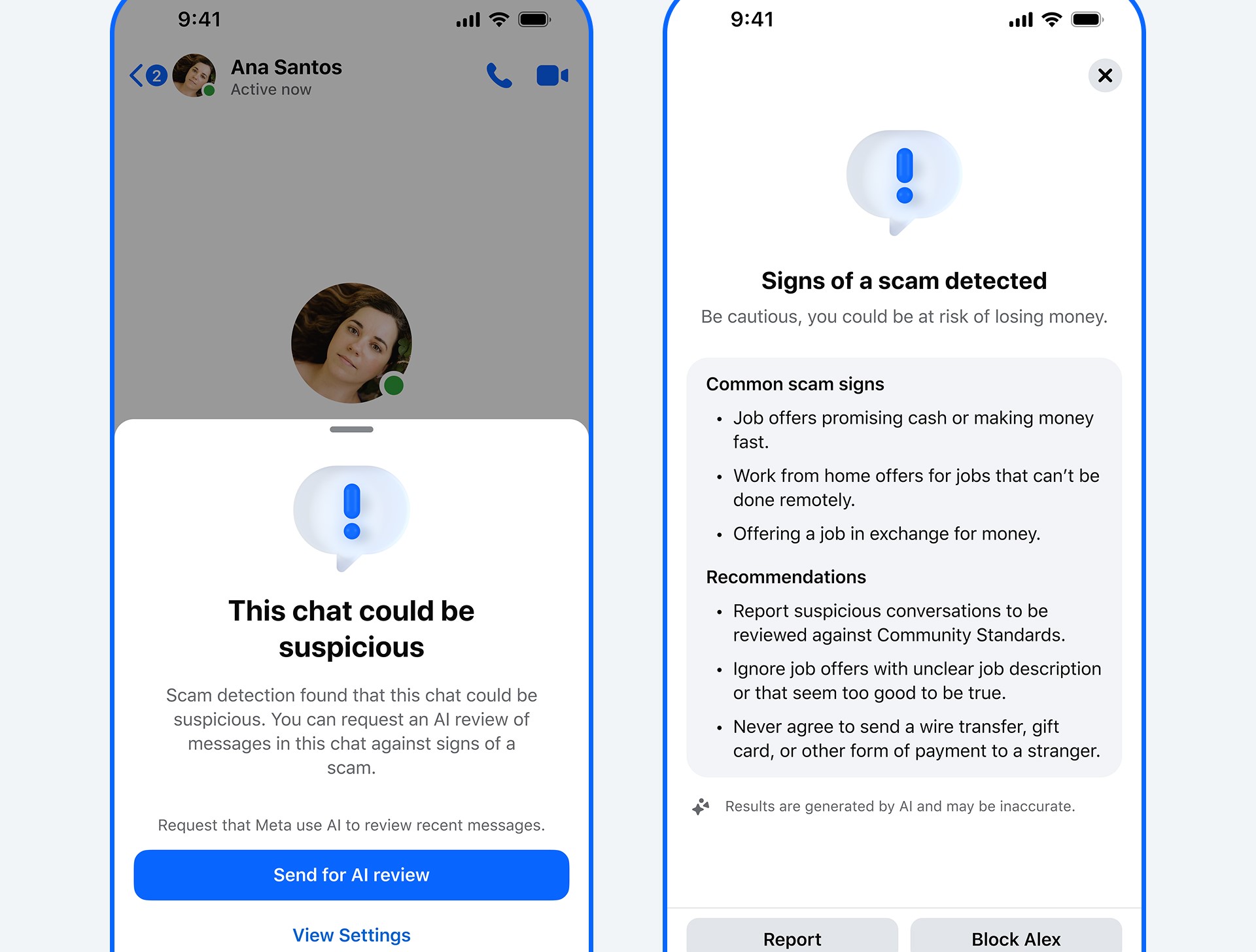
New scam-detection tools are being introduced across apps such as Facebook, Messenger, and WhatsApp. On Messenger, advanced detection systems can identify patterns linked to common scams, including suspicious job offers or messages that attempt to lure users into sharing personal information.
When a potential scam is detected, users may receive warnings along with suggestions to block or report the suspicious account. These alerts help people recognize suspicious behavior and take immediate action to protect themselves.
WhatsApp Device-Linking Warnings
Another new safety feature warns users if someone attempts to link their WhatsApp account to another device. Scammers sometimes try to trick users into sharing verification codes or scanning QR codes that allow them to access accounts.
These warnings are designed to help users recognize such attempts before access is granted. By alerting people at the moment of risk, the feature helps prevent scammers from taking control of accounts and misusing them.
Removing Scam Ads and Fake Accounts
Technology companies are also taking strong action against scam advertisements and fraudulent accounts. According to reports, more than 159 million scam ads were removed in 2025 for violating platform policies. Many of these ads were detected and removed automatically before users had the chance to report them.
In addition to removing scam ads, companies are targeting accounts connected to organized scam operations. Around 10.9 million accounts linked to scam centers were taken down across Facebook and Instagram as part of broader enforcement efforts aimed at disrupting these criminal networks.
Global Partnerships to Disrupt Scam Networks
Fighting scams requires strong cooperation between technology companies and law enforcement agencies. Through joint investigations and information sharing, authorities can identify organized scam networks and take coordinated action against them.
In a recent international operation involving global law enforcement agencies, more than 150,000 accounts linked to scam centers were disabled. The operation also resulted in 21 arrests connected to criminal scam activities.
These investigations involved cooperation between organizations such as the Federal Bureau of Investigation (FBI), the Royal Thai Police, and other international partners. Working together allows authorities to trace scam networks across borders and disrupt the criminal groups behind them.
Raising Awareness to Prevent Scams
Technology alone cannot stop scams. Educating people is also an important part of preventing fraud. Companies are working with partners to launch awareness campaigns that teach users how to recognize suspicious messages and avoid common scam tactics.
For example, initiatives such as the “Scam Se Bacho” campaign aim to educate users about fraud schemes and encourage them to report suspicious activity. By improving public awareness and providing clear safety guidance, these programs help people make safer decisions online and reduce the number of scam victims.