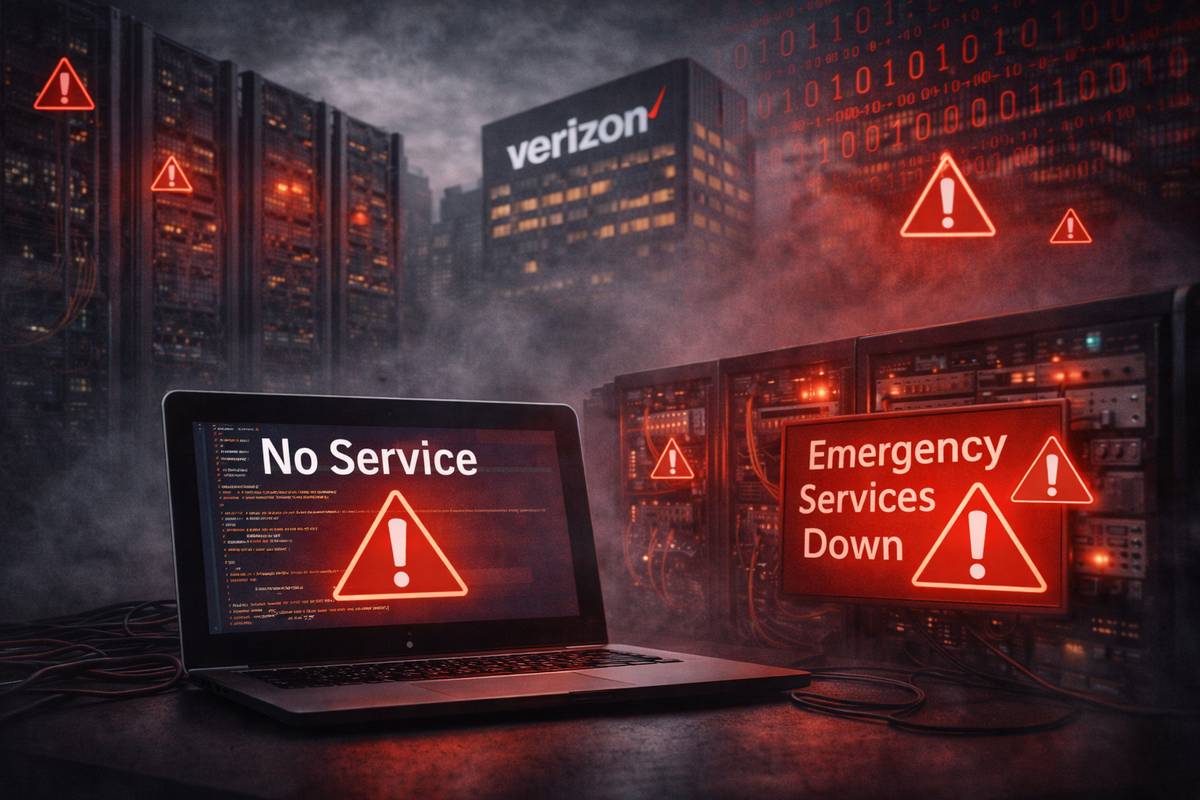
On January 14, 2026, Verizon experienced a major nationwide network outage that disrupted phone calls, text messages, and mobile data for many customers across the United States. The outage began in the late morning and continued for about ten hours, affecting hundreds of thousands of users who rely on Verizon for daily communication.
This incident highlighted how important mobile networks are in modern life, and it taught several important lessons about technology, planning, and communication.
What Happened
The outage started on January 14, 2026, just before midday Eastern Time. Many users suddenly saw “SOS” or “SOS only” on their mobile phones instead of normal signal bars, which meant that regular voice calls, texts, and internet services were unavailable, although emergency calls remained possible in some cases.
Verizon confirmed the outage publicly around 1:00 p.m. ET and said that its engineering teams were working to fix the problems. The disruption lasted throughout the afternoon and into the evening. By 10:15 p.m. ET, Verizon announced that services were restored and that users should restart their devices if they still experienced problems.
Despite restoring service, Verizon did not immediately disclose the exact technical cause of the outage. The company later said the problem was linked to a software issue, and there was no indication that it was caused by a cyberattack. Engineers continued to investigate and review the incident.
The Impact on Customers
During the outage, millions of people could not make normal calls or send text messages, and many lost access to mobile internet. Downdetector and other outage tracking websites showed huge spikes in reports from users having problems.
The outage affected major cities across the country, including New York City, Boston, Washington, D.C., Chicago, and Los Angeles, but reports came from almost every state. People who depended on mobile connectivity for work, school, navigation, and communication were interrupted for hours.
Local officials warned that emergency services relying on mobile networks might not work reliably during the outage and advised residents to use landlines or alternative carriers if possible.

Verizon’s Response
After the outage was resolved, Verizon issued a public apology, saying, “Today, we let many of our customers down, and for that, we are truly sorry.” The company announced that it would offer a $20 account credit to affected customers as a small way to acknowledge the disruption. Business customers would be contacted directly about compensation.
Verizon also encouraged users who still faced issues to restart their phones so they could reconnect to the restored network.
Regulatory and Public Attention
The outage drew attention from U.S. regulators. The Federal Communications Commission (FCC) began collecting customer complaints and reviewing Verizon’s response to the incident. The agency expressed concern about the impact on public safety communications, especially when users could not make standard calls or send text messages.
The FCC is gathering reports from affected customers to understand how widespread the outage was and whether Verizon followed proper safety and communication procedures during the outage.
Lessons Learned
The January 14 outage offered several important lessons for telecom companies, customers, and regulators.
Networks Can Fail Even Without Physical Damage
Modern mobile networks depend on complex software and systems. Even without storms, equipment damage, or cyberattacks, software problems alone can disrupt services nationwide. This shows how important software testing and careful deployment are.
Transparency Matters
Customers became frustrated because Verizon did not immediately share detailed information about the cause of the outage. Communicating clearly and quickly during an outage helps reduce confusion and mistrust.
Emergency Services Must Be Protected
When mobile networks fail, access to emergency services like 911 can be affected. The outage highlighted that cellular reliability is essential for public safety, and backup systems should be stronger and better prepared.
Customers Care Most About Timely Restoration
During the outage, many customers were more concerned about when service would return than why it failed. Restoring service quickly should be the top priority for providers when outages occur.
Accountability and Compensation Matter
Verizon’s decision to offer account credits showed that companies must acknowledge customer inconvenience and take responsibility for service disruptions.
Conclusion
The January 14, 2026, Verizon outage was a major event that affected millions of customers across the United States. The outage lasted nearly ten hours, interfered with phone calls, text messages, and mobile internet, and led to regulatory review and public discussion about network reliability.
While service was restored by late evening, the incident underscored the importance of strong network design, effective communication during outages, prioritizing emergency services, and maintaining customer trust. As telecommunications networks become more complex, learning from outages like this is crucial to preventing similar problems in the future.