
Above: International Tech Park Bangalore Bangalore (ITPB), located in Whitefield, is one of India's premier and oldest IT parks, spanning 69 acres and serving as a major hub for over 125 companies and 35,000+ professionals. Photo by PageImp (CC BY-SA 4.0) on Wikimedia Commons.
The global technology race is on, and India is at a critical crossroads, poised to become the next big thing. For decades, the South Asian tech hub has been building massive, power-hungry data centres and following in Silicon Valley's footsteps. However, analysts believe India will need a path distinct from Silicon Valley's.
Experts believe that simply exporting "imperial tech" would drain local water and electricity. Thus, India should prioritize sovereignty over dependence by focusing on efficient application-centric AI systems. They can build sovereign models that understand a country's unique linguistic and cultural landscape. There is a huge talent pool and 22 scheduled languages, ensuring that technology serves a billion-plus population through economical, locally relevant solutions.
Also read || Agentic AI: 5 Must-Have Enterprise Agents 2026
How is India progressing right now?
%20on%20Wikimedia%20Commons.png)
The IndiaAI mission is already on the rise, with 38,000 GPUs deployed in shared public facilities. Additionally, plans are to add 20,000 more GPUs very soon. With this move, startups and researchers will have high-performance computing without the burden of massive upfront costs. Furthermore, collaborations with Microsoft and Google DeepMind are bringing in billions in infrastructure funding.
During the AI Impact Summit 2026, total commitments for India's AI future exceeded $200 billion. Local leaders such as Adani, Tata, and Reliance Jio are also building hyperscale data centres to match these global ambitions. Beyond hardware, Adobe offers free access programs for students through educational institutions to upskill 30 million learners globally by 2030.
What can India learn from others?
.png)
Even though India is developing into a powerful tech nation, learning must continue. Instead of pursuing trillion-dollar models, China is offering a compelling alternative by mastering computationally efficient, smaller models. Businesses like DeepSeek and Alibaba have shown that efficiency can be boosted by constraints, enabling scalability without requiring a substantial increase in power. Without the larger investments required in the USA, this pragmatic strategy delivers tangible results that could upend international markets.
If India focuses on "tiny AI", it can operate within its own environmental limits. While the USA remains obsessed with the software hype, this shift towards practical deployment offers a more sustainable economic path. When India leverages a hardware focus and edge computing, water or power shortage can become a technical strength. This model prioritizes deploying tools over raw power, ensuring that innovation reaches the grassroots rather than staying trapped in the elite bubbles.
Also read || State of the Union 2026 Ignites AI Boom
The Environmental and Social Cost
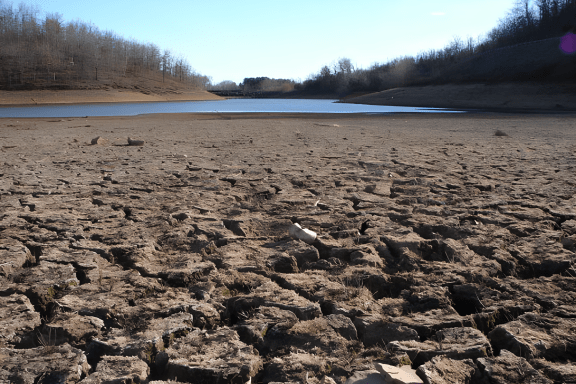
Everything comes at a cost. We cannot ignore the environmental price tag of the rapid expansion of data centres. According to the 2024 report, data centre facilities consumed 150 billion litres of water, a figure that might double by 2030. In a tropical climate like India, it is a huge challenge as erratic monsoons and agricultural needs can be concerning.
Furthermore, pursuing a Silicon Valley-scale approach means fostering inequality by creating tech that benefits only a handful of urban elites. For a rapidly growing Indian economy, it can be unaffordable. India will have to carefully regulate and shift towards lightweight models to reduce the digital divide between rural and urban regions. When we balance these environmental pressures with the need for innovation, we create an inclusive tech ecosystem.
Also read || America's AI Power Crunch: Data Centers Hit a Wall
What is India's vision for the Future?
The way forward is to develop autonomous models tailored to local conditions, such as offline telemedicine bots for isolated communities. These low-cost smartphones must be able to run these lightweight tools without a continuous high-speed internet connection. India can avoid exploitative practices by curating ethical datasets in Indic languages using existing GPU clusters. This strategy creates an exportable model for the entire developing world by leveraging scale and human capital as a competitive advantage.
Developing local chips and edge computing systems will require strengthening relationships between domestic industry leaders. Rural communities and beyond can continue to have access to technology through policies that offer tax breaks for efficient hardware. Pilot initiatives in states like Rajasthan or Bihar may eventually expand nationally to generate employment in maintenance and deployment. Eventually, India will redefine what it means to be a global leader in AI by defining success beyond Western metrics.
Comments (0)
Log in to share your thoughts
No comments yet
Be the first to share your thoughts!