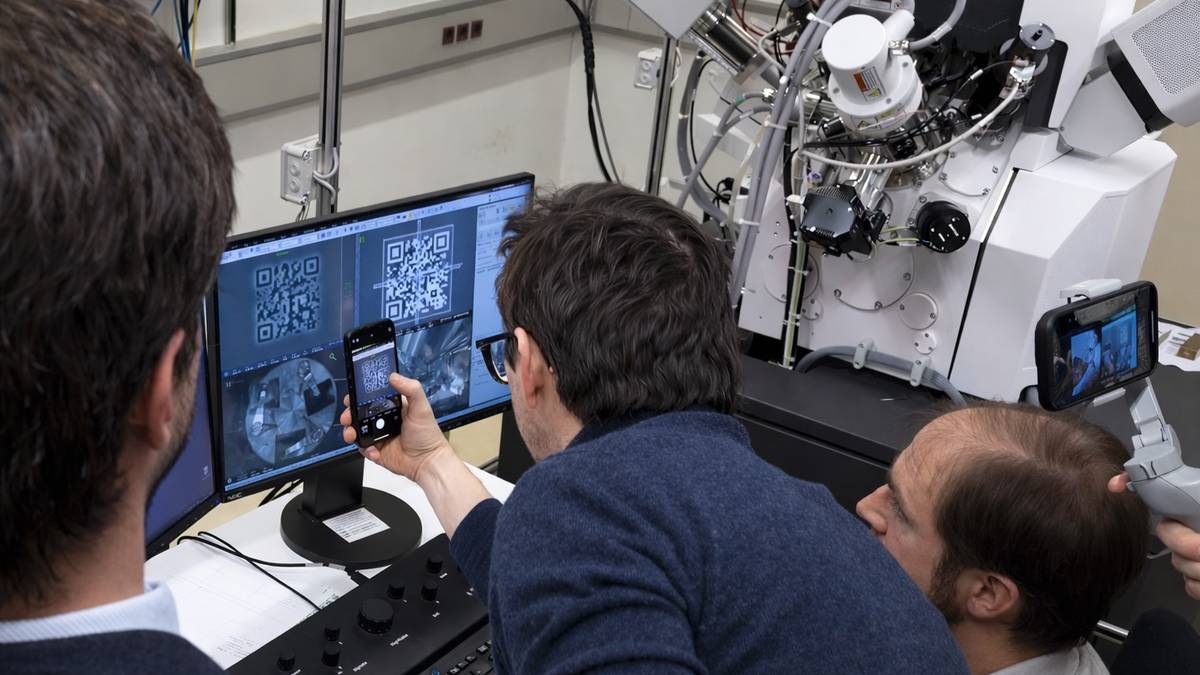
February 16, 2026: Scientists at TU Wien (Vienna University of Technology), Austria, in collaboration with data storage company Cerabyte, have successfully created and verified the world’s smallest QR code, setting a new entry in Guinness World Records.
The achievement marks a major milestone in nanotechnology and advanced data storage research.
A QR Code Smaller Than a Bacterium
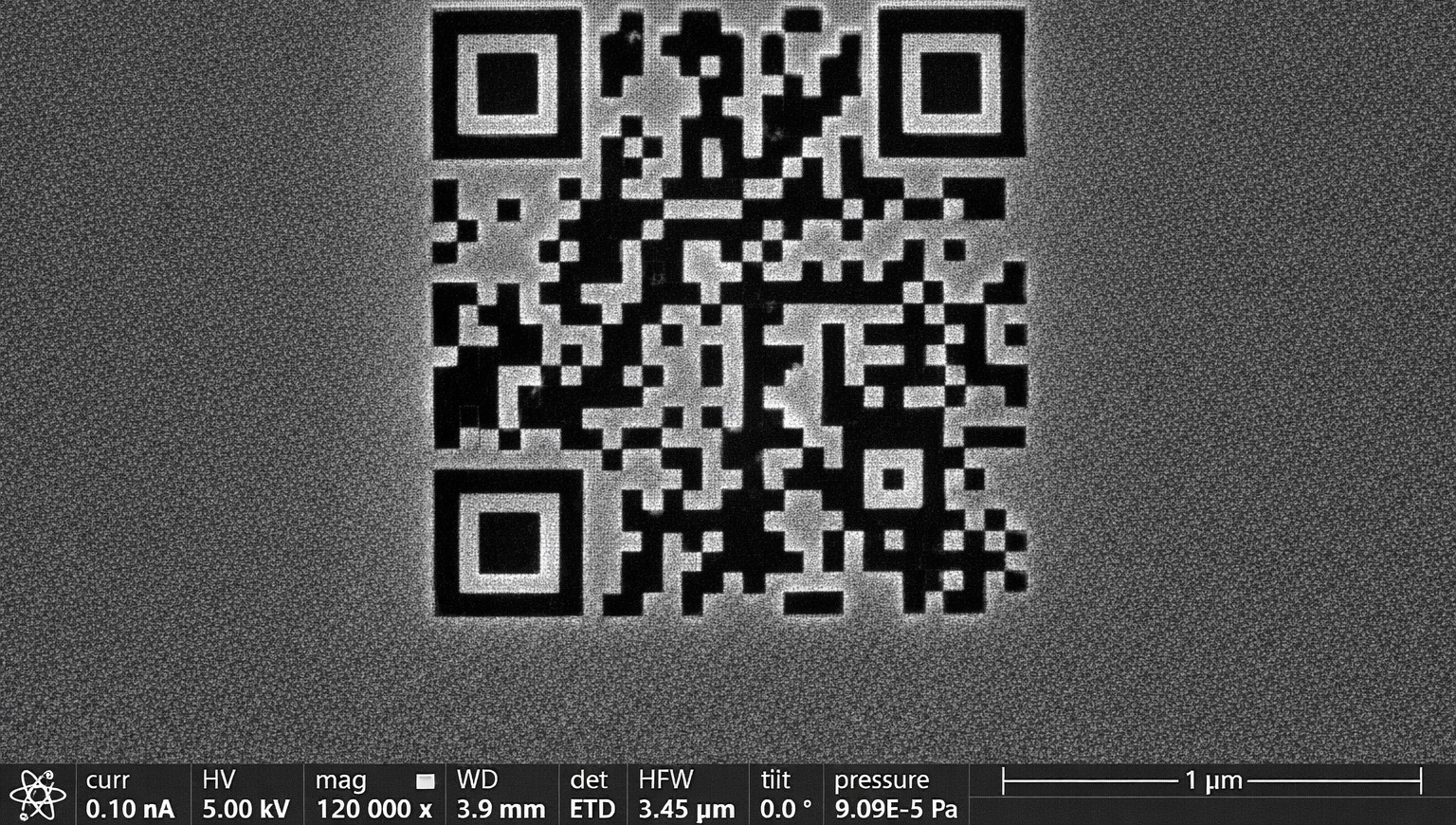
The record-breaking QR code measures just 1.98 square micrometers (µm²) in total area. To understand how small this is, one micrometer equals one-thousandth of a millimeter. This makes the QR code smaller than many common bacteria and completely invisible to the human eye.
The code consists of a 29 × 29 grid of tiny modules (the small square units that form a QR pattern). Each individual module measures only 49 nanometers (nm) in width. For comparison, a nanometer is one-millionth of a millimeter and even smaller than the wavelength of visible light.
Because of its extremely small size, the QR code cannot be scanned with a smartphone or a regular optical scanner. Instead, it can only be read using a highly specialized electron microscope.
How the Tiny QR Code Was Made
Researchers produced the microscopic QR code using advanced nanofabrication techniques. The pattern was etched into a thin ceramic material layer, including chromium nitride, using a highly precise tool called a focused ion beam.
This technology allows scientists to carve patterns at the nanometer scale with extreme accuracy. The ceramic material used is highly durable and resistant to environmental damage, making it suitable for long-term data storage.
After production, the QR code was successfully scanned and verified under an electron microscope to confirm that it functioned correctly.
Official Record Verification
Following detailed measurements and independent verification, the achievement was recognized by Guinness World Records. The confirmation officially establishes the QR code as the smallest ever created and successfully read.
The verification process required proof of precise measurements and successful data retrieval from the microscopic structure.
Why This Achievement Matters
Although the tiny QR code is not designed for everyday consumer use, the breakthrough has major implications for the future of data storage.
The technology demonstrated by TU Wien and Cerabyte shows that information can be stored at extremely high density on durable ceramic materials. Unlike traditional storage devices such as hard drives or flash memory, ceramic-based storage does not require constant electricity to preserve data.
According to the research team, this method could allow massive amounts of data to be stored on very small surfaces and preserved for exceptionally long periods, potentially for centuries.
Future Plans
The researchers plan to continue improving the technology by increasing writing speed and expanding the complexity of stored data beyond simple QR codes. Their long-term goal is to develop scalable, energy-efficient, and long-lasting storage solutions for global data needs.