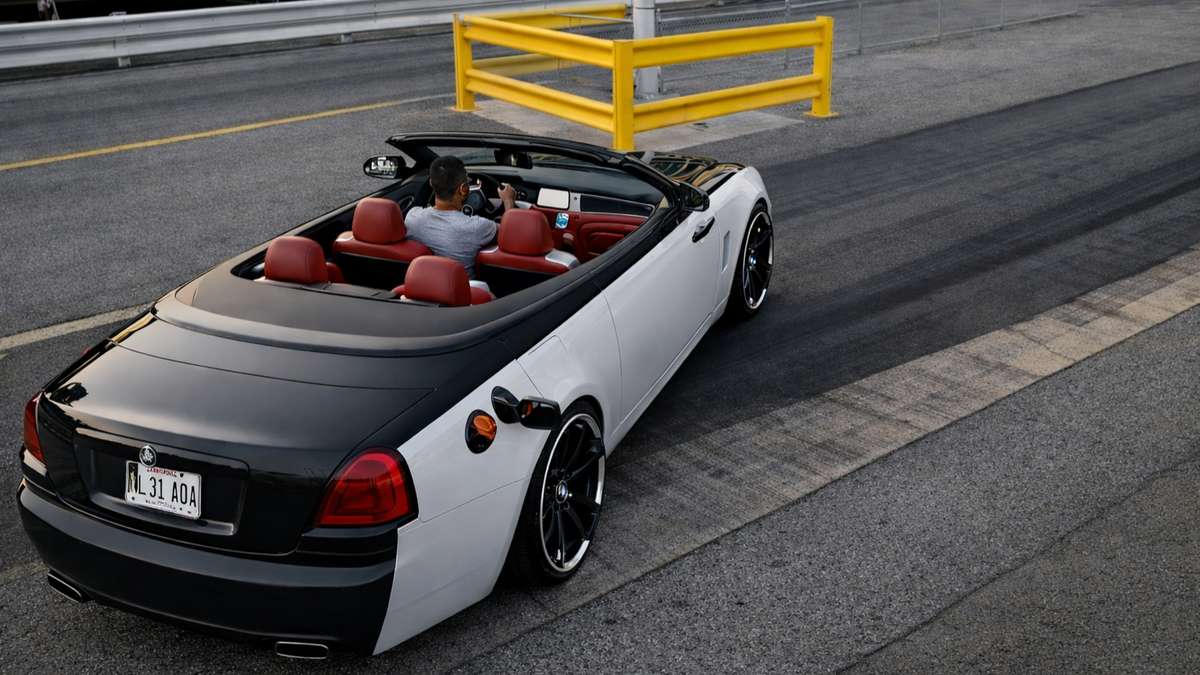
In an innovative experiment that captured global attention, a luxury vehicle from Rolls-Royce successfully ran on fuel made from plastic waste. The fuel, known as Plastoline, was developed by American inventor Julian Brown, who has been working for several years on technology that converts discarded plastic into usable fuel. The demonstration showed that plastic bottles and containers could potentially be transformed into energy capable of powering real automobiles.
Also Read: How Meta Will Pay Creators to Post on Facebook
The Growing Problem of Plastic Waste
Plastic waste has become one of the most serious environmental challenges worldwide. Every year, millions of tons of plastic products such as bottles, packaging materials, and containers are discarded. Much of this waste ends up in landfills, rivers, and oceans, where it can remain for hundreds of years without breaking down. Plastic pollution harms wildlife, damages ecosystems, and creates long-term environmental problems. Because of these challenges, researchers and innovators have been searching for ways to reuse plastic waste instead of simply disposing of it. Converting plastic waste into fuel is one of the ideas being explored to reduce pollution while also producing energy.
The Inventor Behind the Innovation

The experimental fuel used in the Rolls-Royce test was developed by Julian Brown, a young inventor from the United States who grew up in the Atlanta area. Brown began experimenting with plastic-to-fuel technology while he was still in high school and built his first reactor when he was about 17 years old. He is largely self-taught in engineering and chemical processes and used his welding skills to build early prototypes of his plastic-to-fuel system. Over several years, he developed multiple versions of the machine that converts plastic waste into fuel. To expand his work and continue developing the technology, Brown founded a startup company called Naturejab, which aims to develop technologies that turn plastic waste into useful energy sources.
What Is Plastoline Fuel?
The fuel used in the demonstration is called Plastoline. Plastoline is produced by converting plastic waste into liquid hydrocarbons that can be used as fuel in engines. According to Brown, the fuel is approximately 110 octane, meaning it has a high combustion rating suitable for powerful engines. The fuel is made from everyday plastic items such as bottles, containers, and packaging materials. These plastics are processed and chemically broken down to create a liquid fuel that can power vehicles.
Also Read: OpenAI Introduces Interactive Visual Learning for Math and Science in ChatGPT
The Rolls-Royce Demonstration
During the demonstration on March 22, 2026, Plastoline fuel was poured into a vehicle manufactured by Rolls-Royce. After the fuel was added, the engine started successfully, and the car was able to run using fuel made entirely from plastic waste. This experiment demonstrated that plastic-derived fuel could power a real automobile engine, including one designed for a luxury car. The event was widely described as a first-of-its-kind experiment, showing the potential of converting plastic waste into usable fuel.
How Plastic Waste Is Converted into Fuel
Plastoline fuel is produced through a process known as microwave pyrolysis. In this process, plastic waste is heated at extremely high temperatures in a sealed chamber where oxygen is absent. During heating, the large plastic molecules break down into smaller hydrocarbon molecules. These molecules form vapors that are then cooled and condensed into liquid fuel. The resulting liquid can later be refined into fuels similar to gasoline, diesel, or jet fuel. Some versions of the system are partly powered by solar energy, which helps reduce the energy required for the process.
Importance of the Experiment
The successful Rolls-Royce demonstration highlights a promising way to deal with plastic waste. If the technology can be developed further and used on a large scale, it could help reduce plastic pollution while also producing alternative energy. By turning plastic waste into fuel, the technology could help address two major global challenges at the same time: waste management and energy production.
Comments (0)
Log in to share your thoughts
No comments yet
Be the first to share your thoughts!