
On September 9, 1947, a small and unexpected incident took place inside an early computer that would later become one of the most famous stories in the history of technology. A moth, trapped in the machinery of a computer, caused a malfunction that led to the widespread use of the terms “bug” and “debugging.” Although the word “bug” had already been used in engineering, this particular event gave it a clear, literal meaning in computing and helped establish it as a standard term used by programmers around the world.
Early Computing and the Harvard Mark II
In the 1940s, computers were very different from the compact and powerful devices we use today. They were large electromechanical machines made up of relays, switches, and wiring systems that performed calculations automatically. One such machine was the Harvard Mark II Aiken Relay Calculator, developed and operated at Harvard University.
The Harvard Mark II was an advanced machine for its time, but like other early computers, it was prone to technical problems. Engineers frequently had to inspect its internal components to locate faults, which were already informally referred to as “bugs” in engineering long before the computer era.
Also Read: Instagram Expands Teen Accounts Inspired by 13+ Content Ratings
The Incident of September 9, 1947
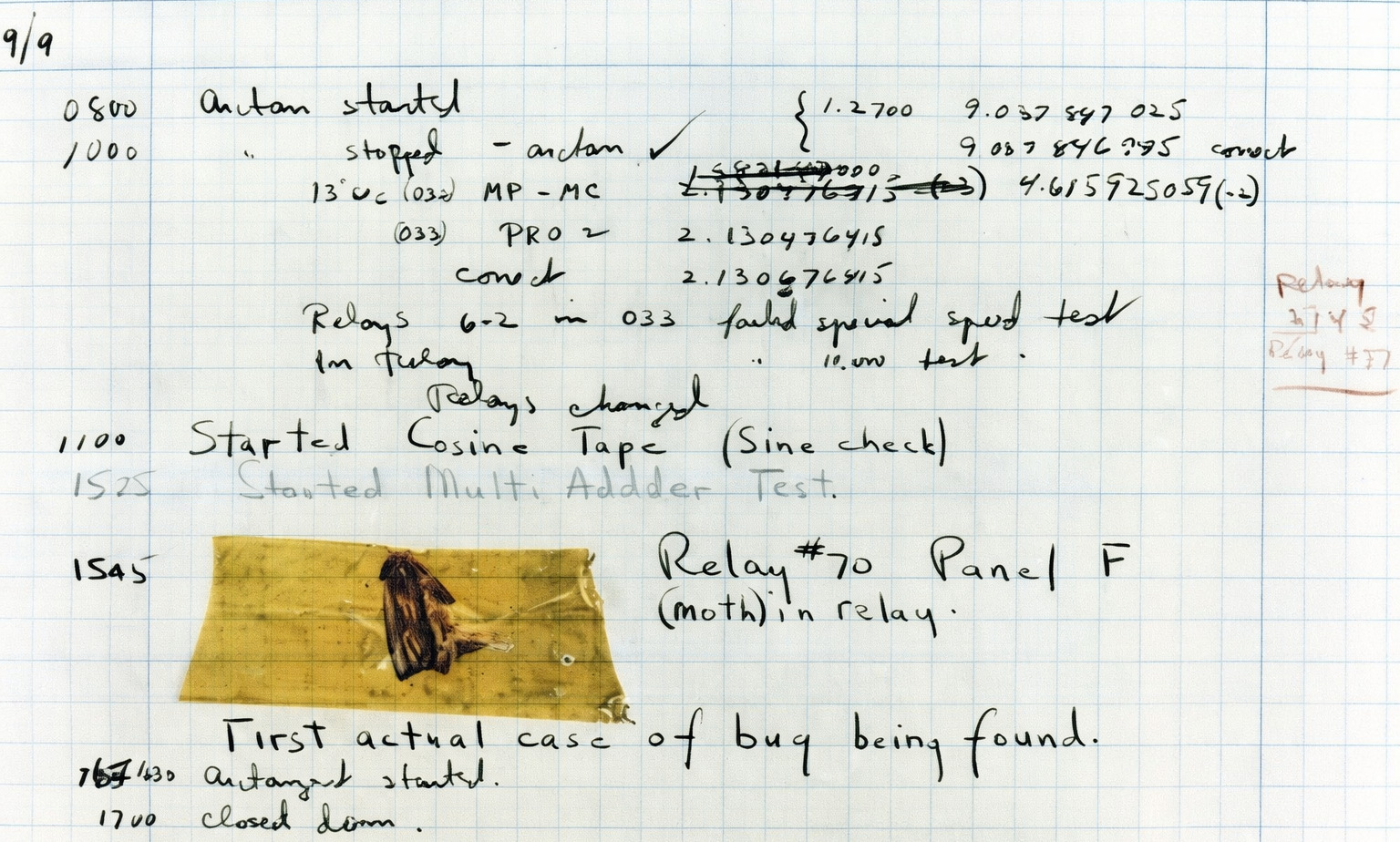
On the afternoon of September 9, 1947, engineers working on the Harvard Mark II encountered a malfunction while the machine was running. Upon careful inspection, they discovered that a moth had become trapped inside one of the machine’s relays, specifically Relay #70 on Panel F.
The moth had physically blocked the relay’s electrical contacts, preventing the machine from functioning correctly. This was not a metaphorical problem but a real, physical cause of failure. The engineers removed the moth and restored the machine to proper working condition.
What made this incident unique was how it was recorded. The engineers taped the actual moth into their logbook and wrote the note: “First actual case of bug being found.” This log entry remains one of the most famous pieces of documentation in computing history.
The Role of Grace Hopper

The story is closely linked to Grace Hopper, a pioneering computer scientist and U.S. Navy officer who worked with early computing systems. Although she was not the person who physically discovered the moth, she was part of the team working on the machine and later played a key role in sharing and popularizing the story.
Grace Hopper’s influence in the computing field helped spread the use of the term “bug” and contributed to the adoption of “debugging” as a standard term for fixing errors in computer systems.
The Term “Bug” Before 1947
It is important to understand that the word “bug” did not originate with this incident. The term had been used in engineering and mechanical contexts for many years before 1947. For example, Thomas Edison used the word in the late 19th century to describe faults or problems in his inventions.
However, the 1947 moth incident provided a clear and memorable example of a “bug” in a machine, which helped reinforce and popularize the term within the emerging field of computer science.
The Birth of “Debugging”
Following this event, the process of identifying and fixing problems in computers became widely known as “debugging.” While the term may have been used informally before, the moth incident gave it a symbolic origin that is still referenced today.
Debugging is now a fundamental part of programming and software development. Every computer program, no matter how advanced, requires debugging to ensure that it functions correctly.
Long-Term Impact on Computing
The impact of this small incident has been significant and long-lasting. The terms “bug” and “debugging” became standard vocabulary in computing and are now used globally by programmers, engineers, and developers. The story also highlights the challenges faced by early computer engineers and the importance of careful problem-solving in technology.
In addition, the incident has become a cultural symbol in computing, often used to illustrate how even complex systems can fail due to simple and unexpected causes. It is frequently included in educational materials to help students understand the history and development of computer science.
Also Read: The History of Apple: From a Garage Startup to a 50-Year Technology Giant
Preservation of the Original Logbook
The original logbook page containing the taped moth has been preserved and is now housed at the National Museum of American History, part of the Smithsonian Institution. This artifact serves as a physical reminder of the incident and its importance in the history of computing.
Comments (0)
Log in to share your thoughts
No comments yet
Be the first to share your thoughts!