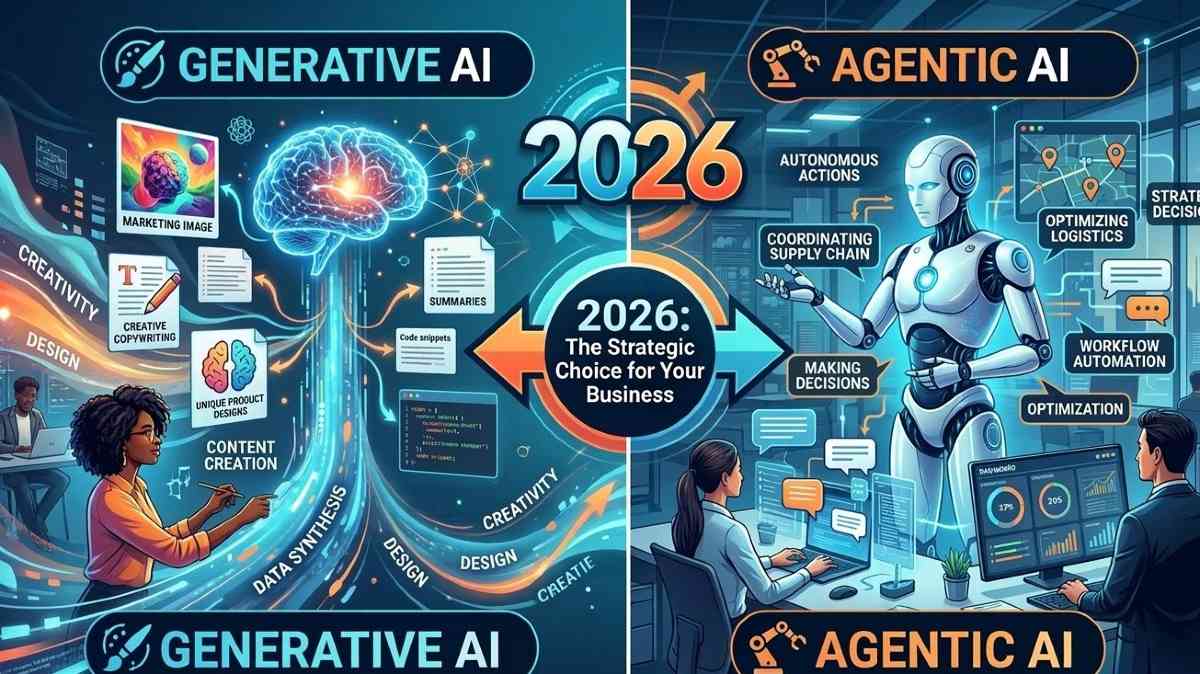
The initial wave of AI focused on information synthesis and content creation, the current trajectory focuses towards a more autonomous future. Learning and understanding the distinction between Generative AI and Agentic AI is no longer just a technical requirement for developers; it has become a strategic necessity for business leaders as well who are looking to leverage the next generation of digital labor.
Defining Generative AI
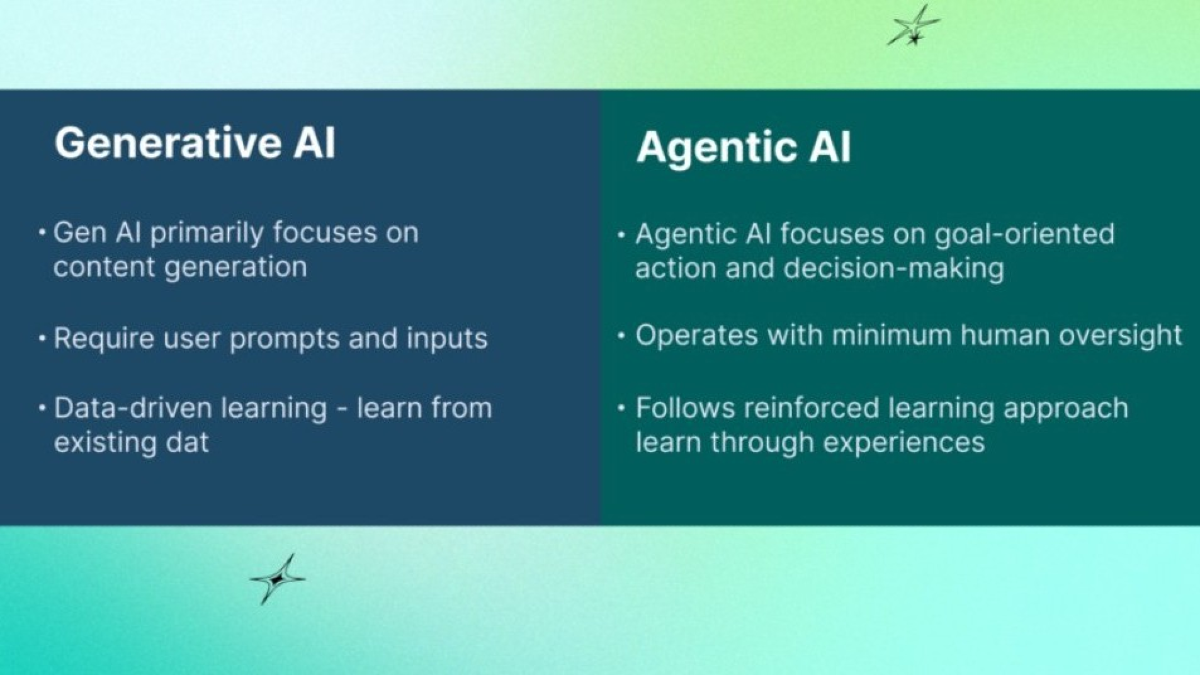
Generative AI, or better known as GenAI, refers to a class of models such as Large Language Models (LLMs), which are designed primarily to produce fresh content, ranging from text and images to code and music, based on patterns learned from massive datasets. According to the research studies conducted by Stanford’s Human Centered AI (HAI), these models are essentially the “Precursors” to more complex systems; they are reactive by nature, operating in a request-response loop where the output is strictly triggered by a human prompt. While other companies such as OpenAI and Adobe have demonstrated how these systems can drastically help in reducing the cost of content production, GenAI remains “stateless,” meaning it can typically lack a persistent memory of goals or the ability to execute multi-step plans without the need of constant human intervention.
Understanding Agentic AI
Agentic AI is characterized by systems that can perceive their environment, reason through complex problems and has the ability to take independent decisions to achieve a specific goal. A 2025 study from MIT Sloan and MIT CSAIL defines these systems as semi-or fully autonomous “agents” capable of making contextual decisions and adjusting their plans accordingly.
In contrary to its generative predecessor, Agentic AI can utilize tools, such as sending emails, running software code, or managing calendars, to complete end-to-end workflows. Academic research studies from UC Berkeley’s Fisher Center for Business Analytics highlights the fact that while GenAI provides the “intelligence,” the agentic layer is capable of providing the “agency,” transforming AI from a passive assistant into an active digital employee.
Key Differences In Autonomy And Reasoning
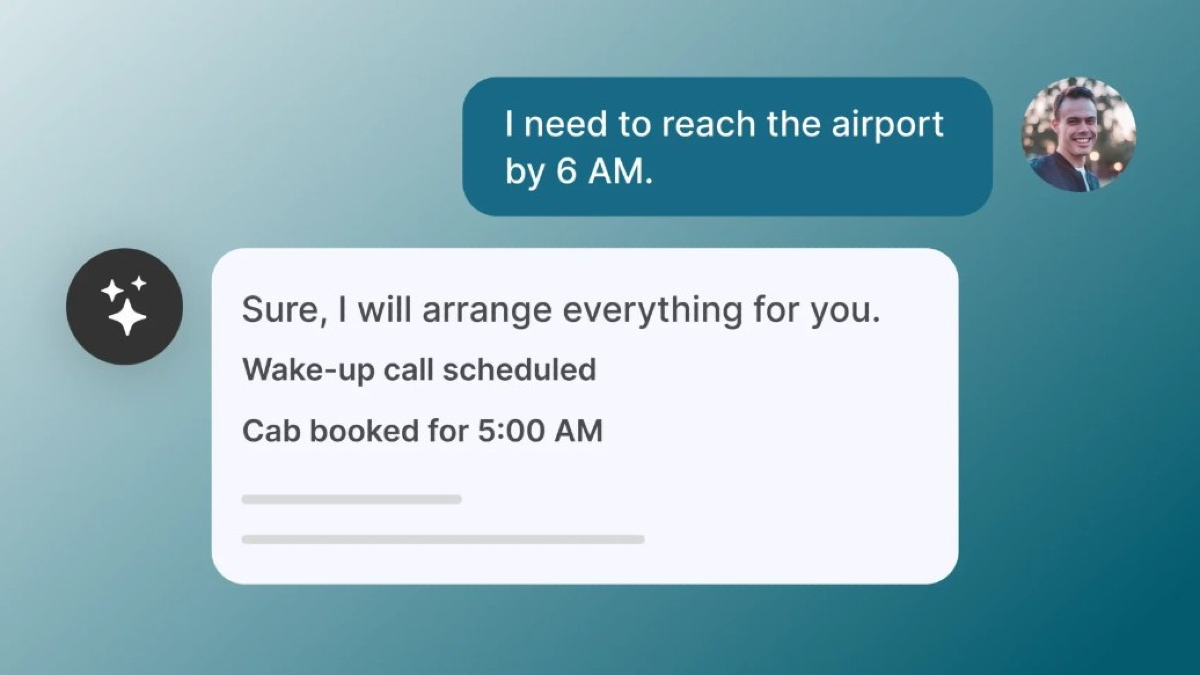
The primary differentiator between these two modes of AI lies in the transition from prompting to goal-setting. Researchers from Harvard University notes that while Generative AI excels at single, discrete tasks like drafting a report, Agentic AI manages complex, multi-step processes to accomplish a goal. Take an example of a generative model that can write a travel itinerary for you but an agentic system can actually book you flight tickets, coordinate with a hotel API and even handle a refund if a cancellation occurs. Furthermore, Stanford University’s 2025 AI Index Report underscores the importance of agentic workflows that can cut human agent’s time in doing a task by up to 86% in complex administrative roles because they proactively initiate the next step in a process rather than waiting for the user’s next command.

The Synergistic Future Of AI Systems
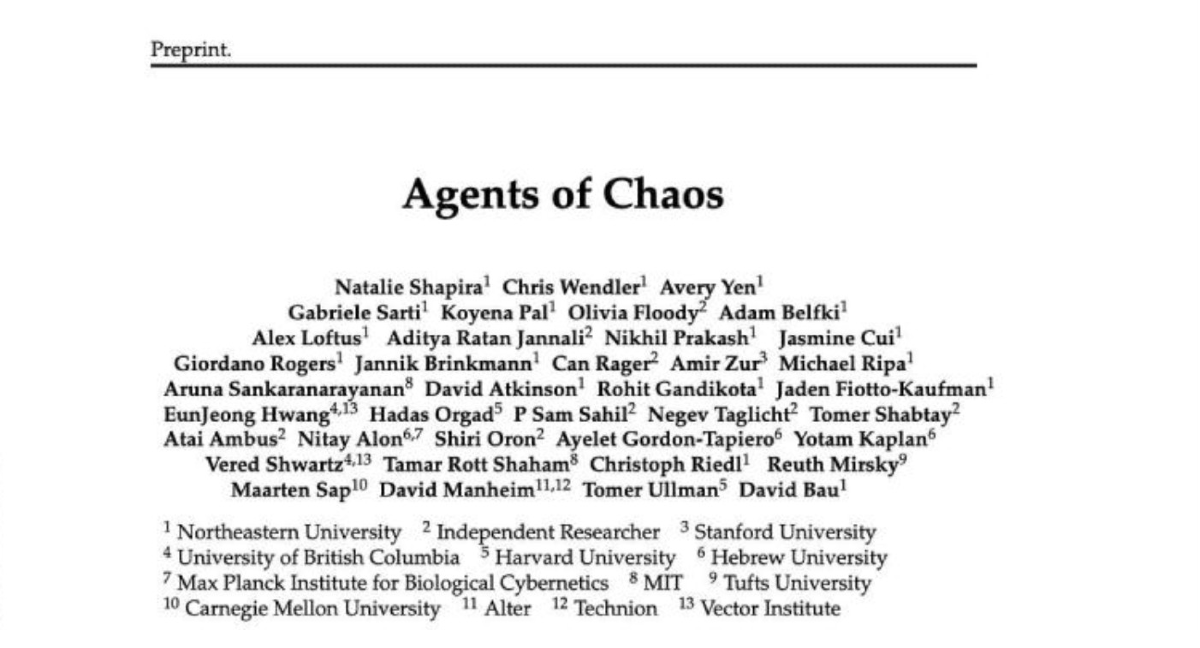
The most effective enterprise integrates both the modes of AI into a unified architecture. The generative framework of AI serves as the “brain” or the reasoning engine, while the agentic framework serves as the “hands” that interacts with the outer world. Very recently, MIT and other universities, including Northeastern University collaborated on a research topic, titled “Agents of Chaos” 2026, which lay emphasis on the fact that as we move towards these multi-Agent environments, the focus of AI development is transitioning from “model weights” to “interaction topologies.” This means that the future of AI in various domains will likely involve a network of specialized agents that generates content, verifies its accuracy and autonomously distributes it across various platforms, all while learning from real-time performance data.