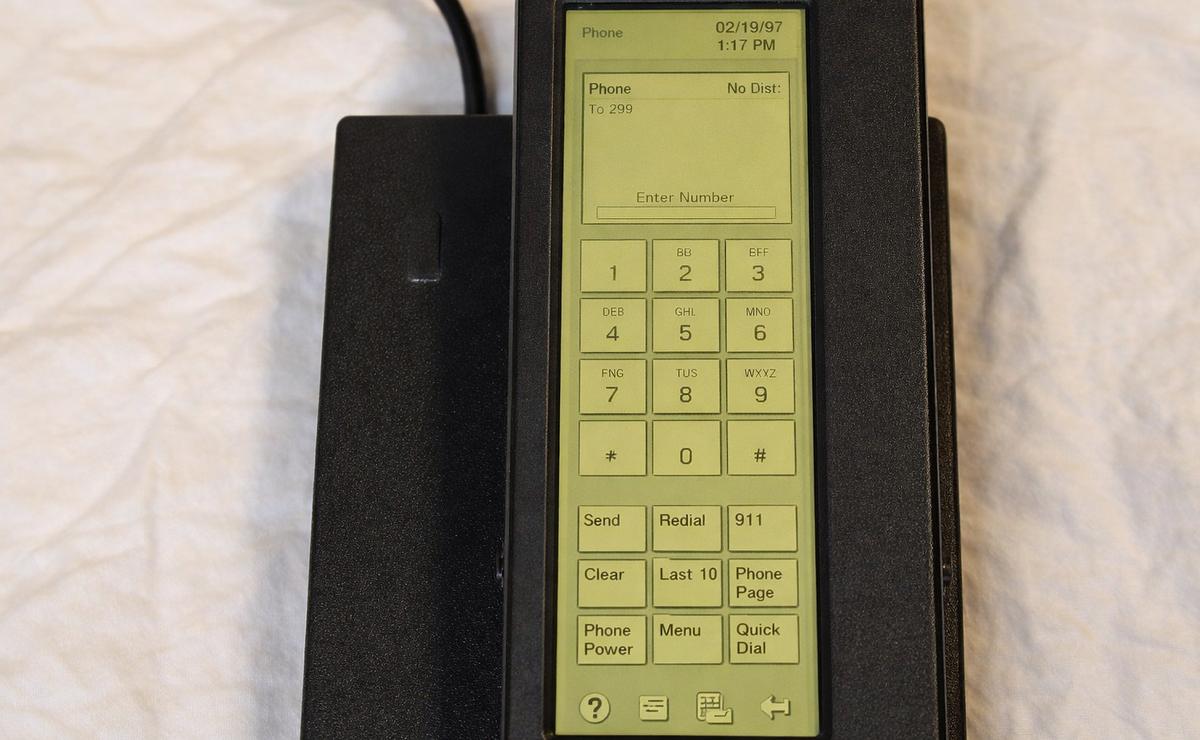
Today, smartphones are everywhere. People use them to communicate, study, work, shop, watch videos, and connect with the world. It is difficult to imagine life without them. However, smartphones did not suddenly appear with modern devices like the Apple iPhone; their development began much earlier, in the early 1990s. The device widely recognized as the world’s first smartphone was the IBM Simon Personal Communicator. It was created by IBM and distributed through the telecommunications company BellSouth. Released in 1994, this remarkable device combined the features of a mobile phone with the capabilities of a computer, something that had never been done before.
The Beginning of a Revolutionary Idea

The story of the first smartphone began in 1992, when engineers at IBM started working on a new type of mobile device. At that time, mobile phones were mainly used for making calls, had very limited functions, and were often large and heavy. IBM engineer Frank Canova led a team that imagined something completely different: a handheld device that could make calls and also manage digital information like a small computer. On November 16, 1992, IBM introduced a prototype of this device at the famous COMDEX technology exhibition in Las Vegas. The prototype amazed visitors because it could perform several functions beyond simple calling, including sending emails, sending fax messages, and storing contacts and appointments. This demonstration gave the world a glimpse of the future of mobile technology.
Also Read: How an 1816 Engine Led to the Refrigeration Revolution
Official Announcement
After the successful demonstration in 1992, IBM continued developing the device with the help of BellSouth, and the project was internally known as “Angler.” On November 2, 1993, IBM officially introduced the device to the public and gave it the name IBM Simon Personal Communicator. The company planned to sell the device through BellSouth’s cellular network in the United States. The announcement created excitement because people began to realize that mobile phones could soon become far more powerful tools.
Commercial Launch
The IBM Simon Personal Communicator was finally released to the public on August 16, 1994, and it was available in the United States through BellSouth’s cellular service. At the time of its launch, the device cost about $899 with a two-year contract or approximately $1,099 without a contract. Although this price was quite high, the device represented a groundbreaking step in mobile technology because it combined multiple functions into one portable device.
Features That Were Far Ahead of Their Time
What made the IBM Simon Personal Communicator truly special was its impressive list of features. Unlike traditional mobile phones, it offered several advanced communication tools. Users could make phone calls, send and receive emails, and even send fax messages directly from the device. For professionals and business users in the 1990s, these capabilities were revolutionary. The device also included several built-in applications that helped users organize their daily lives, such as a calendar, address book, appointment scheduler, calculator, world clock, and notepad. These tools allowed users to manage contacts, schedule meetings, and store information directly on their devices, functioning in many ways like a small portable office.
A Touchscreen Before Smartphones Became Popular
One of the most innovative aspects of the IBM Simon Personal Communicator was its touchscreen display. Instead of relying only on physical buttons, users could interact with the screen using a stylus. By tapping icons and menus, they could open applications, type messages, and write notes. The device used a resistive touchscreen that required gentle pressure to operate. Although simple compared with modern touchscreens, this technology was extremely advanced for the early 1990s and helped inspire the design of future smartphones and tablets.
Technical Specifications
For its time, the IBM Simon Personal Communicator was a powerful device. It was powered by a 16-MHz NEC V30HL processor and ran on Datalight ROM-DOS, a system compatible with MS-DOS. The device included 1 MB of RAM and 1 MB of internal storage. It featured a 160 × 293 pixel monochrome LCD touchscreen display and weighed about 510 grams (18 ounces), making it heavier than most modern smartphones. The device used a nickel-cadmium battery that provided approximately one hour of talk time, and it also supported PCMCIA memory cards, allowing users to expand its capabilities.
Sales and Market Performance
The IBM Simon Personal Communicator was sold from August 1994 to February 1995, during which around 50,000 units were sold in the United States. Although the device introduced many groundbreaking features, it faced several challenges. Its high price, large size, and short battery life made it difficult for many consumers to adopt. Despite its limited commercial success, the device proved that smartphones were possible.
Also Read: How Meta Will Pay Creators to Post on Facebook
Why IBM Simon Is Considered the First Smartphone
Technology historians consider the IBM Simon Personal Communicator the first true smartphone because it successfully combined communication and computing functions in a single handheld device. Even though the term “smartphone” was not widely used at the time, the device introduced many ideas that later became standard features in modern phones, including touchscreen interaction, mobile email communication, built-in applications, and digital organization tools. These features laid the foundation for the smartphones we use today.
The Legacy That Changed Mobile Technology
The IBM Simon Personal Communicator played a crucial role in shaping the future of mobile technology. It proved that a mobile phone could be much more than just a device for making calls. In the years that followed, companies such as Nokia, BlackBerry, and Apple continued developing smartphones with improved technology, faster processors, better battery life, and internet connectivity. Today’s smartphones are far more advanced, but their story began with a groundbreaking invention in the early 1990s: the IBM Simon Personal Communicator.
Comments (0)
Log in to share your thoughts
No comments yet
Be the first to share your thoughts!