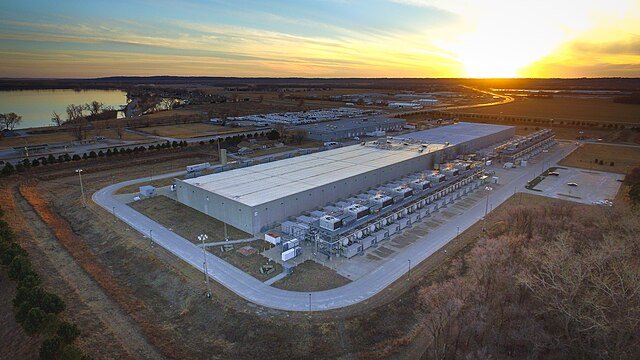
Above: Google's Data Center in Iowa, United States. Photo by Chaddavis.photography from Wikimedia Commons (CC BY 2.0)
The American power grids are failing. A harsh winter storm in late January 2026 exposed this problem when blackouts hit Virginia's data center hub, and wholesale electricity spot prices soared for companies—from $200 to over $1,800/MWh during Storm Fern. Elon Musk said it's already electricity, not chips, that are blocking American AI dreams. Families faced cold homes while tech giants raced to fix them. Data centers consumed over 200 TWh in 2025 and are forecast at over 250 TWh for 2026 (IEA), potentially reaching 426 TWh (12% of U.S. power) by 2030.
Also read || Apple Watch Detects Hypertension: Everything You Need To Know!
How AI Sucks Up So Much Electricity
There have been debates about how energy-inefficient AI is. It crunches huge piles of data nonstop, like reading every webpage ever in seconds. One ChatGPT query uses 10 times the power of a Google search. In terms of people, a big data centre consumes as much energy as a town of 100,000 people every hour.
At the moment, Northern Virginia, the global data capital, is fighting overload. Moreover, the grids in Georgia and Texas are also strained. Cooling fans alone consume 2/5 of that power, as hot chips draw 1000 watts each. You can call them space heaters on steroids. U.S. data centers are projected to hit over 250 TWh total consumption in 2026.
In January 2026, the Storm Fern caused an energy crisis, leading many AI computer centers to reduce power usage and resulting in significant delays for AI projects. Virginia alone uses between 5 and 7 gigawatts of electricity for data centers, enough power for millions of homes.
Also read || Tech Grocery Stores - Why Did Amazon Fail?
Real-Life Grid Struggles and Bill Shocks
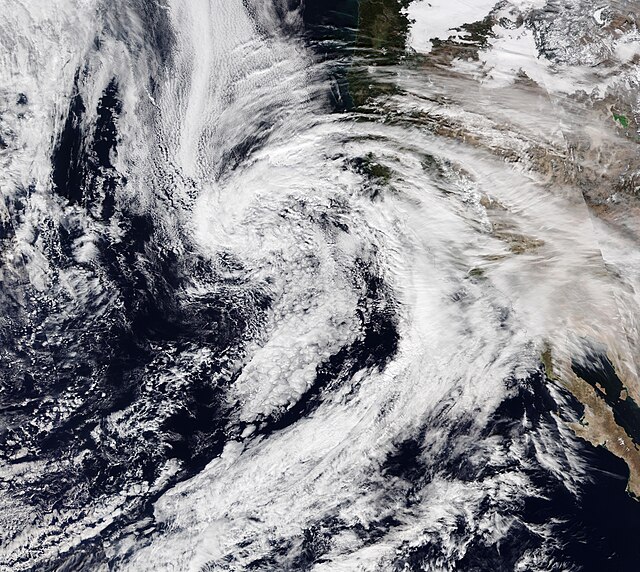
The old American power lines were built for steady homes and factories, and cannot handle the load now. PJM prices spiked from $30 to $330 per power chunk, peaking at $1,800/MWh during Storm Fern, adding around $200 to family bills every year in Virginia. Texas demands "off switches" on new data centers for emergencies. The U.S. Energy Information Administration's forecast shows the most significant demand jump since the 1980s.
The storm's blackouts left folks shivering as servers relied on backups. Projects faced months-long delays, to the point that Microsoft even rerouted expansions. Coal plants were retired just as needed to be replaced by 35 to 50 GW. North American Electric Reliability Corporation warns of summer deficit through 2026 in key spots.
How is the United States going to fix it?

Communities are pushing back against unchecked data center growth. Georgia's House Bill 1012, filed this month, halts new centers for two years to study their toll on power lines, water supplies (1 million gallons daily per site), and household budgets. Protests flared up in Virginia after the recent storm led to a spike in electricity rates in favor of tech giants. Other states are considering matching laws, weighing job gains against the lack of reliable power for daily needs.
Tech companies are racing to fix problems while states tighten rules—Microsoft hunts 10 GW of nuclear power; Google experiments with geothermal energy. If companies switch to liquid cooling, it will reduce usage by 30%, and batteries store cheap nighttime electricity for peak hours.
Also read || Bombardier Global 8000 Earns EASA Green Light
President Trump's team at the Department of Energy (DOE)—the U.S. government's principal agency for energy policy, nuclear safety, and grid upgrades—is fast-tracking the development of small atomic reactors. These mini power plants will sit near data centers by 2027, skipping the slow paperwork and delivering steady, clean electricity. Locals are pushing for veto power over backyard builds (proposed).
Nevada's recent land rezonings are attracting data center builders with cheap, open space and fast internet lines. But power shortages still block progress there. Utilities warn they need $1 trillion to modernize old power lines nationwide, matched by billions pledged from tech giants like Microsoft and Google.