Artificial Intelligence (AI) tools are becoming common in workplaces around the world. Employees now use AI systems to write reports, summarize documents, analyze data, generate ideas, and support decision-making. Many organizations encourage the use of AI because it can increase productivity and help workers complete tasks faster. However, a study published on March 5, 2026, in Harvard Business Review explains that excessive or poorly managed use of AI tools can lead to a new type of mental fatigue called “AI brain fry.”
Researchers explain that when employees constantly interact with AI systems, review their outputs, and switch between several tools, their mental capacity can become overloaded. This overload can reduce concentration, increase mistakes, and make it harder for workers to think clearly. As AI adoption continues to grow, understanding its cognitive effects has become increasingly important for organizations and employees.
What Is AI Brain Fry?
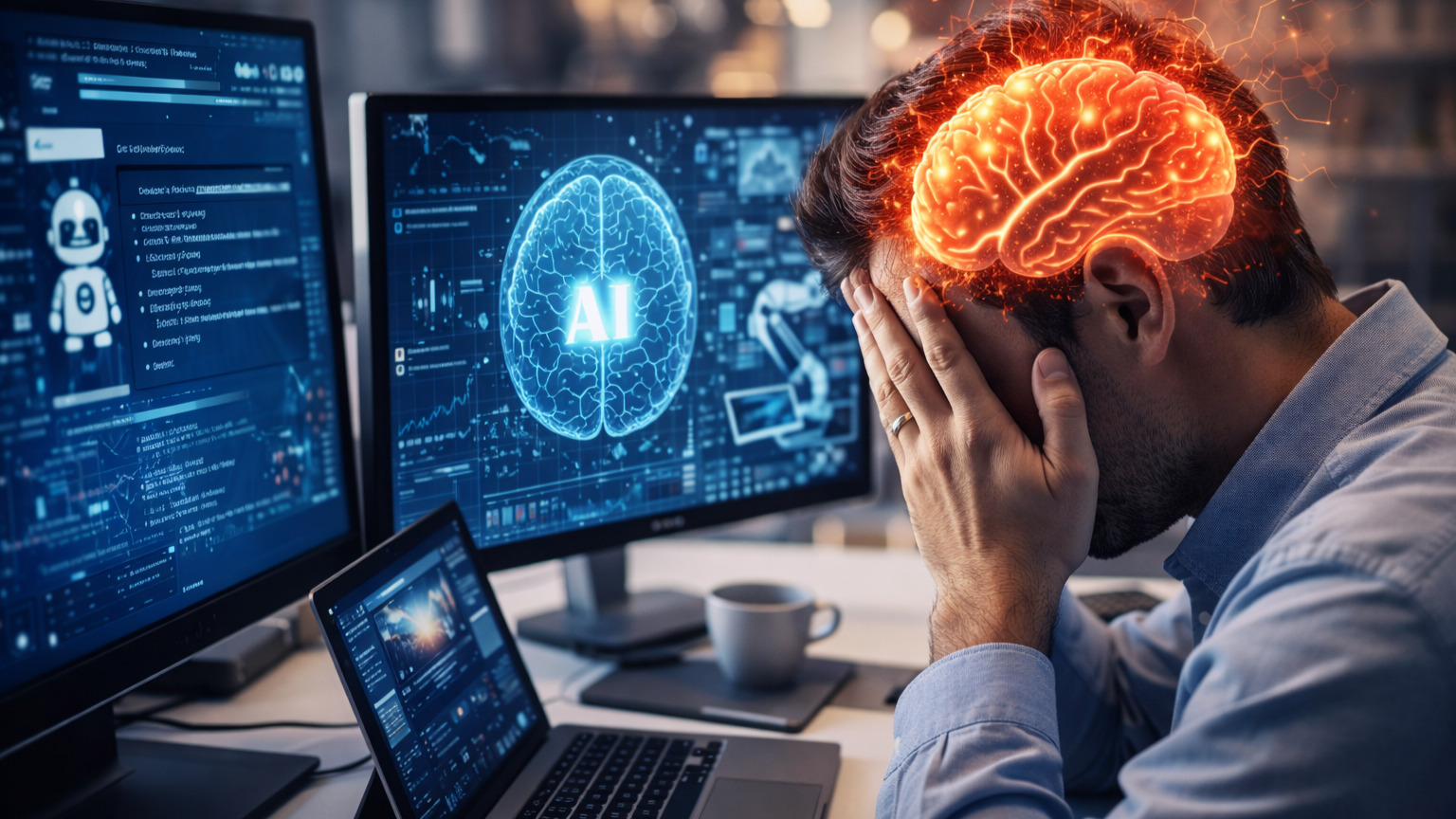
AI brain fry is defined as a form of mental fatigue caused by excessive use of, interaction with, or oversight of AI tools beyond a person’s cognitive capacity. The condition occurs when workers must repeatedly monitor AI outputs, process large amounts of information, and switch between multiple AI systems.
Employees who experience AI brain fry often report symptoms such as mental fog, headaches, difficulty concentrating, slower thinking, and problems making decisions. Some workers describe the experience as feeling like their minds are overloaded with information or filled with too many tasks at once. Researchers emphasize that AI brain fry is mainly caused by cognitive overload, which occurs when the brain must process more information than it can effectively handle.
The Research Study
The research behind the concept of AI brain fry was conducted by Boston Consulting Group (BCG) in collaboration with researchers from the University of California, Riverside. The findings were published in Harvard Business Review on March 5, 2026.
The researchers conducted a survey involving 1,488 full-time workers in the United States who regularly use AI tools at work. The participants came from different industries and professional roles, allowing researchers to examine how AI affects employees across various sectors.
The results of the study showed that about 14 percent of workers reported experiencing AI brain fry, meaning they felt significant mental fatigue related to their interaction with AI systems. Although this percentage may seem relatively small, researchers consider it an important early warning sign because the use of AI in workplaces is expanding rapidly.
Causes of AI Brain Fry
Managing Multiple AI Tools
One major cause of AI brain fry is the need to manage multiple AI tools at the same time. Many employees now use several AI systems simultaneously, such as one tool to generate written content, another to summarize documents, and another to analyze data. Constantly switching between these tools requires continuous attention and mental effort, which can create information overload.
Supervising AI Outputs
Another important factor contributing to brain fry is the need for human supervision of AI systems. Although AI tools are powerful, they can sometimes produce incorrect or incomplete information. Workers, therefore, need to review and verify AI-generated outputs before using them in their work.
The study found that workers who frequently supervise AI outputs report significantly higher levels of mental effort and cognitive strain compared with those who rely less heavily on AI oversight.
Faster Work Pace
AI tools allow employees to complete tasks faster and produce more outputs in less time. However, this increased speed can also create higher expectations for productivity. Workers may feel pressure to handle more tasks simultaneously, which can increase cognitive stress and contribute to mental fatigue.
Jobs Most Affected by AI Brain Fry
The research also found that the level of AI brain fry varies across professions. Jobs that require frequent interaction with AI tools tend to show higher rates of cognitive fatigue.
According to the study, marketing professionals reported the highest rate of AI brain fry at about 26 percent. Workers in human resources reported around 19 percent, while employees in operations, engineering, and technical roles reported around 17 to 18 percent.
In comparison, about 5 percent of legal professionals reported experiencing AI brain fry. These findings suggest that the frequency and intensity of AI usage play an important role in determining how likely workers are to experience mental fatigue.
Effects on Workers and Organizations
AI brain fry can affect both employees and organizations in several ways. The study found that workers experiencing AI brain fry show 33 percent higher levels of decision fatigue compared with workers who do not experience the condition. Decision fatigue occurs when people become mentally exhausted from making too many decisions.
The research also found that employees experiencing brain fry are 11 percent more likely to make minor errors and about 39 percent more likely to make major errors in their work. In addition, workers who experience AI brain fry are more likely to consider leaving their jobs, which could increase employee turnover in organizations.
These effects suggest that cognitive overload from AI tools may reduce productivity, increase mistakes, and create additional costs for businesses.
AI Brain Fry and Burnout
Researchers explain that AI brain fry is different from traditional workplace burnout. Burnout usually develops after long periods of emotional stress and leads to feelings of exhaustion, frustration, and disengagement from work.
AI brain fry, however, is mainly caused by cognitive overload from managing AI tools and processing large amounts of information. Because it is related to mental processing rather than emotional stress, the condition may not appear in standard burnout surveys.
Understanding this difference is important because organizations may overlook cognitive fatigue if they only measure emotional burnout.

When AI Can Reduce Burnout
Although the study highlights the risks associated with excessive AI use, it also shows that AI can have positive effects when used appropriately. When AI tools are used mainly to automate repetitive tasks, employees report lower levels of burnout and improved engagement at work.
The research found that workers who used AI primarily to reduce routine work reported about 15 percent lower burnout levels compared with workers who did not use AI in this way. This finding suggests that the problem is not the presence of AI itself but rather how organizations implement it.
Recommendations for Organizations
Researchers recommend that organizations design workflows carefully when introducing AI technologies. Companies should ensure that AI tools reduce repetitive work rather than creating additional tasks for employees. Managers should also avoid requiring workers to manage too many AI systems at the same time.
Another important recommendation is to recognize that human attention and cognitive capacity are limited resources. AI systems should support human work rather than overwhelm workers with excessive information and supervision responsibilities.