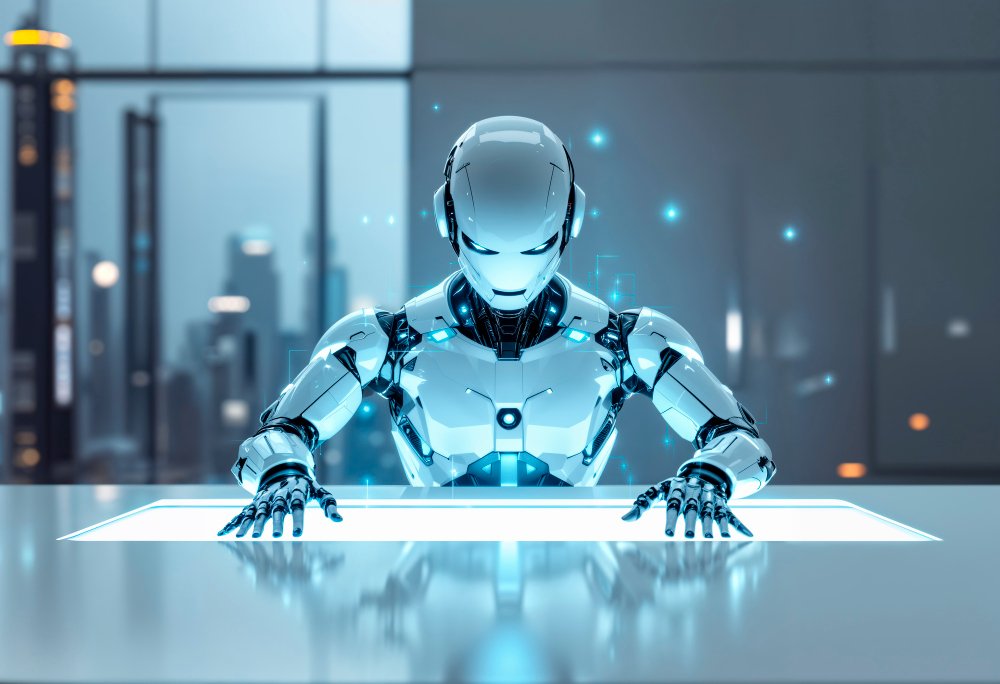
The rise of Artificial Intelligence is undoubtedly reshaping the global job landscape and perhaps no generation has undergone through what the present “Gen-Z” generation is going through. It is true that AI is taking control over many entry-level tasks, but it's also opening doors for new opportunities to come up for the young generation as well. The key to grab a job in this competitive market is about studying effective courses to thrive in an AI-powered future.
Entry-Level Jobs And AI
Traditionally, entry-level jobs have involved repetitive or administrative tasks. The areas where AI and automation are making significant impact:
Data Entry And Basic Administration: AI can effectively process and well-organize the large datasets, handle scheduling and manage basic customer inquiries, resulting in the reduction of the need for manual data entry roles.
Customer-Handling: Various advanced chatbots and AI-powered virtual assistants are increasingly handling initial customer interactions, opening doors for humans to engage themselves in more complex issues.
Basic Level Of Content Creation: AI tools can generate simple reports, social media captions or even generate basic articles. As a result, it creates impact on roles that primarily focuses on routine content-generation.
Retail And Logistics: Automation in warehouses and AI-driven inventory management systems are streamlining operations, affecting some of the entry level positions in these sectors.
Nevertheless, it is always crucial to remember that “impact,” does not always “eliminate.” Many-a-time, AI acts as a co-pilot, enhancing human capacities rather than replacing them entirely.
The Struggle For Job-Hunting

Despite having the potential to secure a job, many Gen-Z graduates are still finding it tougher than expected. The competitive landscape, combined with evolving skill demands, creates significant hurdles.
“I graduated with a degree in marketing from a prestigious university, excited to start as a social media assistant or content creator,” shares Maya, 22, from Oregon. “Every entry level job that I come across, expects you to be proficient in AI content tools. I also know how to write compelling copy, but suddenly, I also need to be a ‘prompt engineer’ for ChatGPT, and they want examples of AI-generated content I have edited.
Liam, 23, a recent business administration graduate in Texas, sounds something similar regarding the roles of the administrative department. “I applied for an office assistant position, thinking my organizational skills would be perfect. During an interview, they extensively discussed their new AI scheduling and data management system. It felt like they were expecting the candidates to do something more than what an AI can do.”
Given the experiences of Gen-Z students regarding the job-market, it can be concluded that a clear path into an industry now requires a new layer of technical fluency.
Emerging Of New Opportunities
The good news for the Gen-Z generation is that AI isn't just taking away; it is also paying back by creating new job-roles and a growing demand for evolving skill sets.
The Dawn Of Prompt Engineers:
As AI tools become more sophisticated in mechanism, there is a growing need of people who are qualified as well as capable enough to communicate with them, commonly referred to as “prompt engineers.” These professionals can put specific prompt to the AI to generate desired outputs, becoming a valuable skill.
AI Trainers And Annotators
AI models learn from data. Entry-level roles often involve training these models by labeling images, categorising text or evaluating AI outputs to improve their level of accuracy and performance.
Ethical AI And AI Governance Roles
As AI is well integrated into society and it is being used almost everywhere; the requirement for ethical guidelines, bias detection and responsible AI development is paramount. Gen-Z, along with its strong social consciousness is well-positioned to contribute widely to these critical areas.
Interpreter And Storytellers
It is acknowledged that AI is capable enough to process huge amounts of data available, but human professionals are still required and they are important to interpret what that processed data means, identifying trends and translating insights into actionable strategies. Roles focusing on data-visualization, business intelligence and communicating through complex findings will remain always vital.

Human-Centric Roles Enhanced By AI
Roles that require human emotions such as empathy, creativity, critical thinking and complex problem-solving are less susceptible to full automation. AI can still assist these tasks by automating mindset tasks, which has positively impacted humans to focus on activities which have higher value. These positions include healthcare professionals using AI for diagnostics, or marketing specialists, who are applying AI to gain organic traffic.
Skills Required By Gen-Z
To navigate effectively through this landscape, Gen-Z should drive their entire focus on developing a skill that is a mixture of both technical and human skills.
Digital Fluency And AI Literacy: Having an understanding as well as knowledge towards how AI works, its capabilities and its limitations is no longer optional. A candidate having familiarity towards AI tools and its platforms, can make them stand out from other candidates.
Critical Thinking And Problem Solving: When AI is handling routine tasks, humans will be increasingly responsible for tackling complex, unstructured problems that needs creative solutions.

Adaptability And Lifelong Learning: The pace of technological change is accelerating. The present generation must equip themselves with a mindset that will encourage continuous learning and be prepared to reskill and upskill throughout their careers.
Creativity And Innovation: AI can generate any desired outputs but it lacks true innovation. Only a human can bring out new imaginations and the ability to connect well with different ideas.
Emotional Intelligence And Collaboration: Human centric skills such as empathy, effective communication and teamwork will be essential for collaborating with both human colleagues and AI tools.
Data Literacy: If an individual develops the ability to understand, interpret as well as work with any data given, he/she will be able to secure a job that requires data literacy.
Embracing The Future
For Gen-Z, the AI revolution isn't a threat to be feared, but a transformation to be embraced. By understanding the shifts that have taken place in the job-market due to the dominance of AI, the present generation can also shape the future of work itself. The key is to see AI not as a competitor but as a powerful tool to increase human potential and also unlock new opportunities that AI cannot handle.