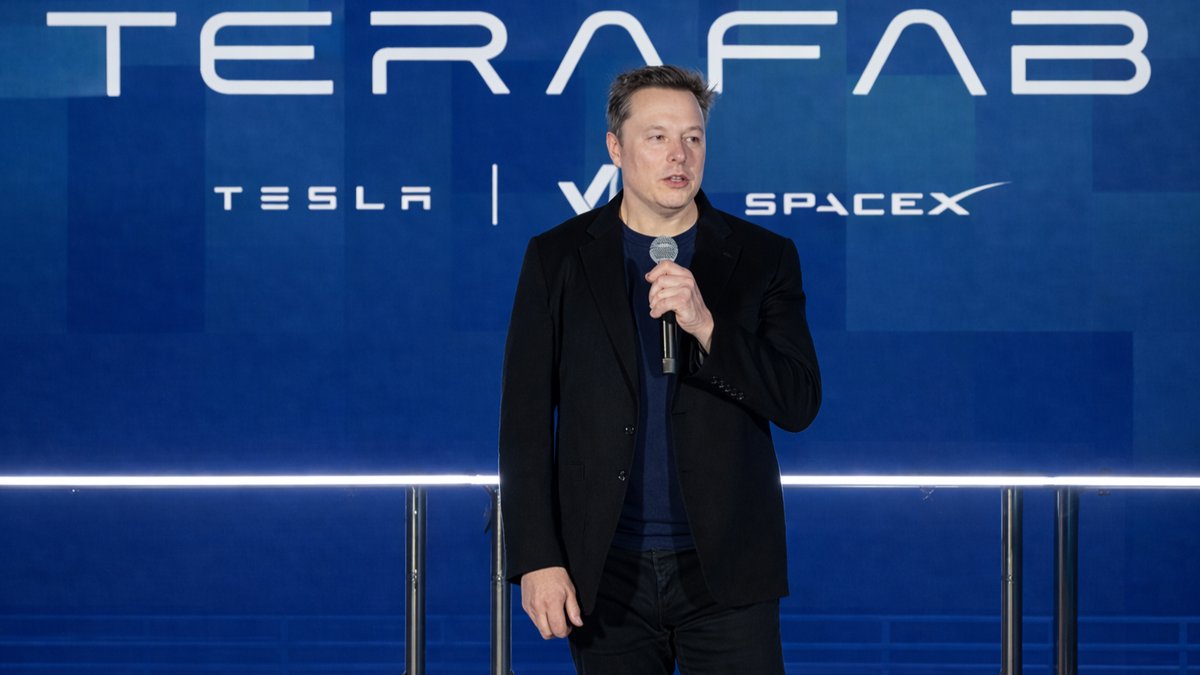
Elon Musk has revealed new details about Terafab, an ambitious semiconductor manufacturing project being developed by his companies, Tesla, SpaceX, and the artificial intelligence company xAI. Musk presented the project during an event in Austin, Texas, and described it as one of the most ambitious chip-building efforts ever attempted. The goal of Terafab is to significantly increase computing power for artificial intelligence systems. Musk said the project aims to produce more than one terawatt of computing capacity each year, which equals one trillion watts of computing power. According to Musk, the demand for chips used in artificial intelligence, robotics, autonomous vehicles, and space technologies is growing rapidly, and current semiconductor manufacturers may not be able to produce enough chips to meet this demand.
Also Read: The Untold Story Of Elon Musk’s Greatest Gamble Before Rising!
Terafab Will Combine the Entire Chip-Making Process in One Facility
One of the key features of Terafab is that it will be a fully integrated semiconductor manufacturing facility. The project aims to bring the entire chip-production process together in one location, including chip design, manufacturing, testing, revisions, memory production, and packaging. In today’s semiconductor industry, these processes usually take place at different companies and factories around the world. Musk said Terafab will allow engineers to design a chip, test it, improve it, and quickly produce new versions without sending components to other facilities. This approach could speed up chip development and increase production capacity. The first prototype fabrication facility is expected to be built near Tesla’s Gigafactory in Austin, Texas, where engineers will experiment with new chip designs before expanding to larger factories.
The Factory Will Produce Two Different Types of Chips
Musk explained that Terafab will initially produce two main types of chips. The first type will be used for Tesla technologies on Earth, including self-driving vehicles, robotaxis, and Tesla’s Optimus humanoid robots. These technologies require powerful processors that can analyze large amounts of data and run advanced artificial intelligence software. The second type of chip will be called D3, and it will be designed specifically for space environments. These chips will power artificial intelligence systems operating on satellites and other space infrastructure. Because conditions in space can be extremely harsh, the chips will be designed to withstand radiation, extreme temperatures, and other challenges.
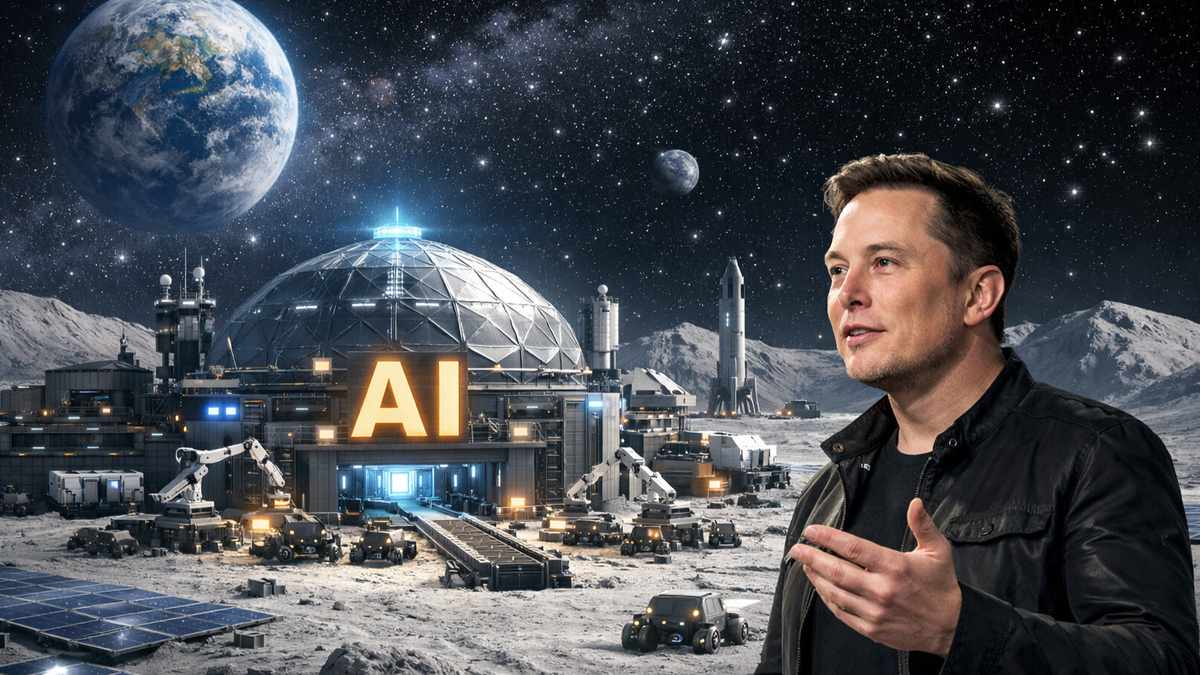
Also Read: Elon Musk Proposes Building an AI Factory on the Moon
Musk Plans to Build Solar-Powered AI Satellites
Another important part of Musk’s plan involves building AI computing systems in space. He introduced the idea of satellites equipped with powerful AI chips that could operate as data centers while orbiting Earth. These satellites would be powered by solar panels that generate electricity from sunlight. During the presentation, Musk showed a concept for a mini AI satellite capable of generating about 100 kilowatts of power using solar energy. In the future, he said these satellites could scale up to produce megawatts of power, allowing them to run much larger artificial intelligence systems. Musk suggested that AI computing in space could eventually become cheaper than operating large data centers on Earth because satellites can receive constant solar energy and avoid some of the cooling challenges faced by ground-based facilities.
The Long-Term Goal Is Terawatt-Scale Computing
The main goal of the Terafab project is to create a massive amount of computing power for artificial intelligence. Musk said the facility could eventually generate around one terawatt of computing capacity every year, which would be far greater than the computing power currently available. This computing power would support technologies such as large artificial intelligence models, autonomous vehicles, and billions of humanoid robots in the future. Musk also discussed more ambitious ideas for the long term. He suggested that artificial intelligence computing systems could expand into space, and extremely large computing systems might even be built on the Moon. Musk believes that such developments could help support long-term space exploration and move humanity closer to becoming a space-faring civilization.
Comments (0)
Log in to share your thoughts
No comments yet
Be the first to share your thoughts!