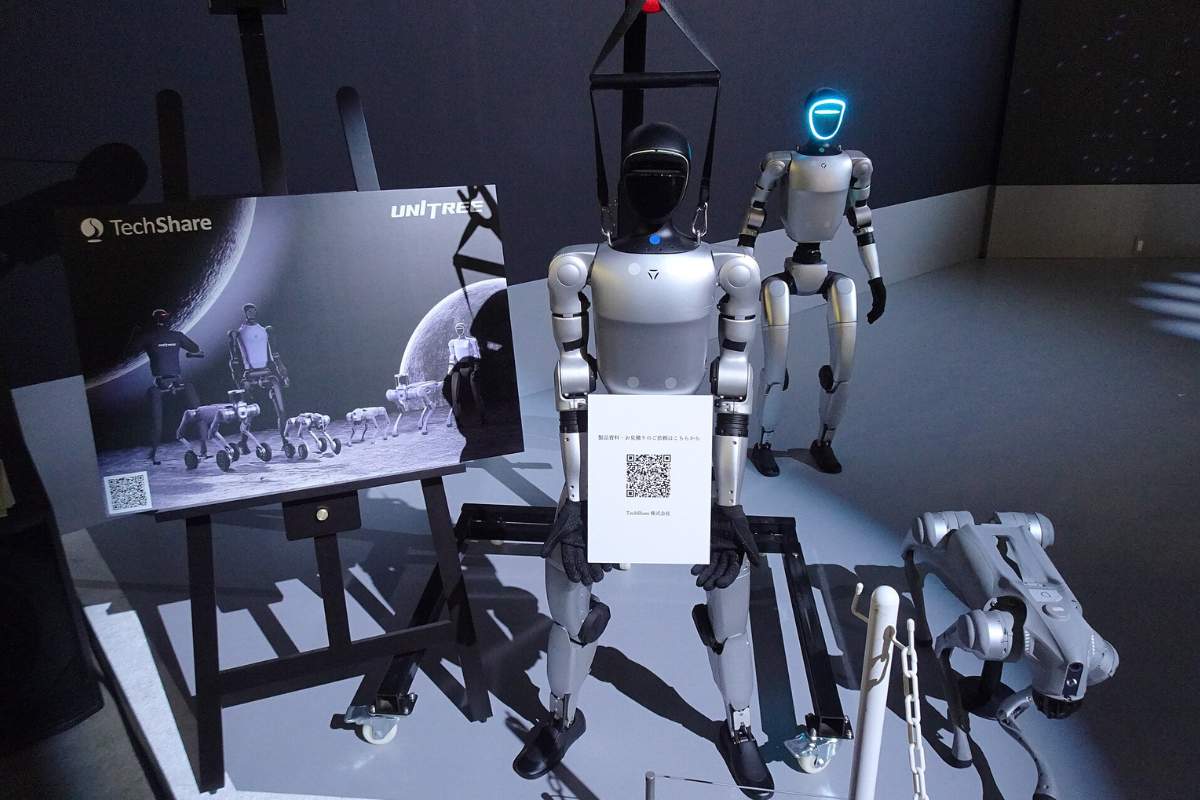
There is no middle ground in a world that is constantly changing; you must either adopt the newest technology or become outdated. The field of robotics is quickly changing from specialized, single-task machines to adaptable, all-purpose humanoids. Humanoids can now be used anywhere, from a tennis court to a surgical site, and you won't only see them in factories or warehouses. They are now vital partners rather than experimental prototypes.
High-torque actuators drive this evolution by enabling "Human-in-the-Loop" compatibility. These machines are made to operate within existing infrastructure without the cost of retrofitting. That's why they are ideal for industries facing labor shortages. Whether it is a barista perfecting a latte or a researcher testing lunar construction, the humanoid form factor is proving to be the most adaptable solution for complex, multi-functional tasks in our modern world.
Also read || From Pilot to Production: The 5 Industries Leading the 2028 Physical AI Wave!
High-Performance Sports Training
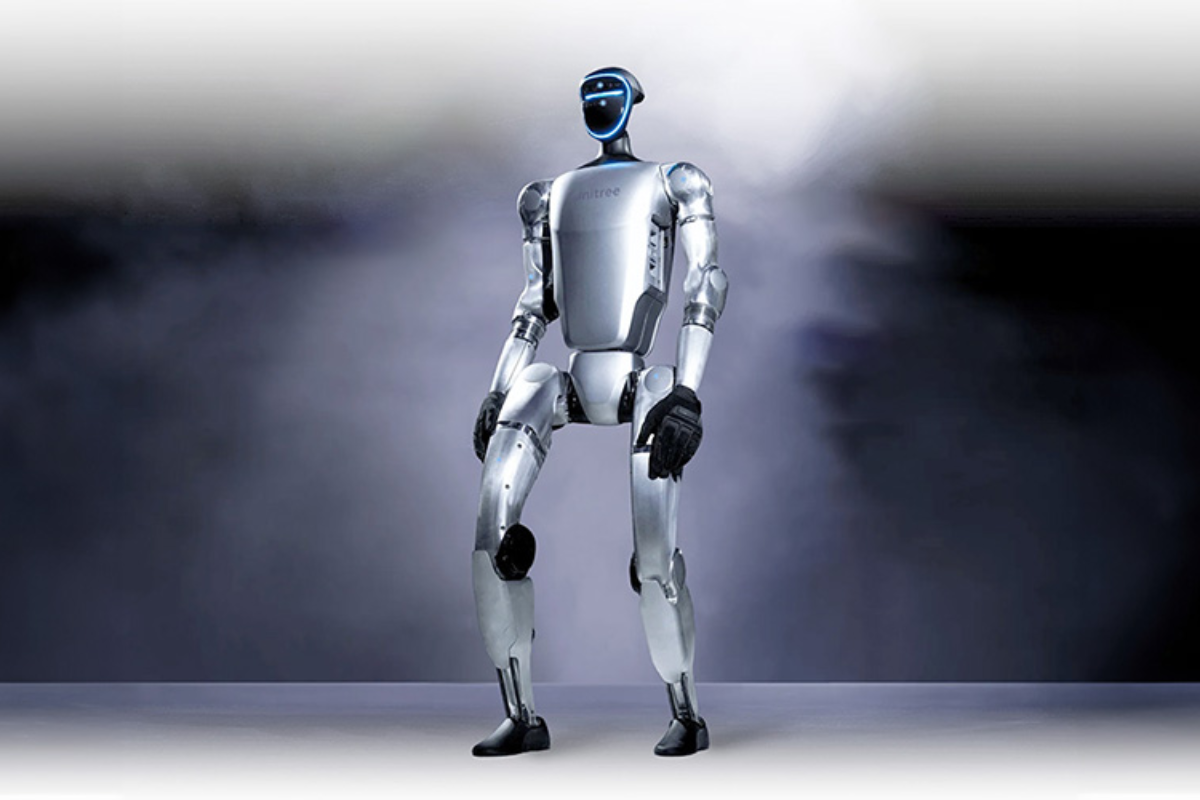
China is considered to be ahead in the industrialization and deployment of humanoid robots. In March 2026, Galbot Robotics, Peking University, and Tsinghua University collaborated to reveal the LATENT system, which trained Unitree G1 humanoids on brief human movements, such as steps and forehands, on a 3 x 5 m court. As a result, humanoids achieved 96% simulated forehand success and 90.9% real-world forehand return rate in rallies with humans at incoming speeds up to 30 m/s.
First, let us understand what LATENT is. LATENT is a recently developed framework for learning athletic humanoid tennis skills from Imperfect Human Motion Data. The goal of this framework is to bridge the sim-to-reality gap. Rather than relying on perfect motion, it learns athletic humanoid tennis skills from fragmented human data. The Unitree G1 customized by Galbot is available globally and costs under $20,000, unless you are using it for advanced research.
Hospitality and Interactive Service
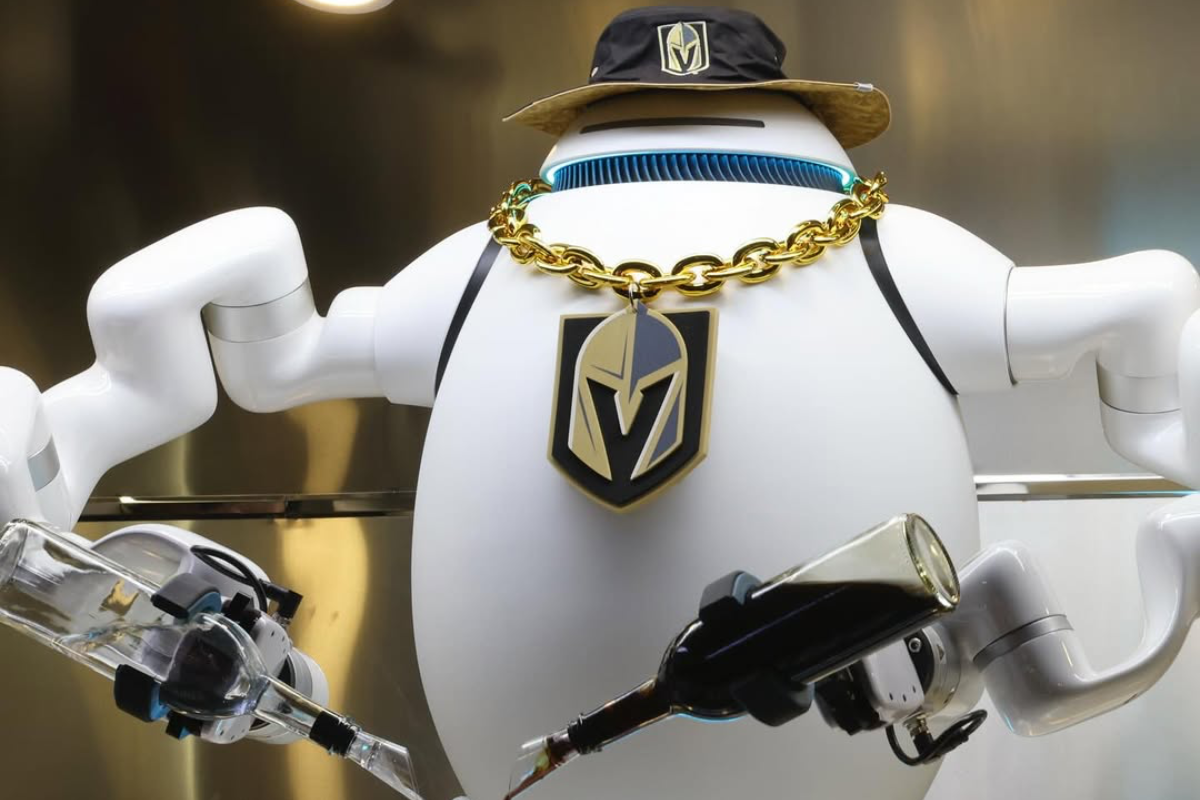
Imagine going to a Las Vegas retail cafe for a coffee, and a robot stands across the counter. Well, that can be the future of the hospitality industry. The market for robot baristas has grown from $1.86B in 2025 to $2.18B in 2026, representing a 16.8% CAGR. This growth was driven by Richtech's ADAM, a dual-armed robot that used NVIDIA AI to mimic artisanal coffee pours, achieving 98% customer satisfaction. In Las Vegas, these robots have reduced wait times by 40%.
On the other hand, UBTECH's Walker S2 offers high-end automation to boutique settings through a "Robotics as a Service" model, where businesses can rent 2-meter-tall, multilingual robots for around $5,000 a month to handle everything from industrial tasks to guest check-ins. Another robot is Zerith H1, a wheeled humanoid designed for scrubbing toilets and mopping slippery floors, effectively reducing the need for manual cleaning staff by 25%. Together, these technologies are reshaping how the hospitality and interactive industries operate.
Also read || Britannica Hits OpenAI with Copyright Suit
Precision Healthcare and Rehabilitation
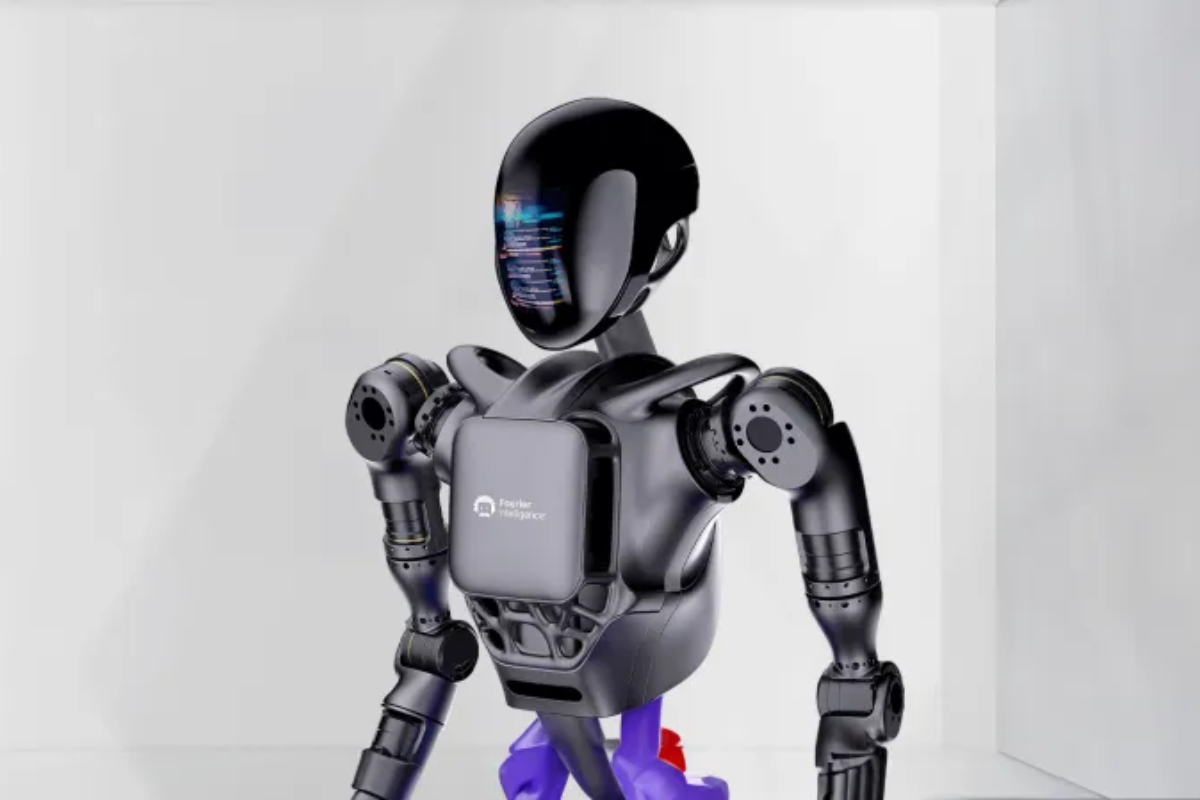
Beyond hospitality, humanoids are also revolutionizing hospitals. Whether it is healthcare, rehabilitation, or high-precision laboratory work, humanoids can fit in anywhere. An example is Fourier Intelligence's GR-1, a bipedal robot designed for rehabilitation, featuring up to 40 degrees of freedom to help stroke and gait-recovery patients regain mobility. Accounting for high-torque resistance and logging movement data creates a personalized AI therapy regimen to reduce recovery times.
Moving forward towards high-stakes science, we have the Maholo robot, which is transforming how life-saving medicines are made. Maholo has dual arms to handle standard laboratory tools, including pipettes, with an astonishing 99.5% accuracy. It allows companies like Astellas to scale up the production of advanced cancer treatments (CAR-T) without redesigning their existing labs. A joint venture between Yaskawa and the Robotic Biology Institute developed it.
Advanced Research and Space Exploration
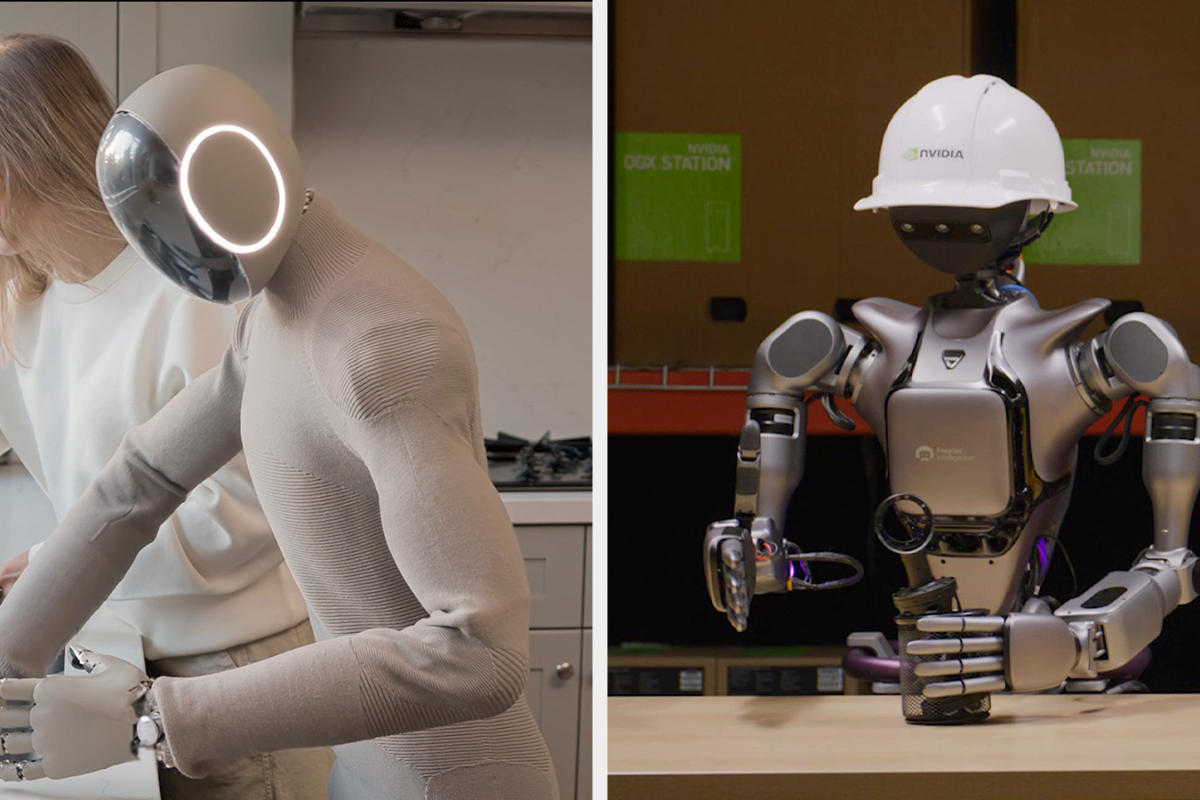
In early 2026, NVIDIA launched Isaac GR00T N1.6 to revolutionize robot training by slashing development times from months to days. The system reported achieving a 95% success rate when moving from digital simulations to real-world tasks such as laundry folding or disaster response. Apart from that, 1X's NEO humanoid begins global home pilots in 2026, using vision-language models to learn and navigate messy, unscripted household environments.
The Beijing Institute recently unveiled a specialized wheeled humanoid designed for the Moon's surface. Featuring a 180-degree rotating waist and radiation-hardened parts, it is built for a ten-year mission at the lunar base by 2035. While NEO focuses on achieving 70% autonomy in kitchens through constant software updates, these lunar robots prioritize stability and strength to manipulate moon soil in one of the universe's harshest climates.
Also read || SpaceX Boosts Starlink Network to New Records
Broader Implications and Future Outlook
The humanoid market, valued at $4-5B, is growing rapidly, with tens of thousands of units shipped in 2026. With updated ISO safety standards and lower costs, these humanoids are ready for Small and Medium Enterprises. If they have better adoption and longer battery lives, it might lead to increased productivity despite all the job-displacement debates.
Comments (0)
Log in to share your thoughts
No comments yet
Be the first to share your thoughts!