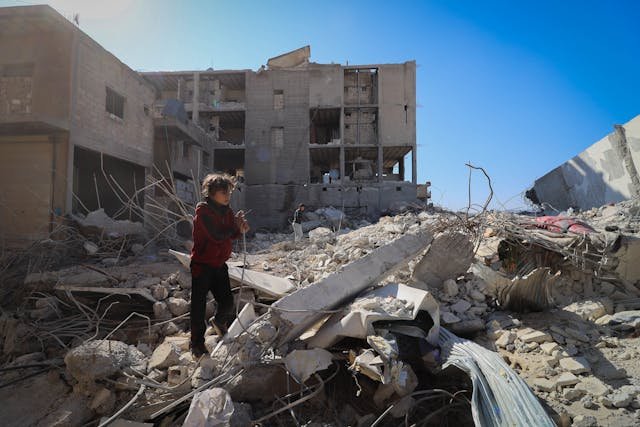
Every year, we're getting closer to a world apocalypse. We don't know whether it is true, but the media never stops scaring everyone. Many countries are still facing the repercussions of World War II, and it's no joke.
"Will there be a world war in 2026?"
It's a serious question that deserves calm, clear answers, not fears or rumors. International experts worldwide are studying global politics, watching conflicts, alliances, and tensions. Although nobody can forecast whether a full-scale world war will happen, global conflict risks remain real and vital to understand.
Here, we will break down what World War means today, what experts suggest, and where tensions actually exist in the world — all in simple, clear language backed by facts and expert studies.
Also read || The World Is Getting Older: What an Aging Population Means for the Future
What World War Really Means Today
A world war does not mean that all 195 countries are fighting each other mercilessly, nor is it just a big fight between two nations. It simply means that many powerful countries are fighting major battles on several continents.
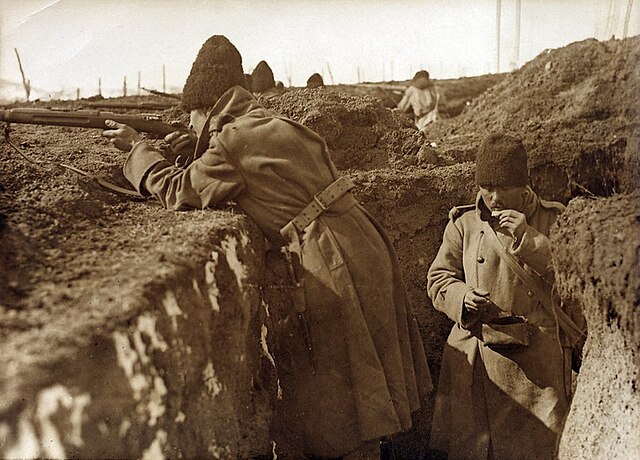
For example, World War I involved two main alliances, the Central Powers and the Allied Powers. Germany, Austria-Hungary, the Ottoman Empire, and Bulgaria were part of the Central Powers. On the other side were France, Britain, Russia, Italy, Japan, Serbia, Belgium, Romania, and the British dominions such as India, Australia, Canada, and New Zealand. The war started after a Serbian Nationalist killed Archduke Franz Ferdinand of Austria-Hungary, and expanded globally in over 30 nations. Most of the battles occurred on the Western and Eastern Fronts, in the Middle Eastern, and in other regions.
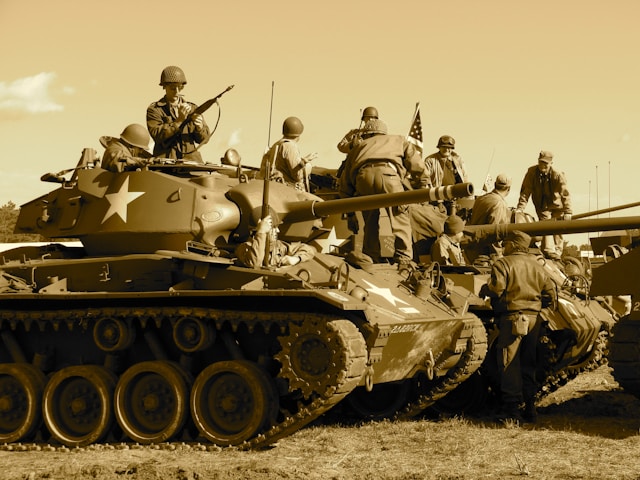
Similarly, World War II started when Nazi Germany invaded Poland, and you know the history. There were two key alliances, the Axis Powers and the Allies. Germany, Italy, Japan, Hungary, and Romania were on the side of the Axis, while the United Kingdom, the United States, the Soviet Union, and China were on the side of France and the Commonwealth nations. The six-year conflict affected almost every country, with major battles fought across Europe, Asia, Africa, and the Pacific.
Undoubtedly, we have ongoing wars and tensions worldwide. None of the situations involves major powers fighting directly on multiple fronts or continents simultaneously. We can't talk about proxy wars, but there's no real international conflict. Most of these are regional - limited to specific areas or fought indirectly through weapons, support, or diplomacy.
Also read || India Set To Add Three (3) New Airlines to Its Skies!
What Experts Say About War Risk in 2026
Experts do not form opinions based on emotions. They use data and surveys to estimate risks of major wars. An extensive study by the Atlantic Council found that up to 28% of global experts believe a world war could happen by 2035 — but this is about the next decade, not specifically 2026 [Atlantic Council]. Some even say it depends on how tensions rise by then.
The study suggests that even though experts anticipate some risk of global conflict in the next 10 years, 2026 is unlikely to be the only year. A world war would require powerful nations to fight directly, which might not be impossible, but is far from guaranteed. Besides, the bigger question would be: Can the world afford World War 3? There is already a multifaceted aftermath of the COVID-19 pandemic across health, economic, and social domains.
Ongoing Conflicts and Why They Matter
The world is entering a different phase, marked by conflicts across Eurasia, the Middle East, East Asia, and Africa.
Russia & Ukraine War
When Russia conducted a full-scale invasion of Ukraine in February 2022, it gave people flashbacks of World War 2. However, it continues until 2026, with ongoing battles in eastern and southern Ukraine. Ukraine is backed by Western military and is receiving financial aid to fight and reclaim its territory. At the same time, Russia aims to hold the captured regions. The conflict has caused significant casualties, displacements, and sustained sanctions on Moscow.
Sudan Civil War
Since April 2023, there has been a brutal civil war going on between the Sudanese Armed Forces and the Rapid Support Forces, which has killed over 20,000 people in the last few years, according to the European Union Agency for Asylum (EUAA). This conflict has destroyed infrastructure, caused widespread famine, and forced millions of people out of their homes. Prolonged instability in the country might risk terrorism, arms trafficking, and food insecurity, which can cause havoc for the world.
Middle Eastern Wars (Israel–Gaza, Iran, Yemen)
The Middle East has been unstable for many decades, whether it was the Iraqi invasion of Kuwait in the 1990s, the deployment of US forces in the region, the Syrian civil war, the formation of ISIS, and so on. The area was never peaceful. Since 2023, there has been a brutal war between Israel and Gaza, which has killed many innocent civilians.
The official data suggests that over 45,000 Palestinians were killed [UN OCHA], over 171,000 were wounded, including around 18,000–20,000 children. As a result, over 1,600 Israeli civilians and soldiers died, while thousands more were injured. The regional tensions persist among Israel, Lebanon, and Iran. The Saudi-backed government in Yemen is also fighting against Houthi rebels, affecting the Red Sea security and global oil routes.
Also read || From Da Vinci to Rembrandt: Famous Museum Heists Through History
United States & Venezuela Tensions
In January 2026, the United States of America launched a military operation in Venezuela, capturing President Nicolás Maduro. The US has brought him to New York on drug-related charges, heightening tensions across the Americas. The US has halted Venezuelan oil shipments due to sanctions, prompting regional and global criticism. Countries are now concerned about sovereignty, legality, and the risk of escalation with major international powers such as Russia and China.
East Asia Crisis
East Asia might be overlooked because of a handful of countries, including China, Taiwan, Japan, South Korea, North Korea, and Mongolia. The region risks a world war because it involves two major powers with global military reach. Any conflict over Taiwan would directly involve China against the United States, and potentially Japan & the NATO (North Atlantic Treaty Organization) allies through security commitments.
Even without a war, the region's long-lasting instability would have global repercussions through critical trade routes, the semiconductor supply chain, and energy flows. The last thing affecting East Asia would be rising military spending and getting into a dirty arms race. Any clash on the Korean Peninsula could quickly expand due to alliance obligations. Every conflict will affect global markets (especially energy), international law, and major-power relations.
Why is a full-blown World War unlikely in 2026?
Too much nuclear
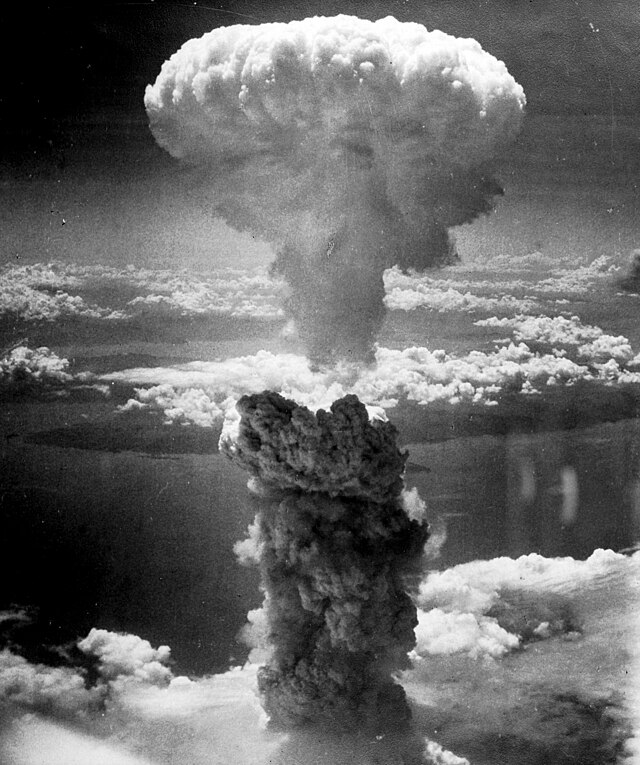
Nuclear deterrence can be a significant reason why a full-blown war is doubtful, or, one might say, it would be stupid to get into one. Many big countries have nuclear weapons, such as Russia, the United States, China, France, the United Kingdom, India, Pakistan, and North Korea. Every state believes that a nuclear exchange would be destructive. Thus, they avoid direct conflict, which we call atomic/nuclear deterrence. So, even if there are tensions, chances are low that any of them plans a nuclear attack, or at least that's what we pray.
Presence of global institutions
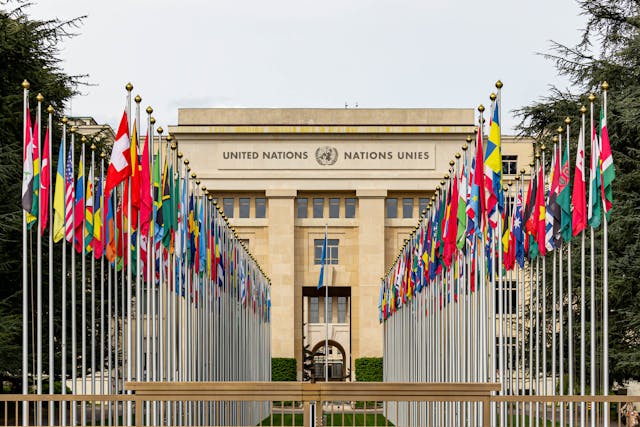
Organizations such as the United Nations may have received heavy criticism for their failure in Ukraine & Middle Eastern conflicts, but they do sometimes work. There are active peace talks and diplomatic channels that continue to work and prevent misunderstandings from escalating into full-scale wars. For instance, they de-escalated conflicts such as the civil wars in El Salvador (1992) and Guatemala, and the Iran-Iraq war. They prevented potential clashes by deploying peacekeeping forces.
Can you actually predict World War?
Anything that involves humans is unpredictable. Did anyone ever predict that Russia would invade Ukraine, or that the United States would arrest the President of Venezuela? Nothing is impossible in this highly dynamic world. Experts believe that there can be some risks of increased conflict if tensions grow between Taiwan and China, Russia and NATO, Middle East military actions, and cyberwarfare [CFR]. Anything can be a serious concern, and we have seen the domino effect in the last two world wars.