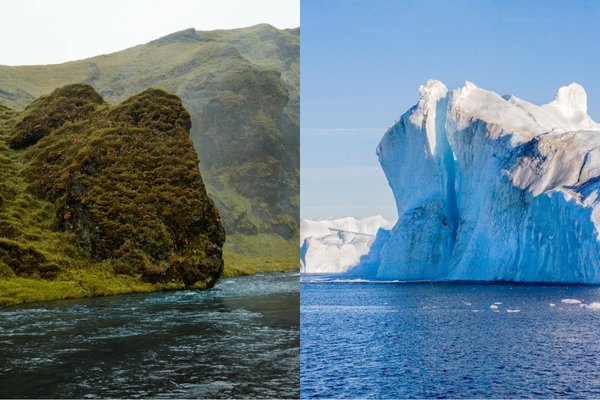
One of the two places in the pictures above is Greenland, and the other one is Iceland. Funnily enough, Iceland is the green one, and Greenland is the icy one. Renowned as the largest island, Greenland is home to Earth's largest ice sheet, mesmerizing Arctic landscapes, glaciers, and a unique Inuit culture.
Greenland is an autonomous Danish territory and is part of the Kingdom of Denmark. It means that despite being self-governed, Denmark has control over its defense and foreign affairs. In the past few years, the US has a significant military presence there and has attempted to buy it from Denmark.
Keeping politics aside, this territory has a lot to offer, from abundant mineral wealth to massive icebergs, hot springs, fjords, whales, polar bears, and more. Most importantly, you can take your wild arctic adventure to the next level by experiencing the Northern Lights from the best vantage point.
Also read || Why Traveling to the U.S. Feels Harder in 2026 — And What Politics Has to Do With It
Why is Greenland named Greenland?
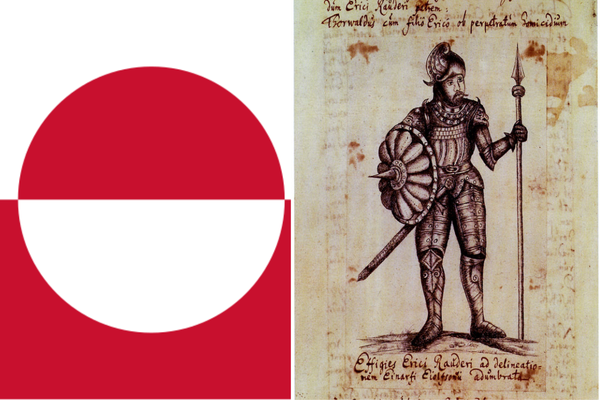
The question in itself might look absurd. But it requires a clear answer, rather than saying "It is what it is!" It is believed that in 982 AD, Erik Thorvaldsson, also known as Erik the Red, was exiled from Iceland for manslaughter. He sailed westward and found fjord grass in a rare warm summer.
He called this place Grønland to attract other Norse settlers, also known as Vikings. By 985, they arrived and farmed the southern coasts with sheep and cattle on the 15% of the land that was ice-free. It was Erik's smart word of mouth that attracted people to this icy plate. Since Iceland was overcrowded, Greenland became another home to Vikings.
Why did Greenland stay autonomous?
Before being autonomous, Greenland was a Danish-Norwegian colony from 1721. Decolonization was gradual, and by 1953, a new Danish constitution made it an equal member state. Greenlandic Inuit (85%+ of the population) demanded self-determination, especially after Denmark joined the EEC in 1972—they rejected it in a 1982 referendum and left in 1985.
The 1979 Home Rule Act granted self-governance over domestic affairs, such as education/health. Inuit prioritize self-determination over complete independence, so Denmark handles defense/foreign policy. In 2009, the Self-Government Act added police control and resources. In simpler words, Greenland is to Denmark what Puerto Rico is to the United States.
Also read || 8 Tips for How To Sleep Comfortably on a Plane
How can you travel to Greenland?
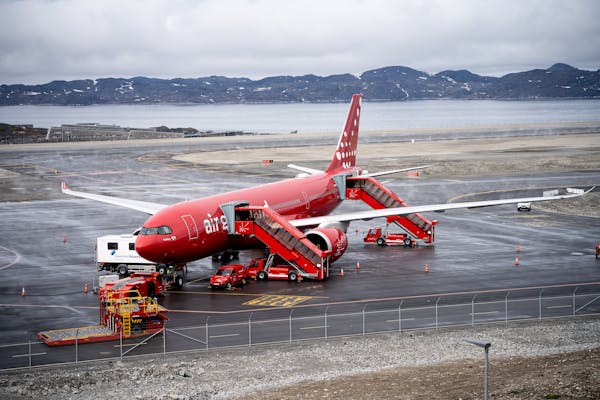
If you want to travel to icy Greenland, summer (June-August) is the best time to go. Americans and Canadians can travel to Greenland visa-free for 3 months (90 days). Although there are no direct flights from the US or Canada, you can fly Icelandair from New York (JFK) to Reykjavik, then connect to Kangerlussuaq (SFJ) airport. From there, Air Greenland offers short flights to Nuuk, Ilulissat, and other towns.
For one week of travel, you will need to spend USD 1,400 to 2,800, including flights, accommodation, and touring. Finding your favorite food can be challenging if you are a vegan or even have a preference for certain meats. You can have freshly caught seafood from markets, Musk Ox burgers, and reindeer steaks. Besides, some hostels serve boiled potatoes, rice, and pasta. The key would be to avoid raw meat unless it comes from trusted Inuit guides.
Also read || Is Albania The New ‘Amalfi?’ Mastering The Tour Of The Mediterranean On A Budget!
Greenland: Where Nature, History, and Autonomy Converge
Apart from its misleading name, Greenland has a rich convergence of Viking and Inuit history. If you want to see how modern self-governance coexists with Arctic nature, this is the right place to be. From beautiful fjords to colossal glaciers, and from evolving political identity to nature, resilience, strength, and adaptation, Greenland tells a story. Despite brutal weather, climate change, and transforming global geopolitics, Greenlanders are among the happiest people in the world.