The Evolution Of The Design Pilot
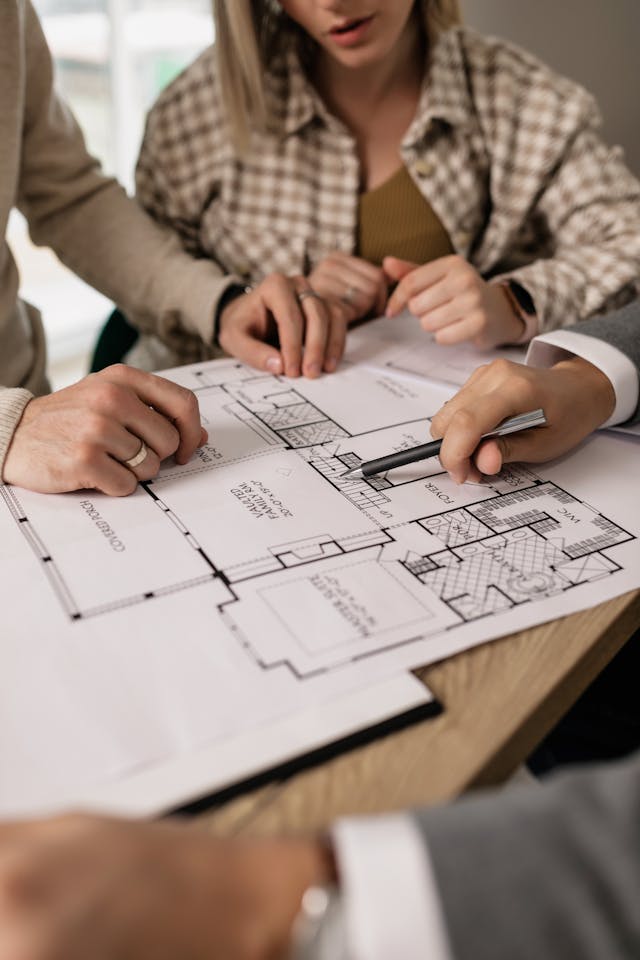
As we move through 2026, the architectural professional is moving far from simple ‘automation.’ We have already entered the age of ‘Augmented Intelligence,’ where a professional architect acts as a ‘Design Pilot.’ Instead of manually drawing every line, the modern architect sets the parameters that includes social, environmental and aesthetic elements in the designing and construction. This gives way to the AI agents to explore the vast ‘solution space,’ of potential forms. This partnership with AI allows for a level of complexity and performance that a single human mind could never calculate alone, yet it remains anchored by human intuition.

Agentic Workflows And The Death Of The Linear Process
The traditional linear design processes that included concept, schematic and development, is now being replaced by “Agentic Workflows.” In these systems, specialized AI “agents” for zoning, sustainability and cost estimation work in a real time feedback loop. Whenever a human architects adjusts a wall in a 3D model, the sustainability agent immediately recalculated the embodied carbon, while the zoning agent flags potential code violations. This kind of “live” collaboration allows professional teams to compress months of work into a couple of hours, freeing up the time for the architect to focus on the poetry of the space rather than the paperwork.

Far From Efficiency: The Search For Emotional Resonance
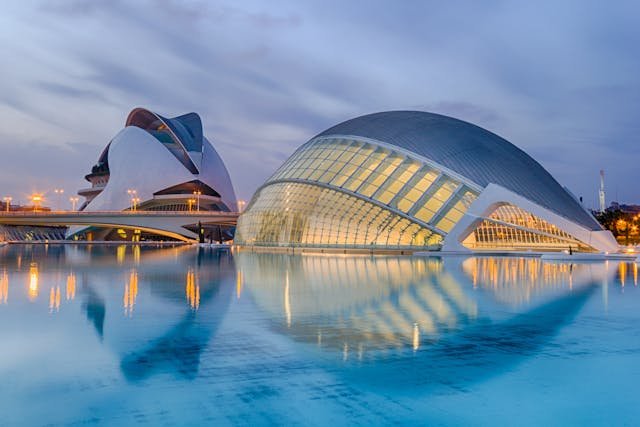
The most profound shifts seen in the starting of 2026 is the use of AI to quantify the unquantifiable. Through the integration of “Neuro-Architecture” data, co design platforms can now predict quite effectively that how a building's geometry will affect a user's heart rate or cortisol levels. On the other side, the human architects uses this medical data to cross verify and check the AI’s optimised outputs, intentionally introducing warmth, texture, or “beautiful imperfections” that a purely logical algorithm might often overlook. The result is a building that is technically flawless but feels purely like a human touch.

The New Authorship: Governance Over Production
Due to this emerging concept, the definition of ‘Architect,’ is changing from a ‘producer of drawings’ to a ‘governer of systems.’ The value of a designer or an architect in 2026 is greatly based on his/her ability to ask the correct questions and curate the best AI generated solutions. This shift does not diminish the architect’s importance; rather, it elevates it. By giving the heavy load of mechanical and computational matters, the human architects returns to their original purpose: being the visionary who ensures that architecture serves the collective soul of the society.