Travel can be a great way to rest and recharge, but sleeping while traveling is often difficult, especially on an airplane. Many people find it hard to fall asleep on a plane because seats can feel cramped, there is usually little legroom, and distractions like engine noise, announcements, and surrounding chatter make it harder to relax.
On top of that, flying across time zones can disturb the body’s circadian rhythm, which is the internal clock that controls when you feel sleepy or awake. Because of these reasons, even people who normally sleep well at home may struggle to get comfortable rest during a flight.
However, there are science-backed ways to make sleeping on a plane easier. By improving your comfort and helping your body adjust, you can increase your chances of sleeping well and arriving at your destination feeling more refreshed.
Plan Ahead With Good Hydration
One of the most important things you can do before flying is to stay hydrated. Hydration helps the body remain comfortable and also helps reduce the effects of jet lag. Airplane air is usually dry, which increases your risk of dehydration, and dehydration can make jet lag worse.
Jet lag happens when your circadian rhythm has not adjusted to the new time zone, and it can cause trouble falling asleep after eastbound flights, waking up earlier than normal after westbound flights, stomach issues, and a decreased appetite. Drinking enough water before, during, and after your flight can reduce these symptoms and help you sleep more comfortably.
Eat High-Carbohydrate Foods
The type of food you eat while traveling can affect your sleep. Studies suggest that meals high in carbohydrates may encourage sleep, while meals high in protein may keep you awake for longer. Because of this, choosing foods rich in carbohydrates can support better sleep during your flight. Eating foods such as bananas, whole-grain bread, brown rice, and potatoes can help your body feel more relaxed and ready to sleep, especially during long flights.
Use a Neck Pillow
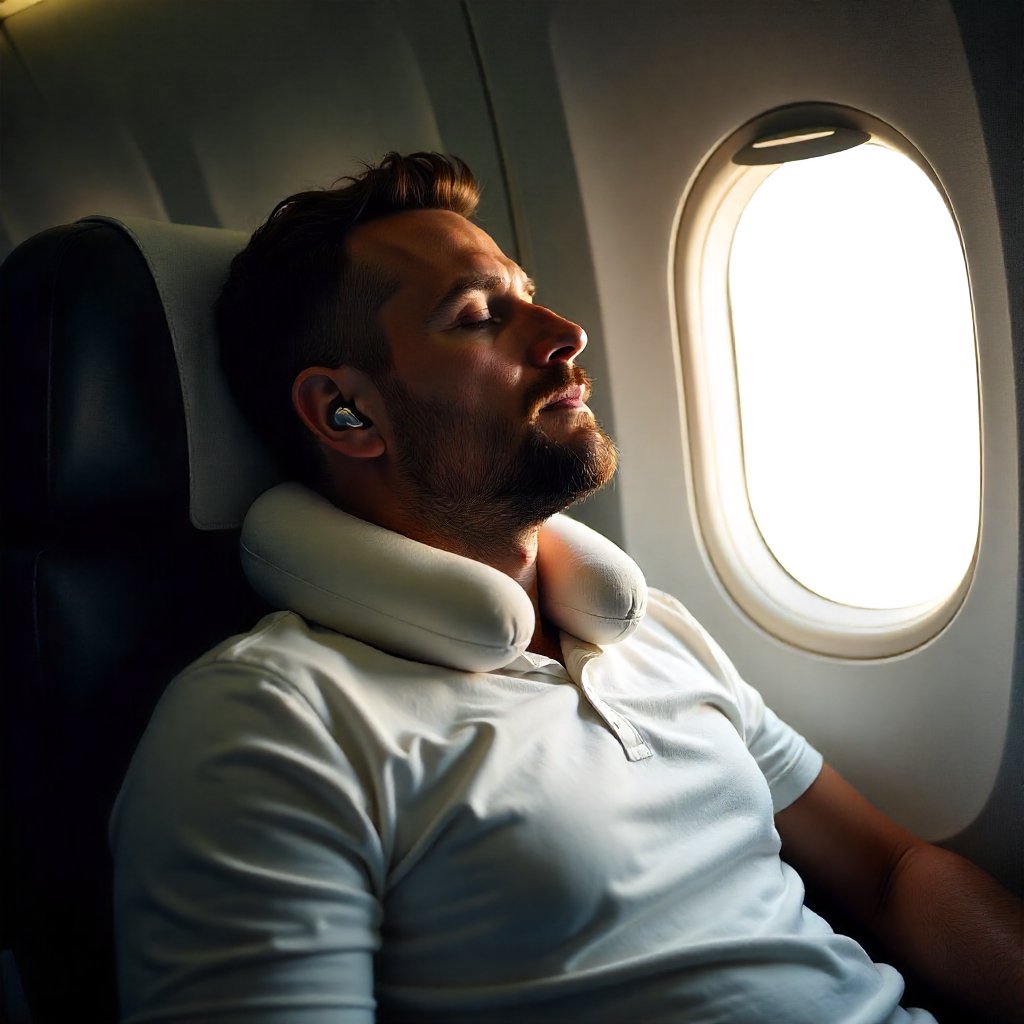
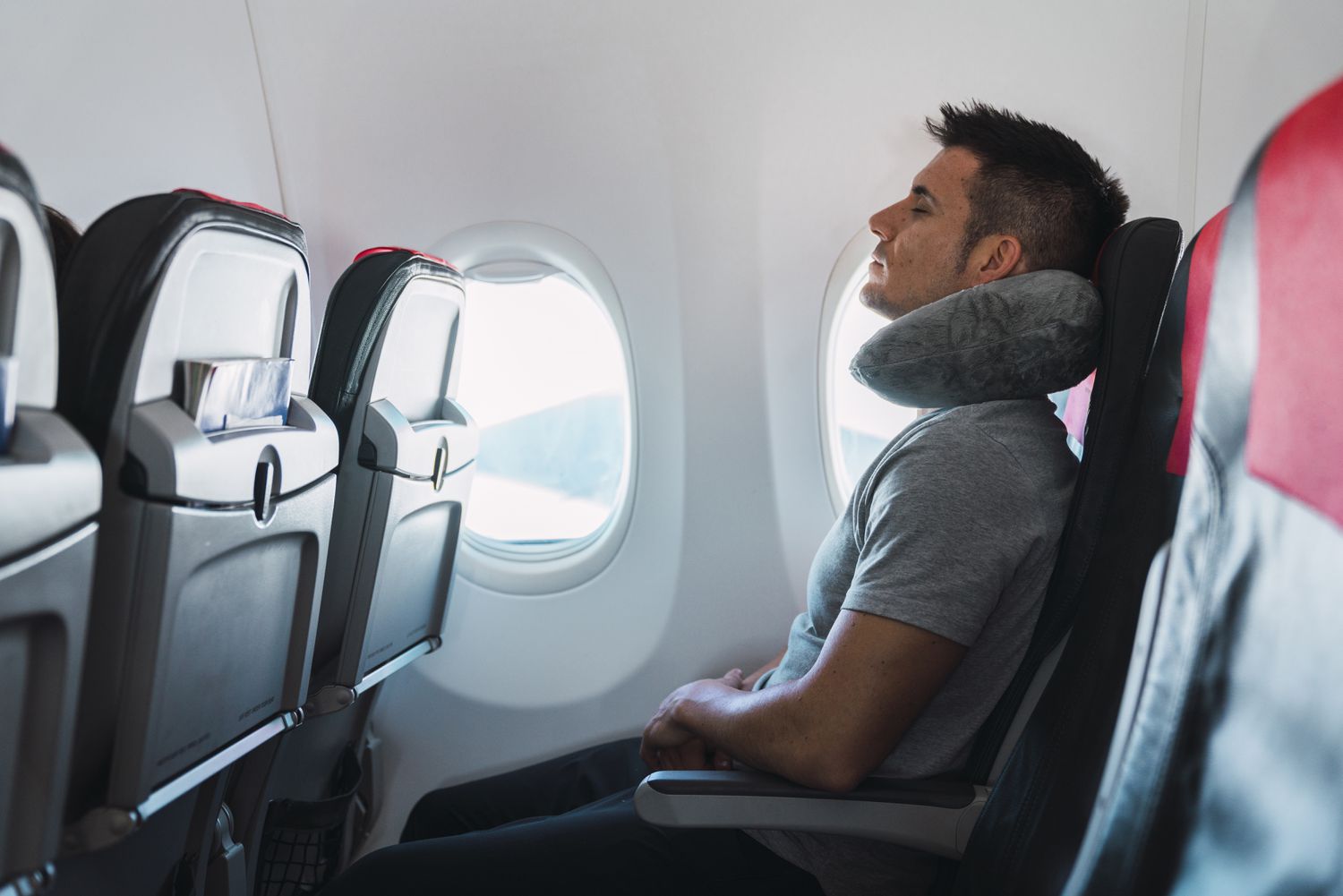
Using a neck pillow can make sleeping on a plane much more comfortable. When sleeping upright, the head often falls forward or to the side, which can cause neck pain and interrupt sleep. A neck or travel pillow can provide cervical support, which means it supports your neck, head, and spinal area in a healthier position. Pillows that keep your head in a neutral position can reduce head movement while sleeping, which helps you stay asleep for longer and improves sleep quality.
Take Melatonin
Melatonin is a hormone that your body naturally produces to manage sleep and wake cycles. It is also available as a supplement, and it may help support your body’s sleep-wake rhythm while traveling. Melatonin can help reduce jet lag symptoms when taken during travel, and it can be especially helpful during overnight flights when you need to sleep while your body clock is still adjusting to a new time zone. Even though melatonin is commonly used, it is still important to speak to a healthcare provider before adding any new supplement to your routine.
Use Earplugs
Noise is one of the biggest reasons people struggle to sleep on a plane. Sounds from the engine, the cabin, and nearby conversations can keep your body alert and prevent deep rest. Earplugs or noise-cancelling headphones can help reduce the noise from your surroundings. Research suggests that earplugs may improve sleep quality by blocking distracting and disruptive sounds. When the environment is quieter, the body can relax more easily, which makes falling asleep and staying asleep much easier.
Wear an Eye Mask
Light can also disturb sleep, even if you feel tired. Bright cabin lights or screens can stop the body from relaxing completely. Wearing an eye mask can block out light and create a darker environment for sleep. When the eyes are exposed to less bright light, the body may naturally produce more melatonin, and this can encourage sleep. Eye masks are simple but effective tools for improving sleep quality on a plane.
Reduce Screen Time
Phones, tablets, and in-flight entertainment screens can keep your brain active and make it harder to fall asleep. Many studies show a connection between excessive screen time and poor sleep quality. Screens can distract you, delay sleepiness, and keep your mind alert when it should be relaxing. Reducing screen time during your flight, especially before trying to sleep, can make it easier to fall asleep and can improve the quality of your rest.
Wear Comfortable Clothing
Wearing comfortable clothing can create a more sleep-friendly environment while flying. Tight or uncomfortable clothes can restrict movement and make it harder to relax. Comfortable clothes allow the body to rest more naturally, especially during long flights. Some travelers also use compression socks, but only if a healthcare provider recommends them.
Compression socks and stockings gently squeeze the legs to improve blood flow and reduce swelling. It is also important to prepare for changing airplane temperatures because the cabin can feel warm at one time and cold later. Dressing in layers allows you to stay comfortable by adding or removing clothing when needed.
What To Avoid
There are also certain habits and choices that can make sleeping on a plane harder. Alcohol and caffeine should be limited because both can increase dehydration and worsen jet lag symptoms. Alcohol can also disrupt sleep and may lead to obstructive sleep apnea, which causes breathing problems during sleep. Sleeping for the entire duration of short daytime flights may also disturb your circadian rhythm and make you feel more tired later, so sleeping on overnight or long-haul flights is usually more helpful.
If you only want to nap, it is better to keep your nap under 30 minutes because longer naps can push your body into deep sleep, and waking up from deep sleep can make you feel even more tired. Some people consider hypnotic medications like Ambien or Imovane to sleep during flights, but these drugs can have side effects, so it is important to speak to a healthcare provider before using them.
Final Summary
Sleeping on a plane can be difficult because of noise, light, uncomfortable seating, and jet lag. Still, you can improve your sleep by taking steps that support both comfort and your body’s internal clock. Staying hydrated, choosing high-carbohydrate foods, using a neck pillow, wearing earplugs and an eye mask, reducing screen time, dressing comfortably, and using melatonin carefully can help you sleep better on flights and arrive feeling more rested.