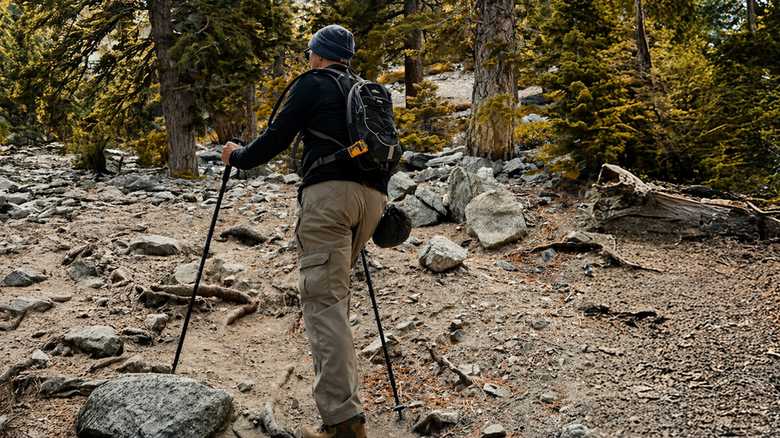
Hiking is a great way to stay active and enjoy time in nature. Many people like hiking with a partner because it helps them spend time together. However, sometimes one person walks faster and leaves the other behind. This situation is often called “Alpine divorce,” which means one person leaves their partner alone on the trail, possibly putting them in danger. This idea comes from an old story written in 1893, and recently it has become popular again on social media, where people share their own experiences.
Not everyone is alone by accident. Many people choose to hike alone because it can feel peaceful and refreshing. Spending time in nature alone can help people relax and think clearly. However, hiking alone also comes with risks, especially because of confusing trail starting points and limited supplies. That is why it is important to understand how to stay safe, whether you are hiking alone or with someone else.
Also Read: Australian Drinking Tradition Involving a Shoe
What Are the Biggest Risks of Hiking Alone?
Hiking alone can be safe and enjoyable, but it needs more preparation, awareness, and discipline than hiking with a group. One of the biggest risks is that there is no one to help if something goes wrong. Outdoor conditions can change quickly. You might twist your ankle on rocky ground, face sudden weather changes, become dehydrated, fall and get injured, or come across wild animals. Any of these situations can become serious very fast.
Another major risk is getting lost. This can happen easily on trails that are not clearly marked or in open areas above the treeline, where it is harder to follow a path and conditions change quickly. Not having the right gear is also a risk. When hiking with others, people can share supplies, but when you are alone, you can only depend on what you carry with you.
Tell Someone Your Plan (and Stick to It)
One of the most important safety steps is to tell someone about your hiking plan. Before you leave, you should share where you are going, when you are starting, and when you expect to return. You should also include clear details about the trailhead and the route you will take. It is important to tell them what to do if they do not hear from you.
You should also follow your plan carefully. If you change your route at the last minute, go too far from the starting point, or do not check in with others, it can make it much harder for people to find you if something goes wrong. If you expect weak or no phone signal, you can carry a satellite communication device like Garmin inReach. This device can track your location and show your path on a map so others can see where you are.
Look at Weather Reports
Before going on a hike, you should check the weather conditions in the area. You can use weather apps, talk to park rangers, ask other hikers, or read online forums to understand recent trail conditions.
However, you should not depend only on weather reports. You should stay alert during your hike. If you see storm clouds coming, you should turn back early. You should also avoid high places during strong winds, rain, or snow. If you receive a real-time warning about severe weather, you should stop and find shelter if possible.
Choose Trails That Match Your Fitness Level
Choosing the right trail is very important for your safety. You should pick a trail that matches your fitness level and experience. To understand how difficult a trail is, you should not depend on only one source. Instead, check different sources such as hiking apps like AllTrails, online communities like Reddit, and advice from park rangers.
It is a good idea to choose a trail that is slightly easier than your current ability. Loop trails are also a smart choice because they keep you closer to the starting point. You should also remember that distance is not the only factor. The type of terrain and weather conditions can make a trail more difficult.
Go to Busier Locations
If you are new to hiking, it is safer to choose trails where you are likely to meet other hikers. Being around other people can give you a sense of safety and comfort. If something goes wrong, someone nearby may be able to help you.
You can find out how busy a trail is by talking to other hikers or joining hiking groups on social media. If possible, you can also visit the trail before your hike to see how remote it feels. As you become more experienced and confident, you can start exploring quieter and more remote areas.
Also Read: 5 Food Heists That Shocked the World
Bring the Essentials
Carrying the right supplies is very important when hiking alone. You should drink water regularly, even before you feel thirsty. A general guideline is to drink about half a liter of water every hour during moderate activity, and more if the weather is hot or you are at a high altitude. You can set a reminder to drink water every 30 minutes.
You should also carry a water filter, such as the Sawyer Mini or Squeeze filter system, so you can safely drink water from streams if needed. Electrolyte powders or tablets can help prevent dehydration.
Food is also important. You should bring enough snacks and meals, and it is a good idea to carry extra food in case your hike takes longer than expected. Foods like granola bars, nuts, and jerky are good choices because they are easy to carry and provide energy.
In addition to food and water, you should carry important items such as navigation tools like maps or a compass, sun protection like a hat and sunscreen, warm clothing like a jacket and gloves, a headlamp, a first-aid kit and necessary medicines, fire-starting tools like a lighter, a knife and repair kit, emergency shelter like a tarp, a portable phone charger, trekking poles to help prevent falls, insect repellent, and a safety whistle.
Listen to Your Body
When hiking alone, your body is your best guide. You should pay close attention to how you feel. Tight muscles and tiredness are not just small problems; they can be early signs that you need to slow down.
To reduce tiredness, you should take short breaks to rest and catch your breath. Stretching your legs and back can also help. It is important to keep a steady pace, especially at the beginning of your hike, because many people get too tired by walking too fast early on.
Most importantly, you should trust your instincts. If something feels wrong, such as the weather getting worse, the trail not looking right, or feeling more tired than expected, you should turn back. It is always safer to stop and return than to continue in risky conditions. The trail will always be there for another day.