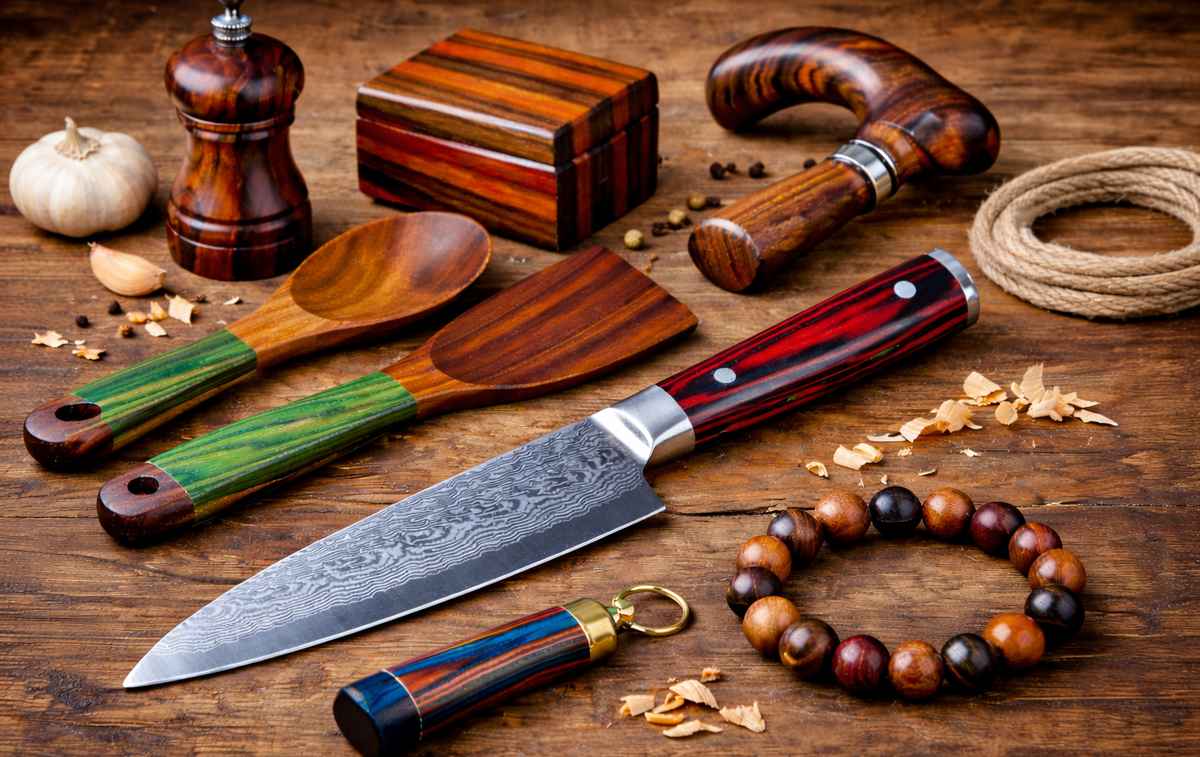
Pakkawood is a strong and durable engineered wood material that is widely used in knife handles, kitchen tools, and decorative products. It looks like natural wood, but it is specially treated with resin to make it stronger, more stable, and resistant to water and heat. Pakkawood combines the beauty of real wood with the strength of modern manufacturing technology. Because of its durability and attractive appearance, it has become popular around the world.
Introduction to Pakkawood
Pakkawood is a composite material made by combining thin layers of hardwood with synthetic resin. The wood layers are soaked in resin and then compressed under high pressure and heat. This process makes the material dense and solid. Although it looks like natural wood, it is not completely natural because it contains resin. It is designed to improve the strength and stability of ordinary wood.
Origin and Historical Background
The idea of strengthening wood with resin began in the early 20th century when synthetic resins were developed. Manufacturers started experimenting with resin-treated wood to create stronger and more durable materials. Over time, this technology improved and became widely used in different industries.
Pakkawood became especially popular in Asian countries such as Japan and China, where it was commonly used in the production of kitchen knives and utensils. Today, it is used in many countries for both household and industrial products.
Manufacturing Process of Pakkawood
Selection of Wood
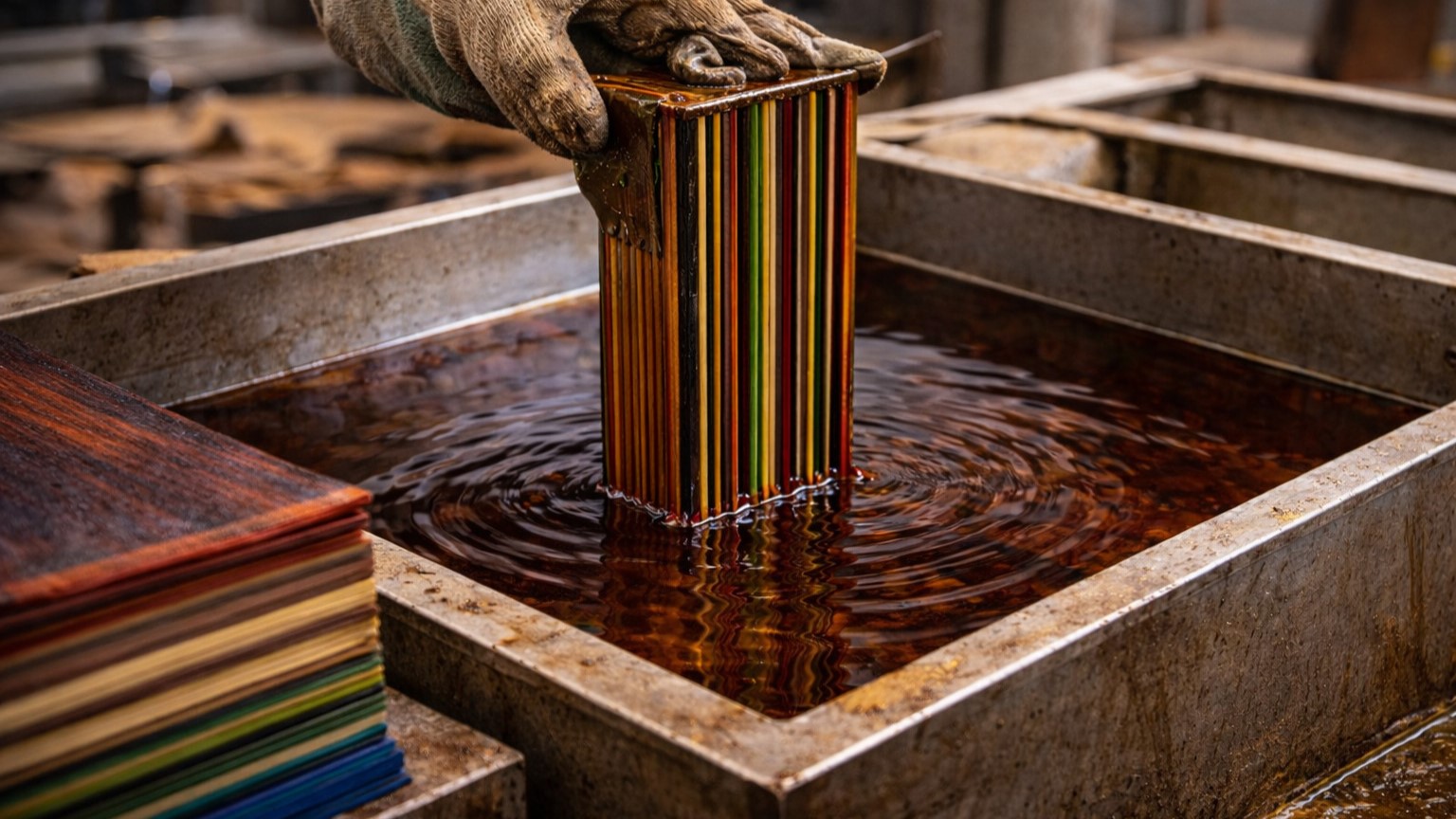
The process begins with selecting thin sheets or veneers of hardwood. These sheets must be of good quality and uniform thickness.
Resin Soaking
The wood sheets are soaked in phenolic or epoxy resin. The resin penetrates deep into the wood fibers, strengthening them.
Layering and Compression
After soaking, the wood layers are stacked together. High heat and pressure are applied to compress the layers into a solid block. This step permanently bonds the resin and wood.
Shaping and Finishing
Once the block is formed, it is cut into desired shapes such as knife handles. The surface is then polished and finished to create a smooth and attractive look.
Key Features of Pakkawood
Pakkawood is known for its high strength and durability. It is stronger than untreated natural wood because of the resin bonding. It is resistant to water and moisture, which makes it ideal for kitchen use. It can handle moderate heat without cracking or warping. It also remains stable and does not easily expand or shrink due to temperature changes.
Another important feature is its appearance. Pakkawood often shows beautiful layered grain patterns, and it can be produced in various colors.
Common Uses of Pakkawood
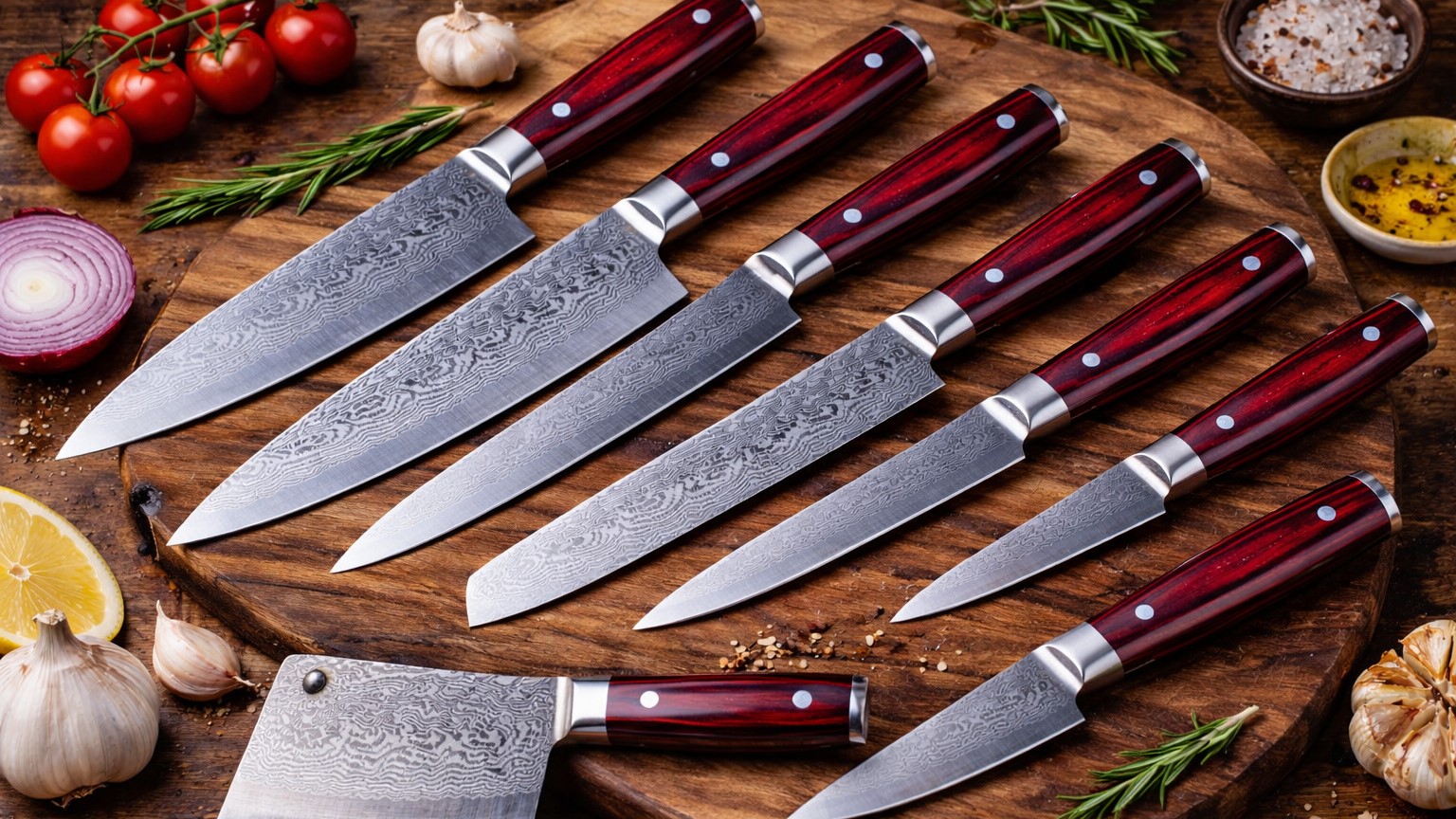
Knife Handles
Pakkawood is most commonly used for kitchen knife handles. It provides a comfortable grip and long-lasting performance.
Kitchen Utensils
It is also used in spoons, forks, spatulas, and other cooking tools because of its moisture resistance.
Tool Handles
Some tools use Pakkawood handles due to their strength and durability.
Decorative Items
Pakkawood can be used in decorative products such as small boxes, walking stick handles, and craft items.
Advantages and Disadvantages of Pakkawood
Pakkawood is strong and durable. It resists water and humidity, making it suitable for kitchen use. It has an attractive, polished appearance and requires less maintenance than natural wood. It is also stable and does not crack easily.
However, Pakkawood is heavier than regular wood. Because it contains synthetic resin, it is not fully biodegradable. It can be more expensive than ordinary wood and may be damaged if exposed to extreme heat for extended periods.
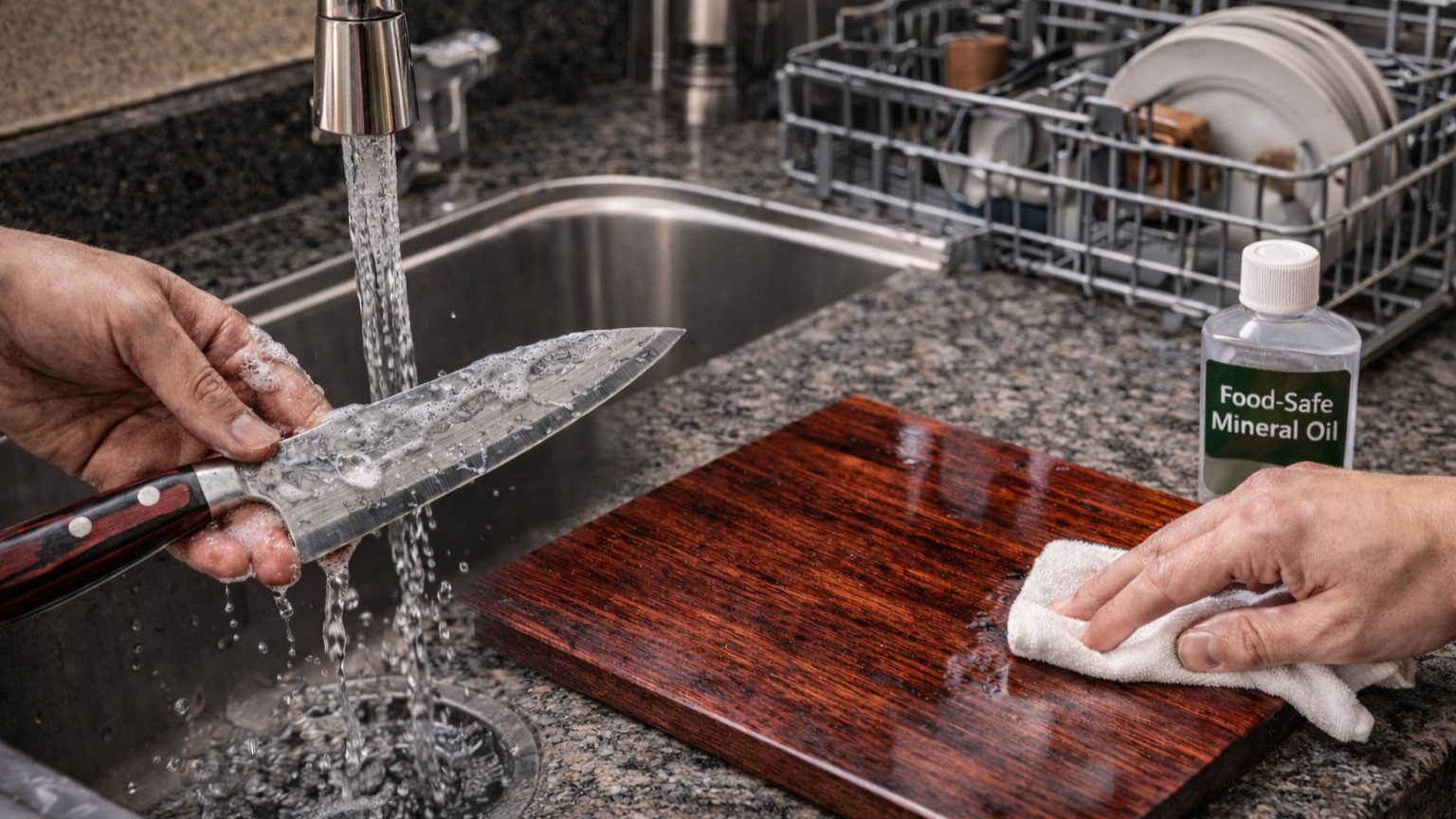
Maintenance and Care Guidelines
Pakkawood products should be washed by hand and dried immediately. They should not be soaked in water for long periods. Dishwashers are generally not recommended because high temperatures and strong detergents can damage the finish. Applying food-safe mineral oil occasionally can help maintain its shine and smoothness.
Environmental Considerations
Pakkawood uses natural hardwood layers, but it also contains synthetic resin. Because of this, it is not completely natural or biodegradable. However, its long lifespan reduces the need for frequent replacement, which can help reduce overall waste.
Conclusion
Pakkawood is a durable and attractive engineered wood material made by combining hardwood and resin. It offers strength, water resistance, stability, and a beautiful appearance. It is widely used in knife handles, kitchen utensils, and decorative products. With proper care, Pakkawood items can last for many years and provide reliable performance.