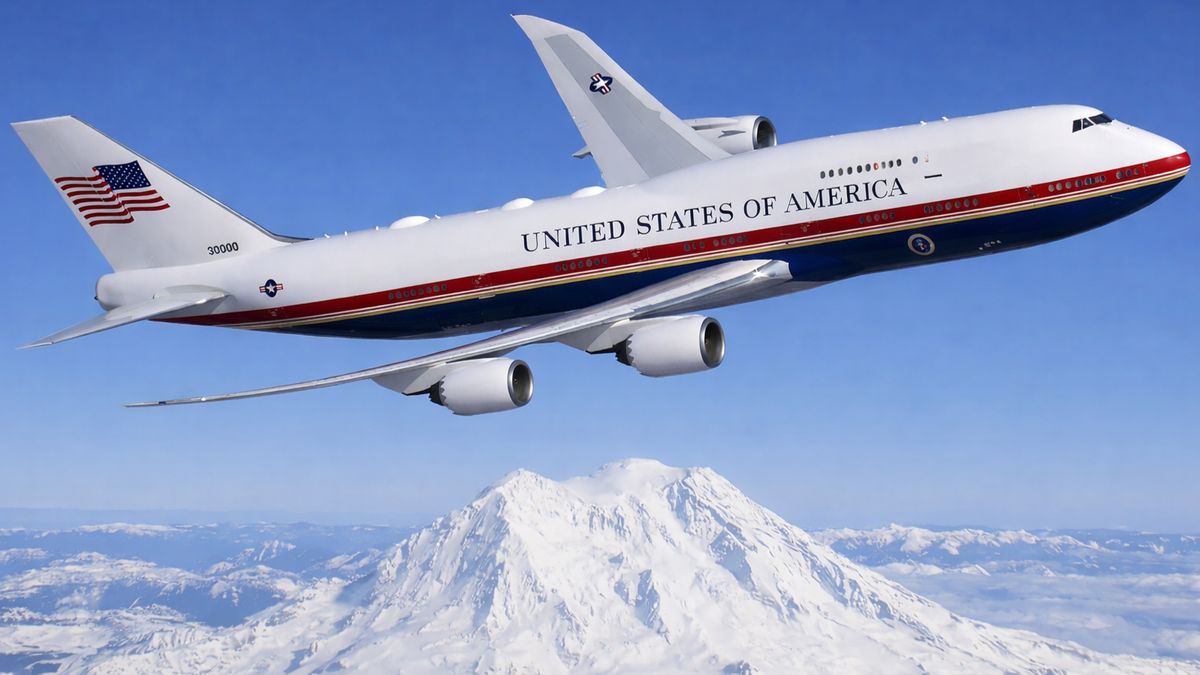
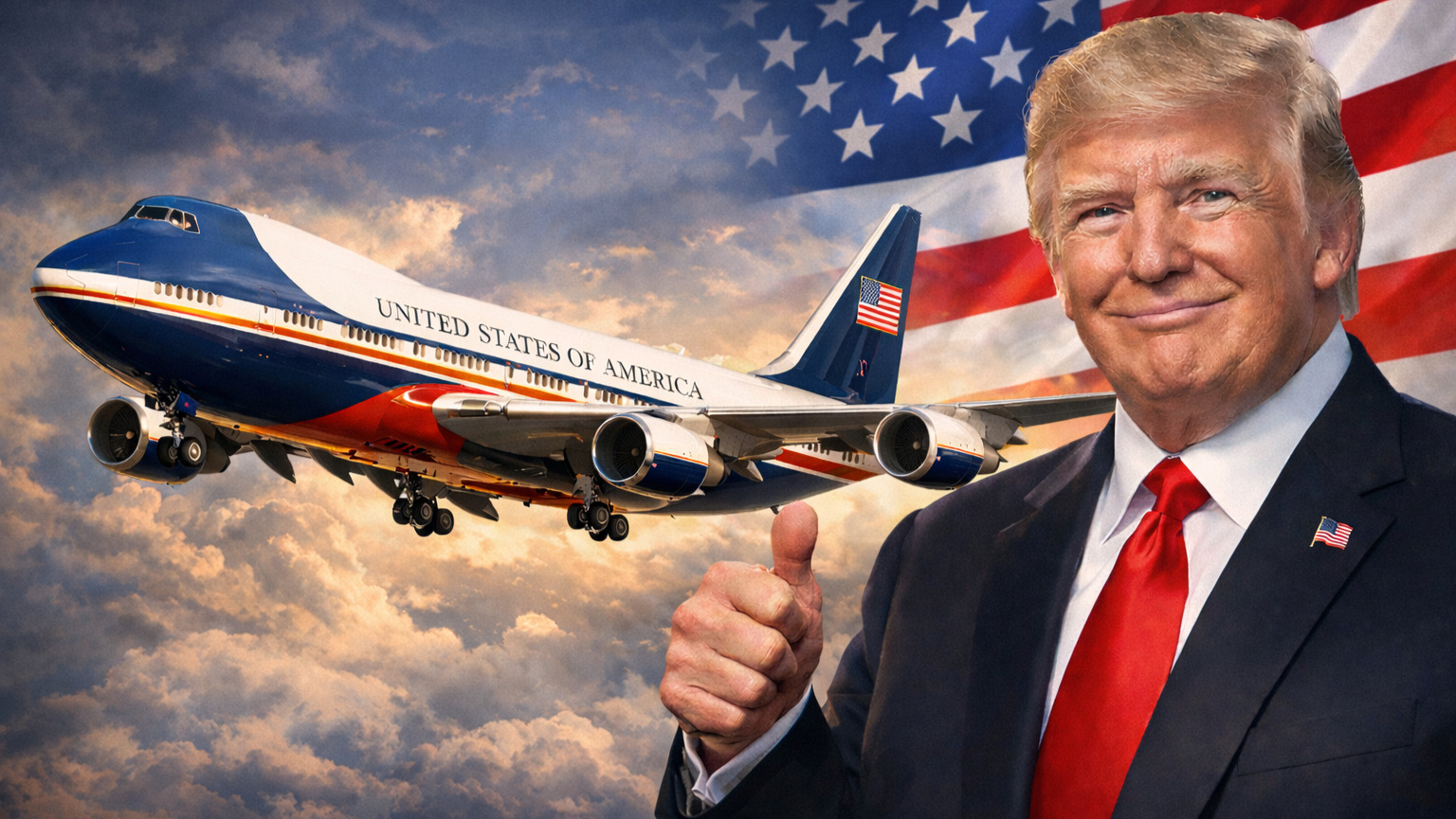
The United States government has officially confirmed a new paint design for Air Force One, the aircraft used to transport the President of the United States. President Donald Trump has supported a bold red, white, dark blue, and gold colour scheme for the presidential aircraft fleet. This decision marks a significant visual change from the traditional light blue and white design that has been used for decades.
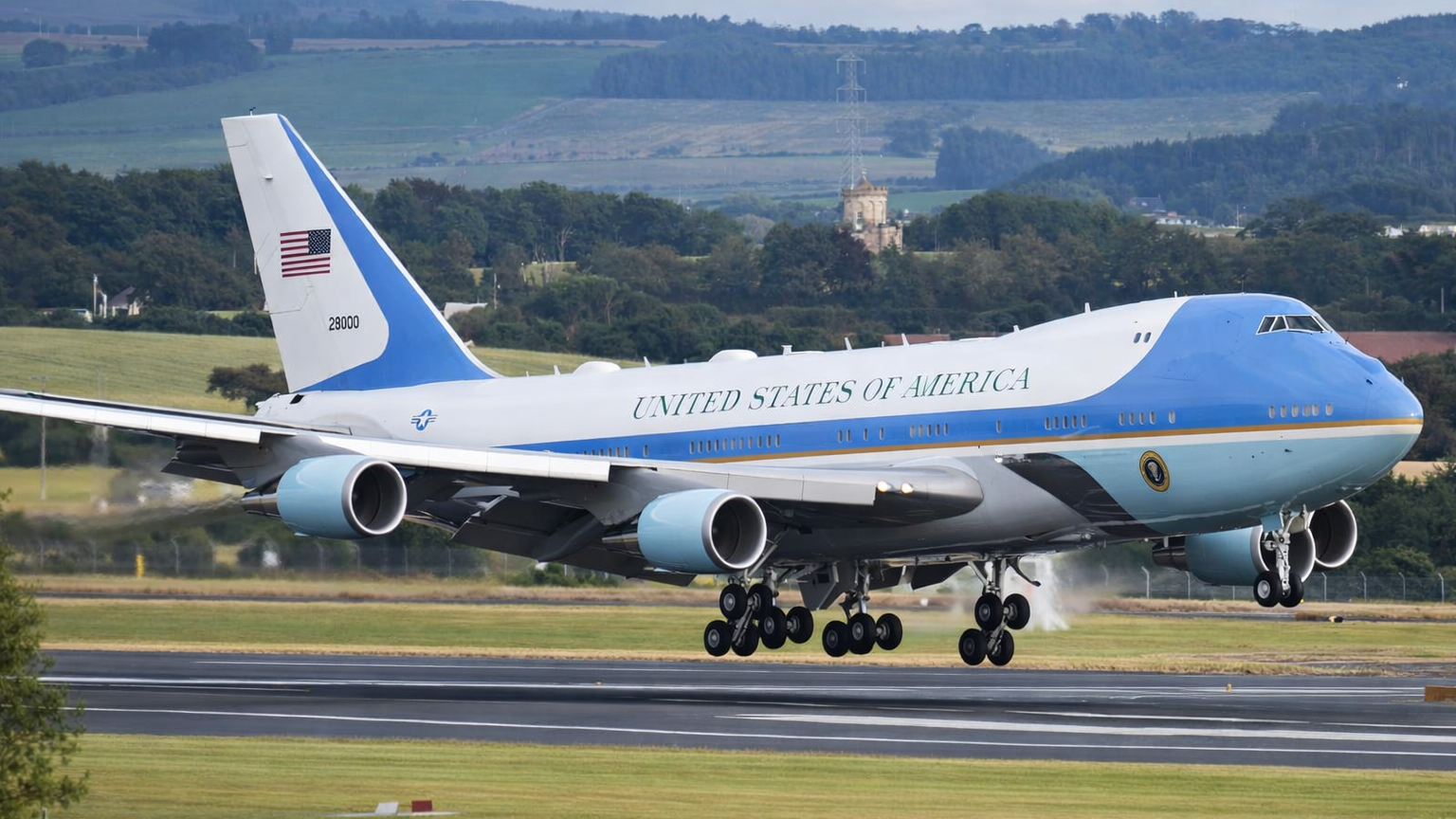
What Is Air Force One?
Air Force One is the official call sign for any U.S. Air Force aircraft carrying the president. The aircraft currently serving in this role are specially modified Boeing 747 planes equipped with advanced communication systems, security technology, medical facilities, and office space that allows the president to work while travelling.
The current aircraft are known as VC-25A jets, and they have been in service since 1990. Their light blue and white color scheme was introduced during the presidency of John F. Kennedy. Over time, this design became a global symbol of American leadership and presidential travel.
Details of the New Paint Design
The new design replaces the traditional light blue shade with a darker navy blue on the underside of the aircraft. It includes bold red striping across the body, a white upper fuselage, and gold detailing along certain sections. President Donald Trump has long expressed his preference for stronger and more patriotic colors, and the new scheme reflects that vision.
During his earlier term in office, Trump publicly presented a model showing a redesigned Air Force One with bold red, white, and blue colors. Although that proposal was delayed at the time, the updated plan now moves forward with similar design elements. Supporters of the new paint scheme say it looks modern and patriotic, while critics argue that the Kennedy-era design carried historical importance and international recognition.
Aircraft Included in the Repainting Plan
The repainting plan applies not only to the current aircraft but also to the future generation of presidential jets. The next aircraft set to serve as Air Force One are known as VC-25B jets. These aircraft are based on the Boeing 747-8 platform manufactured by Boeing. The VC-25B jets are expected to enter service around 2028 after years of development and upgrades.
In addition, a Boeing 747-8i aircraft donated by Qatar is expected to serve as an interim presidential aircraft until the VC-25B jets are ready. This aircraft will also receive the updated paint scheme.
The repainting effort also includes the C-32A aircraft, which are commonly used to transport the Vice President of the United States and other senior officials. When the vice president is onboard, the aircraft uses the call sign Air Force Two.
Reasons Behind the Change
Officials have stated that the repainting is being carried out as part of scheduled maintenance and modernization efforts for the presidential fleet. According to the U.S. Air Force, the repaint will be completed during routine servicing periods to avoid major additional costs. The updated color scheme reflects the current administration’s preference for a stronger patriotic appearance.
Timeline of Events
The current VC-25A aircraft first entered service in 1990. Between 2018 and 2020, President Trump proposed a new paint design during his first term. The redesign plans were later paused under the next administration. In 2026, the U.S. Air Force confirmed that the new patriotic paint scheme would be adopted for the presidential fleet. The new VC-25B aircraft are expected to begin service around 2028.
Conclusion
The repainting of Air Force One represents an important visual change in U.S. presidential aviation history. The shift from the historic light blue design to a bold red, white, dark blue, and gold scheme reflects President Donald Trump’s long-standing preference for a more striking patriotic look. While public opinion remains divided, the modernization of the presidential aircraft fleet continues as the United States prepares for the next generation of executive air travel.