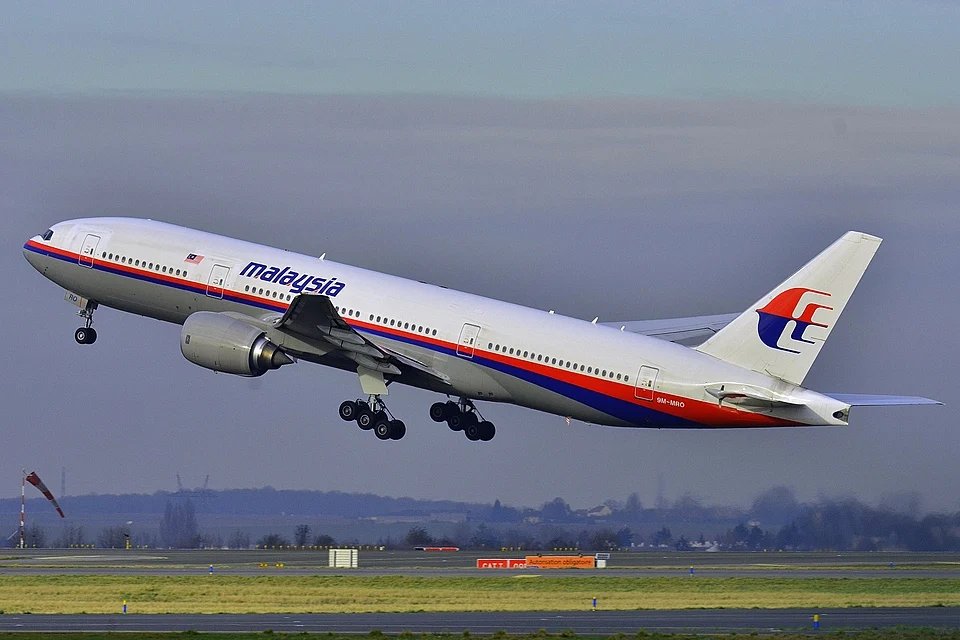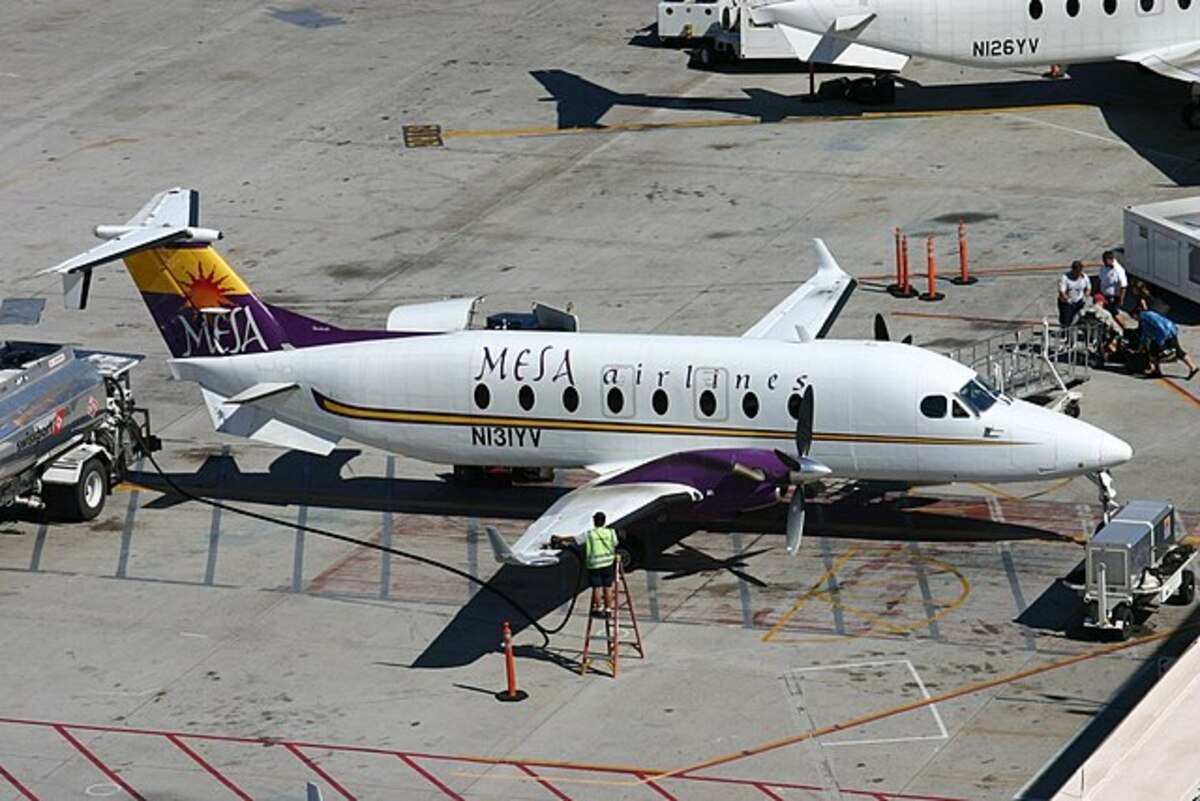
Above: Mesa Airlines at Phoenix Sky Harbor International Airport. Photo by Aeroprints.com on Wikimedia Commons (CC BY-SA 3.0)
When you book a flight from a city like Palm Springs, California, chances are you are not flying on a big-name airline the whole way. It's the regional airlines that get you to a central hub first. According to the Regional Airline Association, regional carriers serve 94.3% of U.S. airports with commercial flights, and for about two-thirds of them, they are the only available air service. It is a considerable number despite low brand visibility.
Should you be concerned about it? Here is why it matters to all of us. People living in smaller cities also need quality education, jobs, healthcare, and business opportunities—the U.S. Government Accountability Office reports that regional airlines historically account for about 1 in 3 U.S. departures, carrying over 150 million travelers annually. If there were no regional airlines, these people would be cut off from the national economy. It shows how powerful organizations can quietly exist with real, sustainable infrastructure without spending millions on social ads.
Also read || Bombardier Global 8000 Earns EASA Green Light
So, Why Are Routes Disappearing Everywhere?
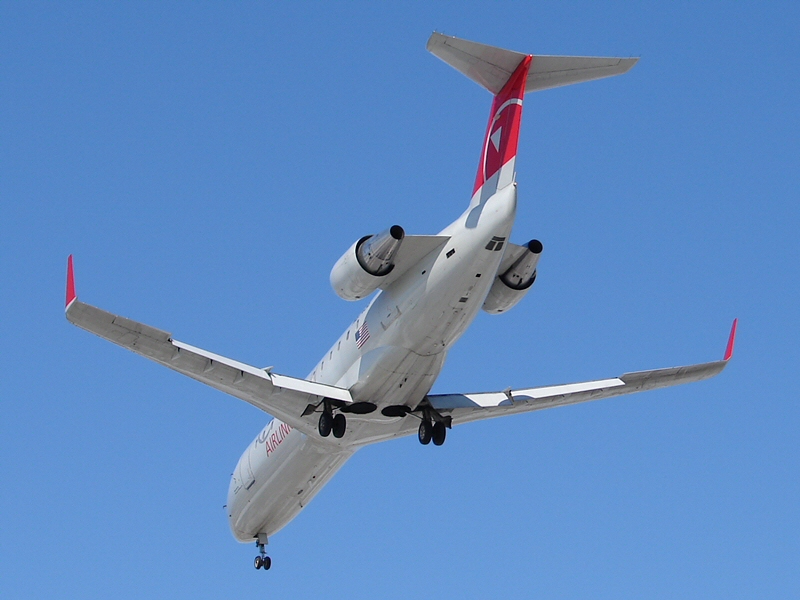
Let's talk about the frustrating part. Have you ever noticed how there are only a few flights on specific routes, weird schedules, or routes that just vanished? We are not talking about a random event. Since 2023, regional airline networks have shrunk gradually, with some markets losing over 25% of regional capacity, as Mighty Travels analyzed and reported.
The economics is simple here. Smaller jets cost more per passenger to operate, especially as fuel prices inflate, maintenance costs increase, and aircraft shortages hit the industry hard. Apart from that, there is a labor shortage that cannot be ignored. There is a serious pilot and mechanic shortage across regional airlines, as reported by the Regional Airline Association and the Air Line Pilots Association.
Unlike big airlines, regional airlines cannot pay more or offer better schedules, which leads to their gradual disappearance or obsolescence. Moreover, regional airlines are stepping stones rather than destinations. Thus, when airlines cannot staff flights, routes do not just underperform; they vanish.
Also read || Best Priority Pass Airport Lounges You Must Visit in 2026
What This Means for You—and Where Things Might Go Next
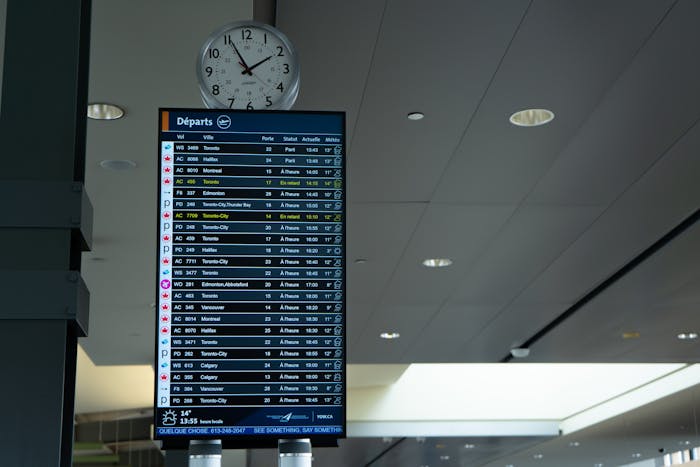
Imagine how you would react if the route from your home to your workplace disappeared. It is not an imaginary scenario but the reality of people living in smaller cities. When regional routes are cut, the impact goes beyond mild inconvenience. It impacts the local communities to an extent we don't imagine.
You have to drive to mega airports, pay higher fares, or even lose access altogether. The local communities that thrive on travel and tourism are affected even more. Businesses lose talent, and commute prices creep up because competition disappears. Experts found that reduced regional connectivity strengthens big aviation players, and these mega airlines become even more powerful when travelers have no better alternative. Thus, higher ticket prices.
Also read || Luxury Airports to Experience in 2026: Where Travel Feels Like a Stay
We must realize that the future may look fragile, but it is not yet doomed. Airlines are experimenting with larger regional jets, tighter partnerships, and even selective consolidation to survive. As economic gaps are widening, policy conversations about pilot training and community air service subsidies are resuming. Regional airlines may not be the "coolest" thing in town. Still, if you care about accessibility, affordability, and absolute economic mobility for everyone, it is the most essential component of our system.