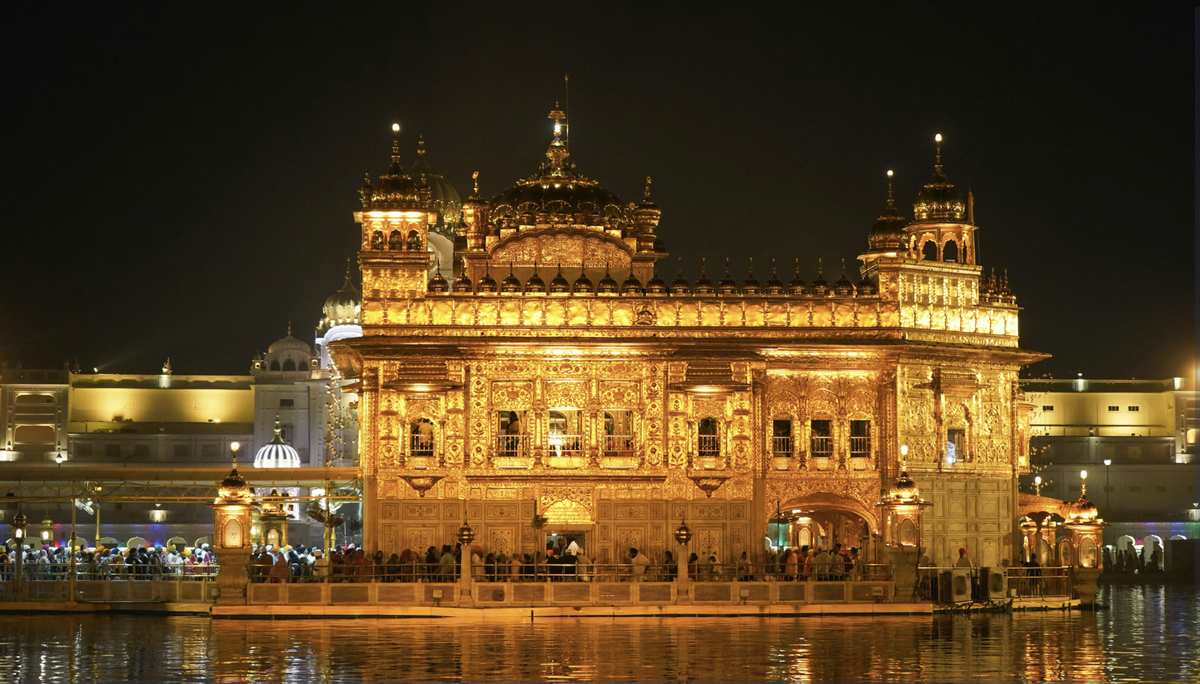
Above: Golden Temple in Amritsar, India.
The Golden Temple, or Sri Harmandir Sahib, is not just a place of worship; it is one of the most significant architectural achievements in the entire human history. Situated in the heart of Amritsar, India, it represents a “living wonder” that rivals the world's greatest monuments. Its design is of Hindu Rajput styles, that creates a unique architecture focusing on natural elements like light, water and spiritual equality.
When you visit there, you can observe that every arch , dome and doorway was meticulously planned to convey a message of universal brotherhood, making it a true architectural wonder of the world.
A Unique Fusion
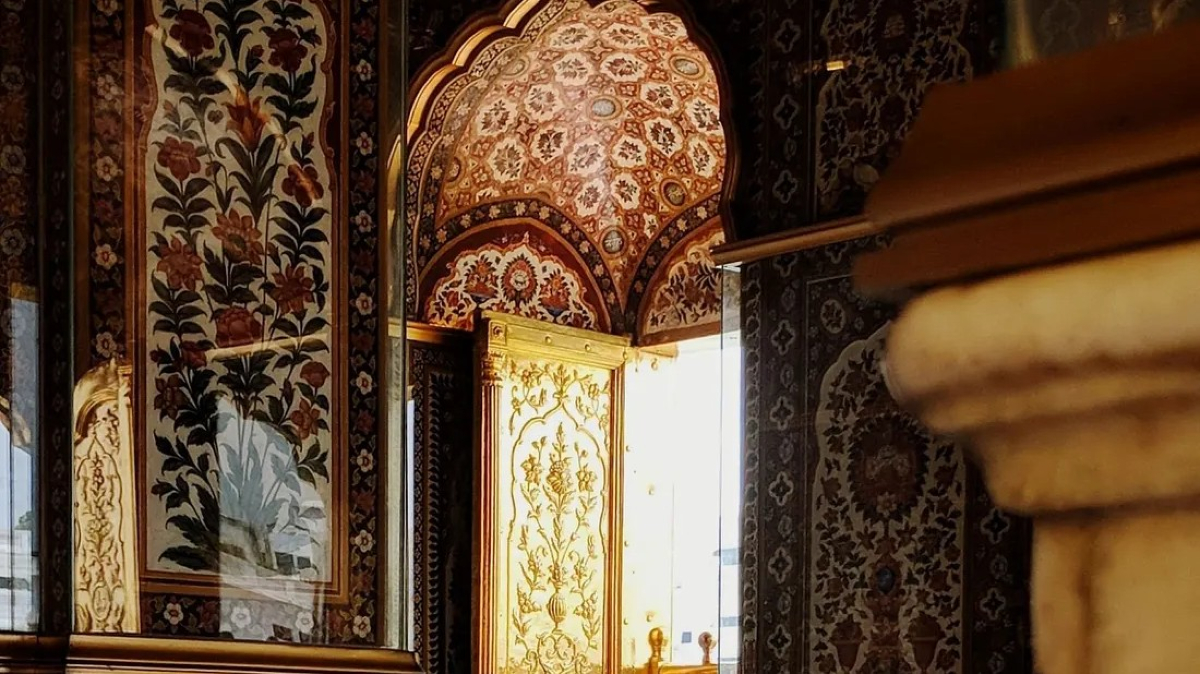
The unique architectural features like the the “delicate floral motifs” and “symmetry in Mughal art,” combined with the ornate “chhatris” (umbrella-shaped kiosks) and fluted domes are the original characteristics of Rajput craftsmanship. The Golden Temple was intentionally built on a lower level than the surrounding, forcing every visitor to step down to symbolize the virtue of humility before entering the presence of the Divine.
The Symbolism Of The Four Doors

In an era where many religious places prohibited the entry of people from other caste and creed, Guru Arjan Dev Ji, the fifth Sikh Guru who designed this temple, introduced a revolutionary concept. He ensured that the sanctum had four entrances, one on each cardinal direction: North, South, East and West.
This is symbolic of a bold architectural declaration. The four doors signify that the Golden Temple is open to everyone, regardless of their background, religion or social status.
The Engineering Of The Amrit Sarovar
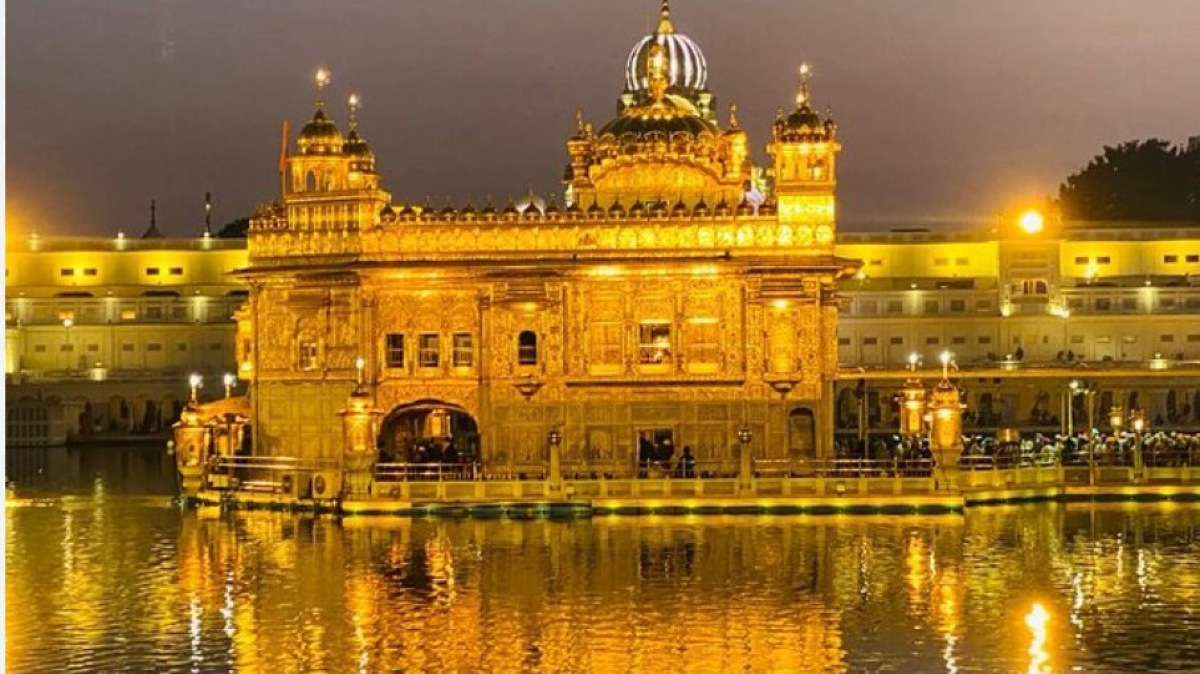
The temple does not just sit near water; it is credited by it. The Amrit Sarovar (Pool of Nectar) is a man-made lake, serving as the foundation for the entire complex’s serenity. The central sanctum, which appeared to float in the water, is built on a square platform, roughly measuring 19.7×19.7 meters.
Still today, architects marvel at the 16th century hydraulic systems that keep the water fresh and the structure stable. Especially during sunrise and sunset hours, the Sarovar creates a visual “mirage” effect, making the temple appear even more majestic and heavenly.
500 Kilograms Of Pure Gold And Fine Marble
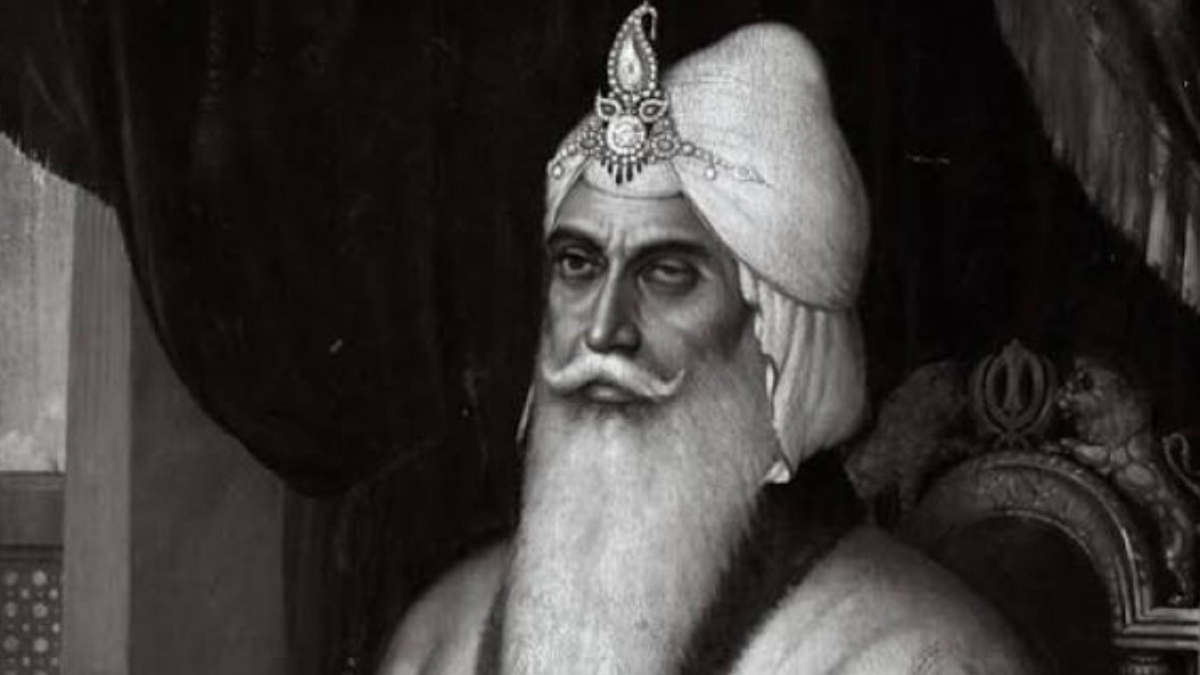
You might wonder that the word “Golden” is added with the temple’s name to exaggerate it, but it's not so. The upper storeys and the iconic dome are covered with approximately 500 kilograms of 24-karat gold leaf. This massive undertaking is largely credited to Maharaja Ranjit Singh in the early 19th century, who transformed the brick structure into a gilded marvel.
While you visit, if you look closely at the walls, you will see intricate “Pietra Dura” work inlays of semi-precious stones forming floral and animal patterns. This level of craftsmanship rivals the finest palaces in the world, yet it remains accessible to the pilgrims who visits here on a daily basis.
Experiencing The Wonder
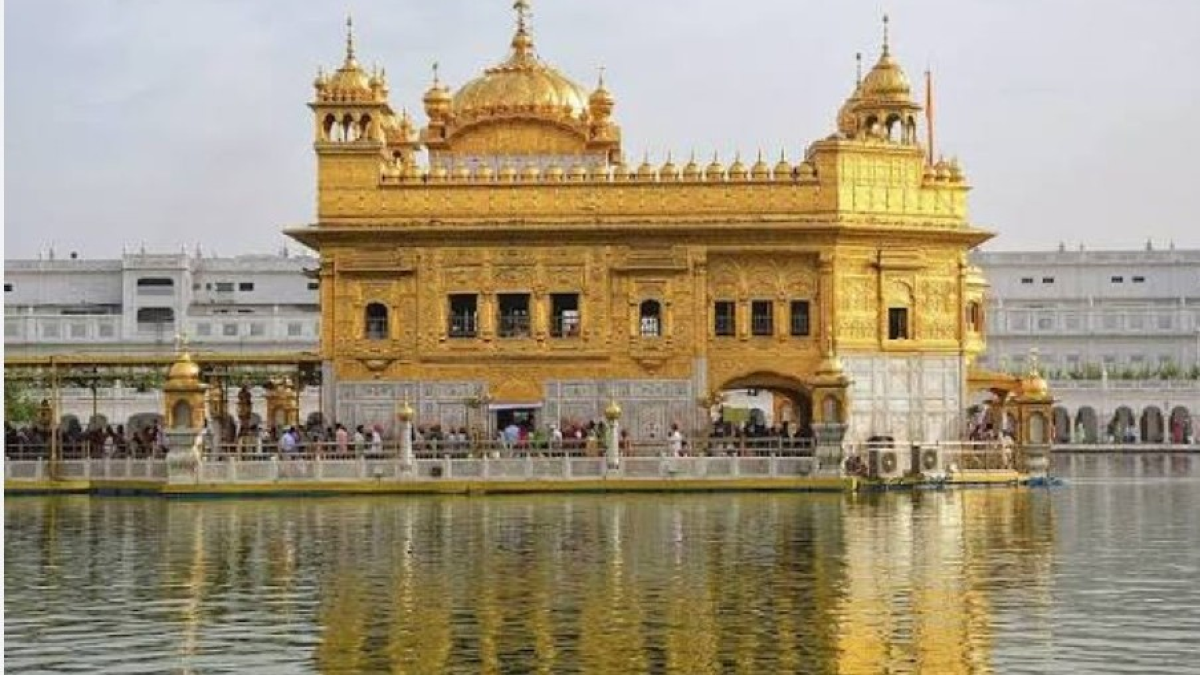
The Golden Temple is a rare example of an architecture that is as socially significant as it is aesthetically stunning. It is a place where the architecture serves a philosophy and the gold reflects a light intended for all of humanity. Whether you are an architectural enthusiast or a spiritual seeker, the sight of the sun hitting the golden dome is an experience that stays with you forever!