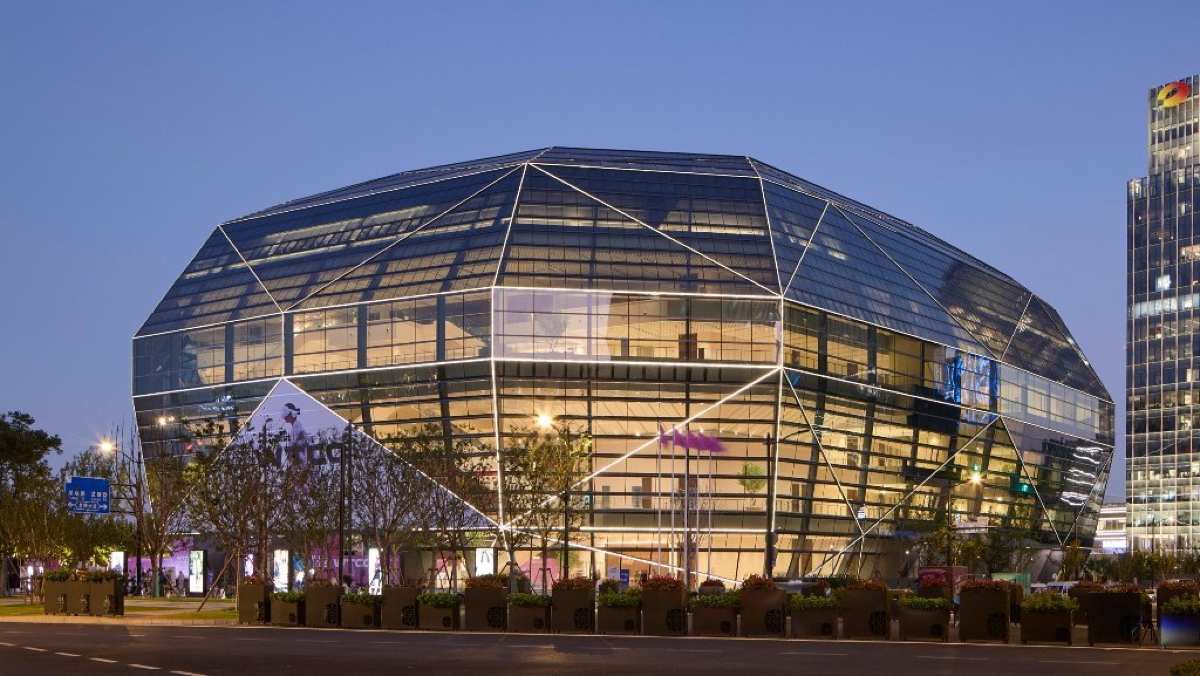
In the bustling tech hubs of China, a brand new architectural masterpiece has emerged that was not just built by machines, it was dreamt by them. Having said that, the West Bund Convention Center was completed in October 2025. Located in Shanghai’s "AI Valley," this center was designed by the American firm "Skidmore," Owings & Merrill(SOM) using an AI-assisted process to reflect upon the technology it hosts.
How AI Designed A Convention Center
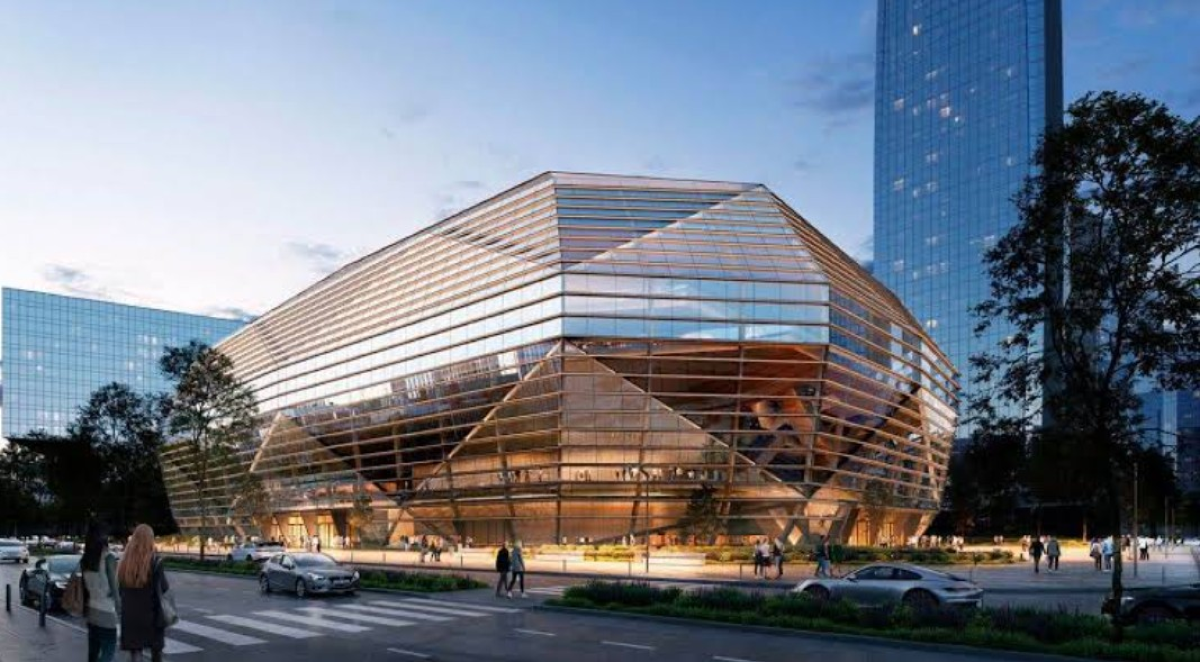
As soon as you hear the idea of AI designing a building or an architectural site, you can wonder about it being futuristic, but it's built on a foundation of data and complex computation. Similarly, to make this convention center, AI tools were fed huge amounts of information, which includes:
Environmental Data: This includes local climate, surroundings, sunlight paths, sunrays- pattern and seismic activity.
Indoor Data: This includes the need for large exhibition halls, conference rooms, lobbies, circulation paths for thousands of visitors and service areas.
Material Science: Properties of various construction materials, their expenses, capacity for sustainability and other structural capabilities.
Human Behavior: People moving through large spaces, common bottlenecks and optimal visitor flow.
As per the architects, the AI then processed this data to generate countless design ideas, evaluating each of them against predefined goals such as energy efficiency, structural integrity, cost-effectiveness and optimal visitor experience. Instead of human architects drawing lines, the AI ‘computed’ forms and spaces, identifying carefully about the solutions that might have taken human teams years to discover.
Key Architectural Elements Involved With AI
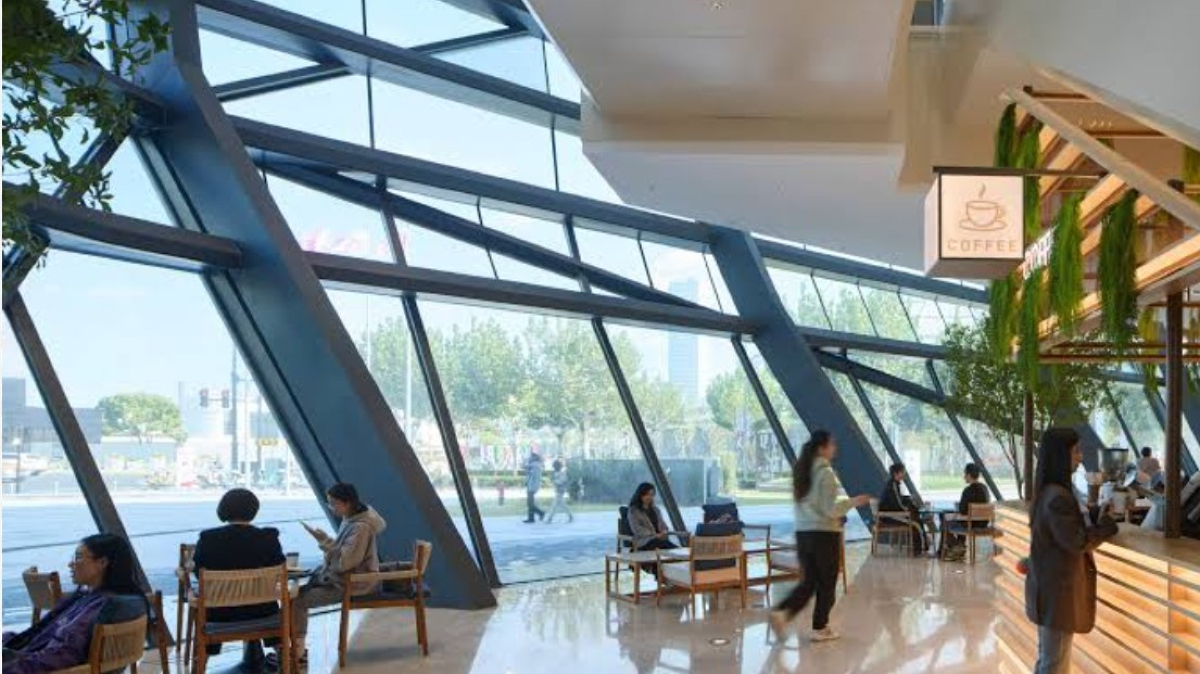
The design isn't just for showcase, every curve and pillar in this architecture serves a mathematical purpose. Elements that standout:
The Biomimetic Roof: In place of a traditional flat ceiling, AI designed a complex, web-like roof structure. By copying the biological patterns found in nature, the AI calculated the usage of the minimum amount of materials while maintaining maximum strength. All this resulted in a lightweight, “floating” aesthetic that reduced the building's carbon footprint.
The “Tree-Like” Support Columns: Inside the hall, the pillars do not look like standard beams. They branch out at the top like trees. The AI then optimizes these shapes to distribute the weight of the roof perfectly, allowing for massive, open door spaces without the need for hundreds of cluttered walls.
Data-Driven Sunlight-Optimization: The building’s facade was calculated to let in the perfect amount of natural light. By properly analyzing the path of sunrays in Shanghai, the AI then shaped the exterior to keep the hall bright during the day while naturally cooling the interior, drastically cutting down on electricity costs.
Why This Matters For The Future
This convention center in China is more than a "showcase;" it is a living proof of futuristic architecture. Typically, it would have taken months to bring refinement to such a complex structural plan, AI algorithms generate thousands of safe, efficient options in a matter of few hours.