
Founded in the 5th century CE, this UNESCO World Heritage Site was once the world’s premier residential university before falling into centuries of obscurity. At present, it's a rediscovered architecture serving as the blueprint for a monumental revival.
Who Built Nalanda And Why?
Nalanda was established in 427 CE during the reign of Kumaragupta I of the Gupta Dynasty. While the Guptas were traditionally belonging to Hindu religion, still they championed a policy of religious tolerance and intellectual freedom.
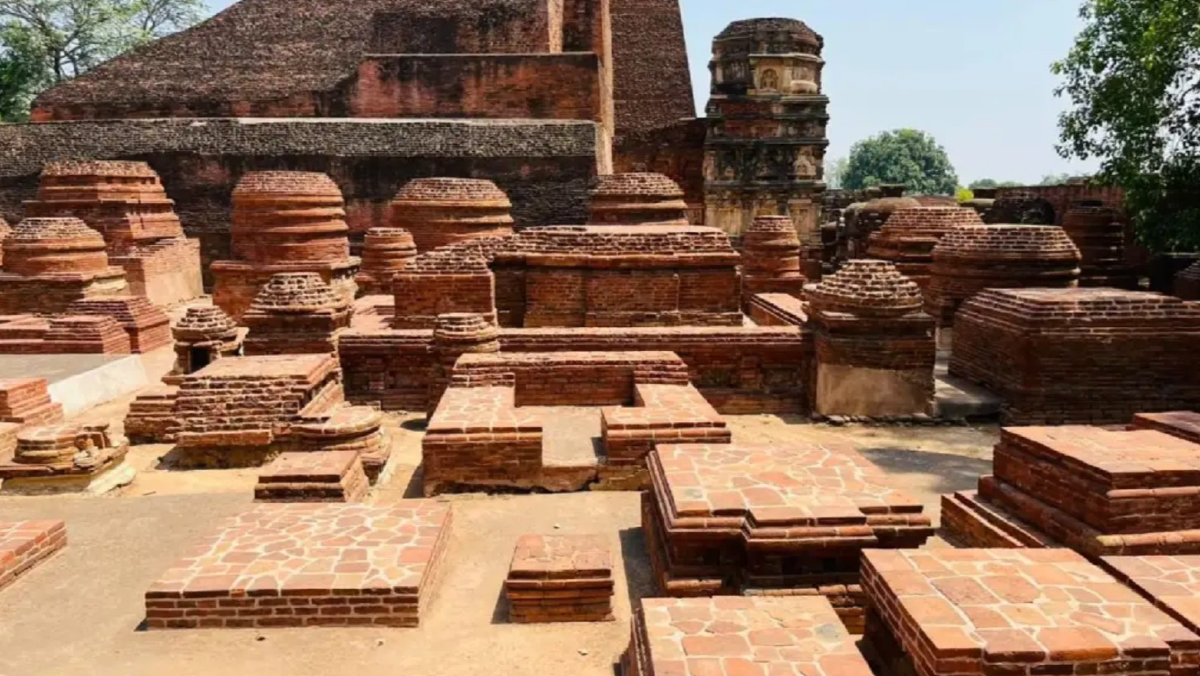
It was built as a “Mahavira,” a great monastery that unified Buddhist philosophy with secular sciences. The center was created as a "universal center of learning" to host scholars from across the globe, including China, Korea and Central Asia, to debate logic, grammar, medicine and metaphysics.
After the Gupta empire, legendary kings like Harshavardhana of Kannauj and the emperors of the Pala dynasty continued to expand the campus, viewing it as a symbol of India’s cultural and intellectual supremacy.
Who Destroyed It And Why?
Several invasions marked the decline of this intellectual powerhouse, but the final, catastrophic blow came at the end of the 12th century.
In approximately 1193 CE, a Turkish invader Bakhtiyar Khalji sacked the entire university during his conquest of Bihar and Bengal. Historical accounts such as, Tabaqat-i-Nasiri, states that Khalji felt humiliated when an Indian physician from Nalanda, cured him of a mysterious illness that his own royal doctors could not treat. Getting enraged by the extraordinary knowledge of the scholars, he ordered for the destruction of the university.
The Damage On Nalanda University
The university's massive library, “Dharmaganja,” was set ablaze. It was so vast, containing an estimated 9 million manuscripts, that it was said to have turned for three to six months to fully turned into ashes. Historical accounts reveal the heart-wrenching fact that thousands of Buddhist monks were either beheaded or burned alive during the raid.
Before its tragic fall, Nalanda was attacked by the Huns in the 5th century and again by the Gaudas in the 7th century, but it was meticulously restored by the Gupta and Pala kings respectively.
Architectural Details Of An Ancient Treasure
During its peak, Nalanda was an architectural masterpiece housing over 10,000 students and 2,000 teachers.
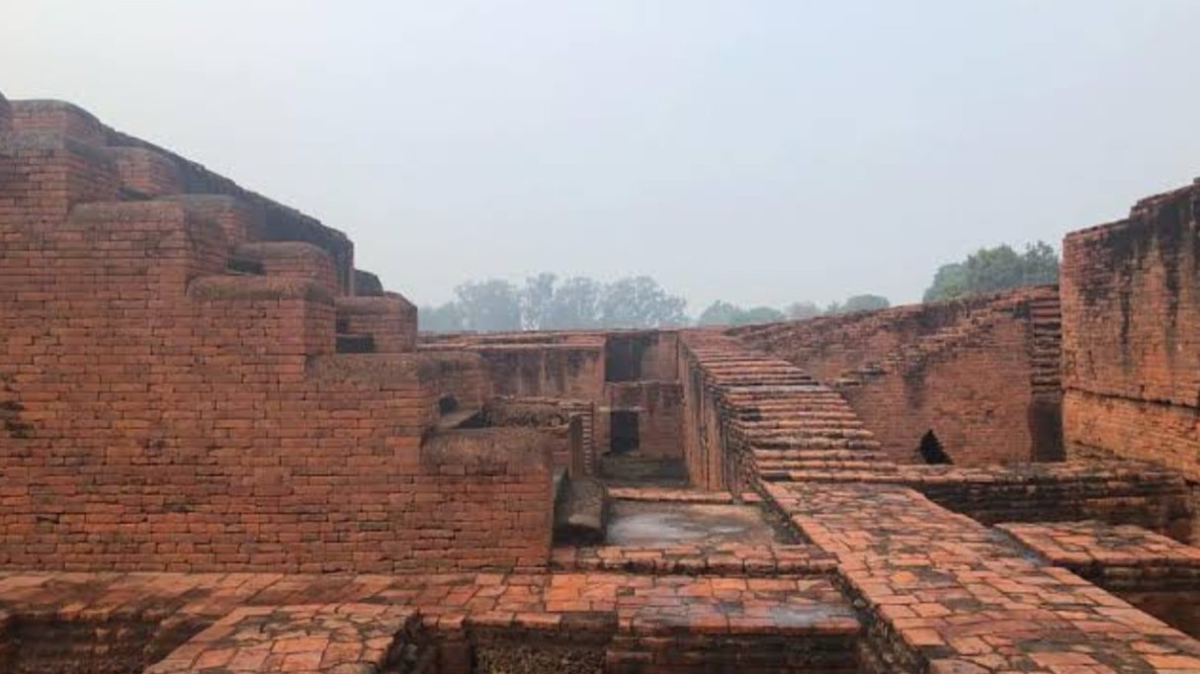
Scientific Layout: The University featured a strict north-south orientation with a central path dividing the grounds. Monasteries were known as “viharas,” lined the east, while temples known as “chaityas,” stood to the west.
Climate-Smart Design: During the construction process, thick brick walls were used, which acted as thermal insulation, keeping the interiors cool in scorching summers and warm during the winter season.
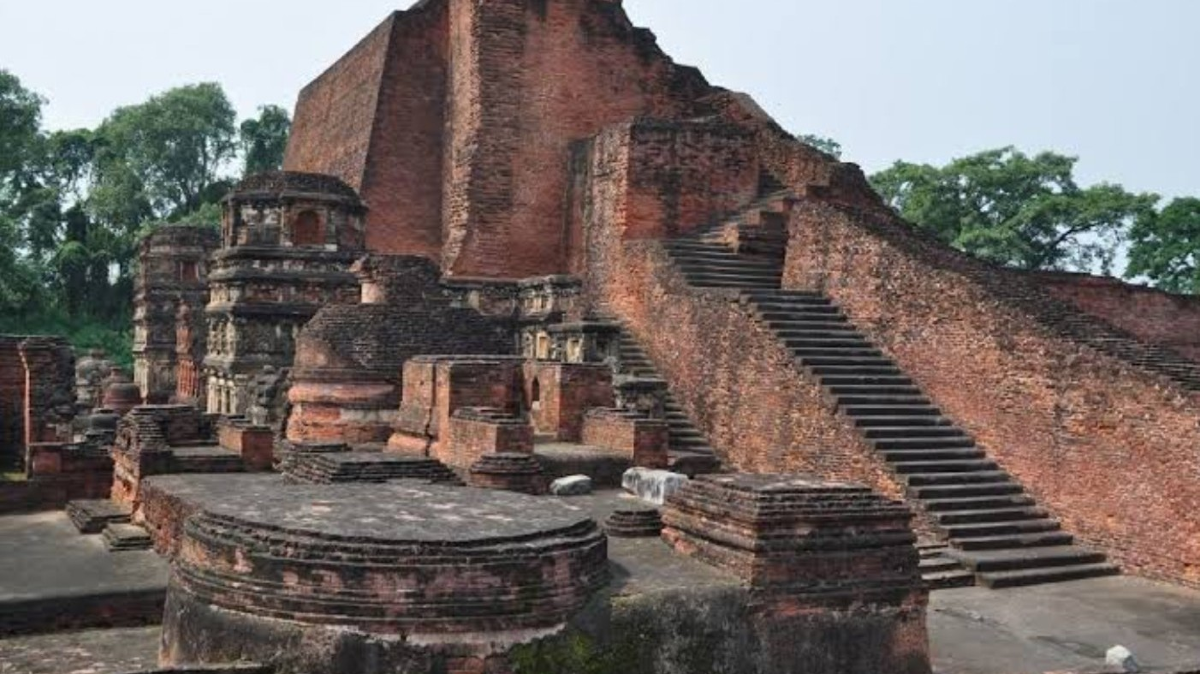
The Vertical Marvels: The most iconic structure is Temple No.3, a massive pyramid-like stupa structure built in seven distinct phases.
Lost To Time, Rediscovered By Scots
For nearly six centuries together, the grandeur of Nalanda was buried under the mounds of earth. In 1812, a Scottish surveyor Francis Buchanan-Hamilton first recorded the expansive ruins near Baragaon. Then in 1861, using the travelogues of a Chinese monk, Xuanzang, Sir Alexander Cunningham officially identified the site.
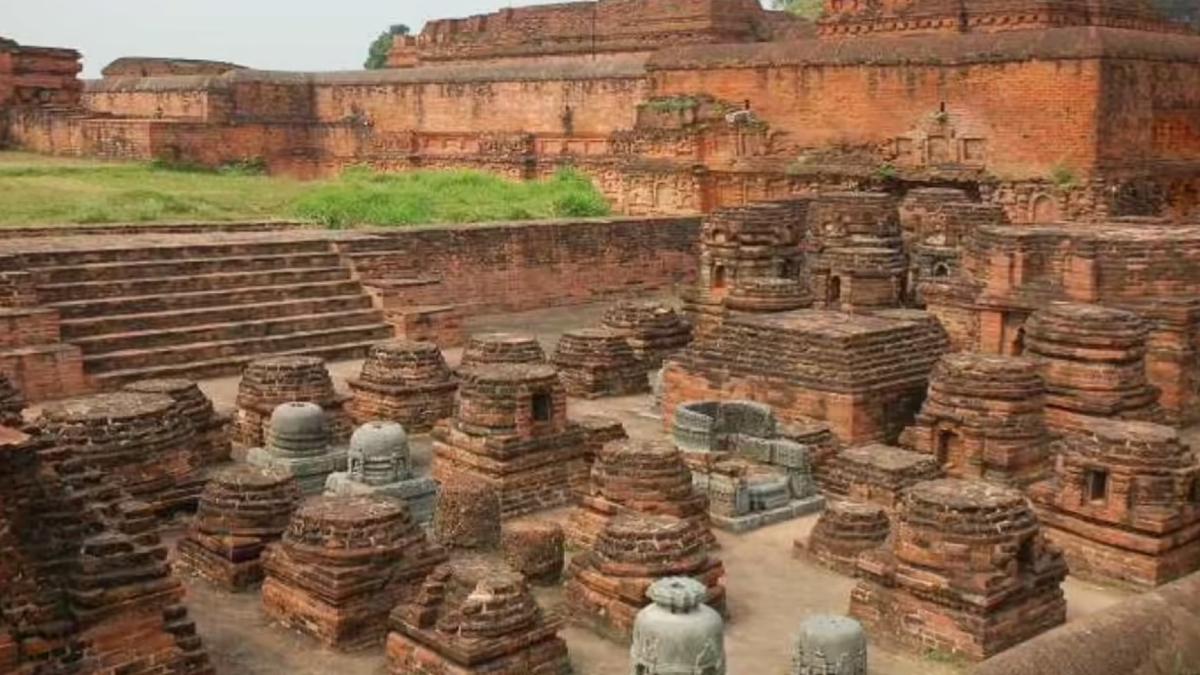
Finally, from 1915-1937, the Archaeological Survey of India (ASI), unearthed 11 monasteries and 6 brick temples, though much still remains buried.
A 21st Century Revival
The spirit of Nalanda was officially reborn with the Nalanda University Act Of 2010, leading to the inauguration of a new campus in 2024.
The campus was designed by late B.V. Doshi, the new 455-acre campus in Rajgir is a carbon-neutral marvel. The design incorporates the ancient “ahar-pyne” water management system and uses “Compressed Stabilized Earth Blocks" (CSEB) made from local soil instead of traditional polluting bricks.

Supported by 17 countries, the Modern Nalanda University continues the legacy of the ancient tradition of being a “Vishwa Guru” (Global teacher).
Comments (0)
Log in to share your thoughts
No comments yet
Be the first to share your thoughts!