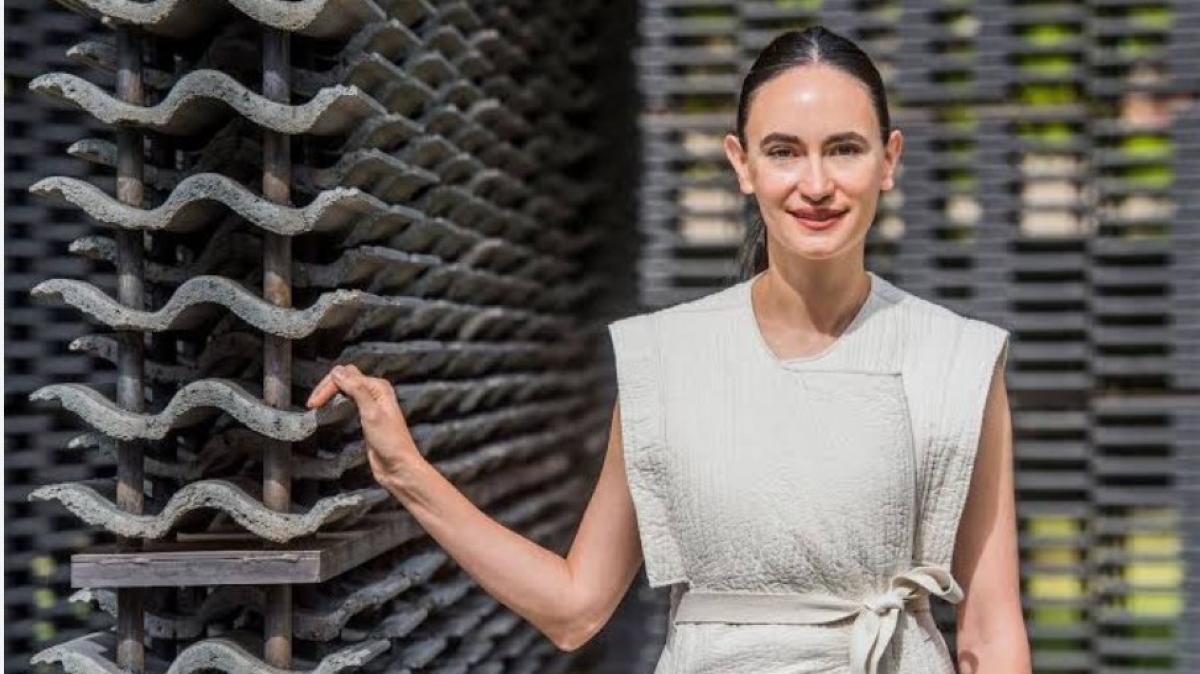
It has been over 150 years that the Metropolitan Museum Of Art has stood as a bastion of global culture on New York City's Museum Mile. Yet, in its century and a half existence, one glass ceiling remains obstinate: “No woman had ever been commissioned to design a standalone wing for the institution.” This started to changed when the Met announced Mexican architect, Frida Escobedo. She is not just building a gallery; but weaving a new narrative into the fabric of one of the world's most prestigious museums.
Who Is Frida Escobedo

Born in Mexico City in the year 1979, Escobedo has literally proved that architecture is nothing but creativity that does not necessarily mean that an architect cannot hit the top notch level until they hit their 60s. She has been breaking all records since her 30s.
Escobedo founded her studio in Mexico City in 2006. Following this in 2018, she became the youngest architect ever to design the prestigious “Serpentine Pavilion,” in London. Again, very recently, she was selected for the Met Museum expansion, beating out several Pritzer Prize-winning finalists.

Her unique way of styling and designing an architecture is best described as “spatial storytelling.” She deeply focuses on how the time, light rays as well as the patterns and the social context interact with physical structures, often using raw, vernacular materials such as concrete, brick and limestone to create a dialogue between the past and the present.
The Tang Wing For Modern And Contemporary Art
The new $550 million "Tang Wing" is set to be launched in the year 2030. It will replace the aging "Lila Acheson Wallace Wing" and it is to be expanded as per the museum’s capacity for 20th and 21st century art by nearly 50%.
The Celosia Facade
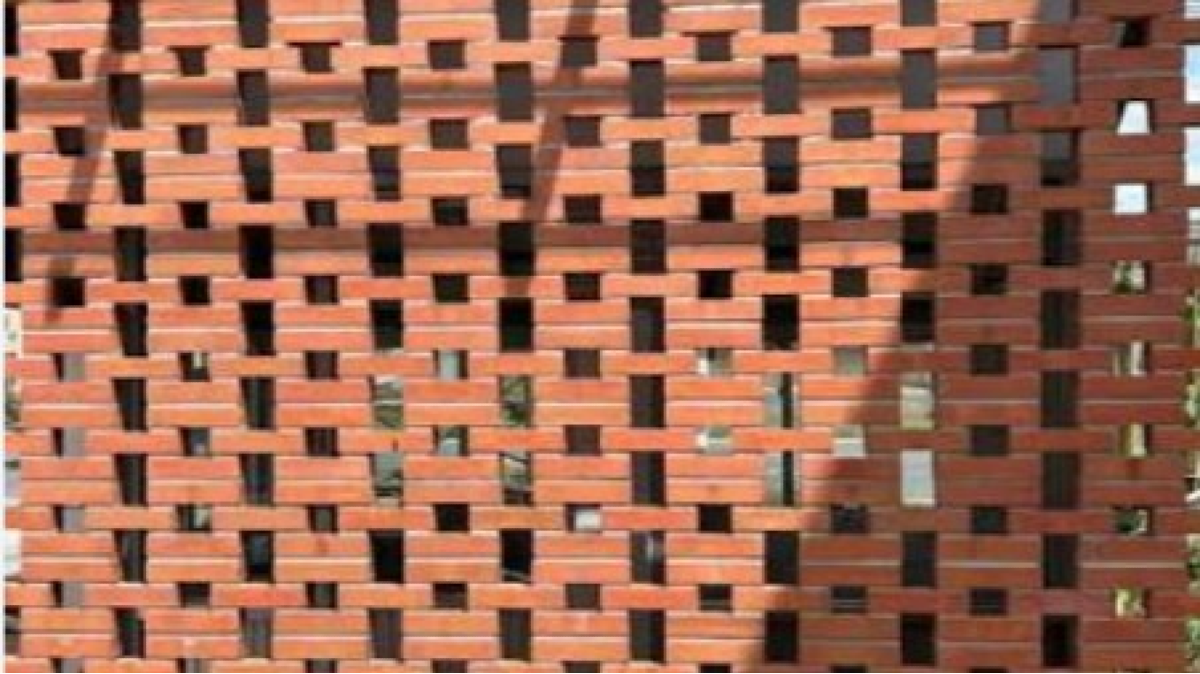
The most striking feature of Escobedo’s design is the “Limestone Celosia,” a traditional latticed screen often found in Spanish and Latin American architecture. This facade will:
Filtering out the natural light to give protection to the delicate artworks,
Reduce the solar heat gain, contributing to the project's LEED Gold sustainability goals.
Creating a “breathing” building that feels connected to its the surrounding nature.
Breaking The Hierarchies
Escobedo’s galleries are designed in a way that they appear “rhythmic.” Unlike the rigid, linear paths of traditional museum wings, the Tang Wing will feature varying ceiling heights, from 11 to 22 feet and interconnected spaces. This layout measure will allow the Met to display massive contemporary installations alongside the 5,000 year old artefacts, posing as a challenge to the “embedded hierarchies” of the art history.
Focusing On Public Space
The unique design emphasizes on the museum as a community hub. The project includes:
18,500 square feet of outdoor terraces,
An expanded Iris and B. Gerald Cantor Roof Garden,
Strategic windows that allows the New Yorkers in Central Park to peek into the museum, blurring the line between the city and the art.
Why This Matters For The World Of Architecture
Escobedo’s extraordinary talent of this subject is more than a milestone for the Met; it highlights a shift for the industry. Her basic approach prioritises the two facts “empathy and accessibility” over the “starchitect” ego.
By blending a Mexican perspective to a quintessential New York landmark, Escobedo is successful in proving that the future of architecture isn't limited to glass and steel, its about creating spaces where everyone, regardless of their origin or background, can stay peacefully and feel that they belong to this place.

“Architecture is a way to create powerful spatial communal experiences. Frida has demonstrated her vision to curate a more accessible trajectory for the new wing.” Says Max Hollein, Director Of The Metropolitan Museum Of Art.