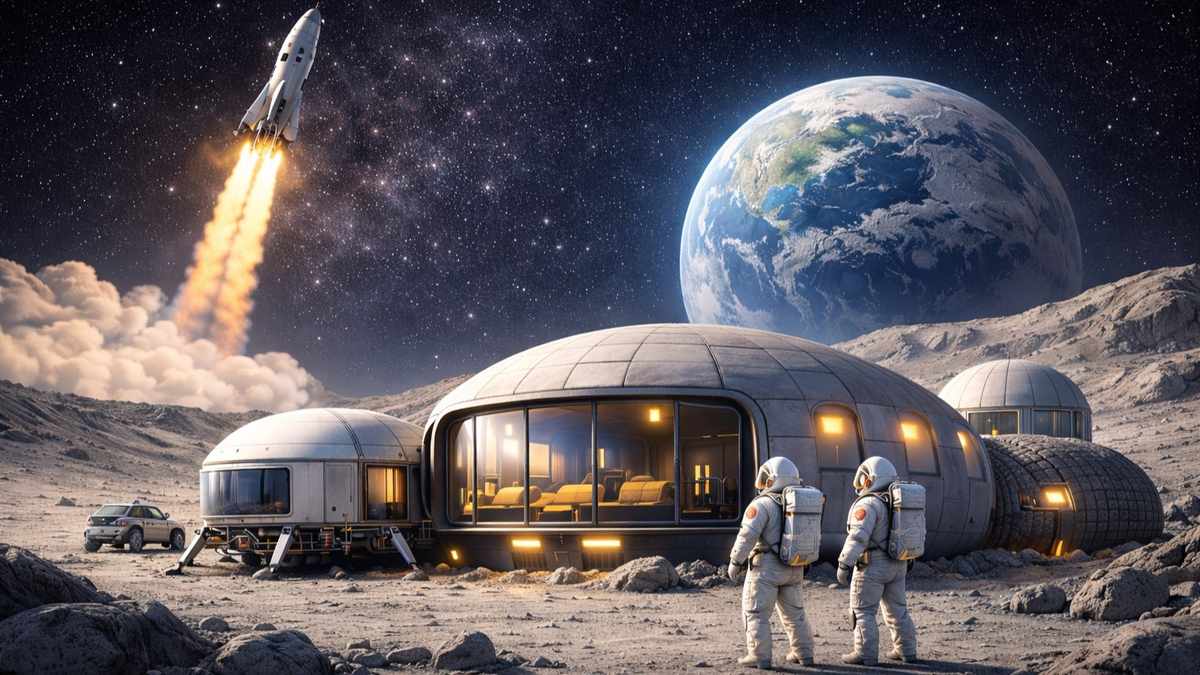
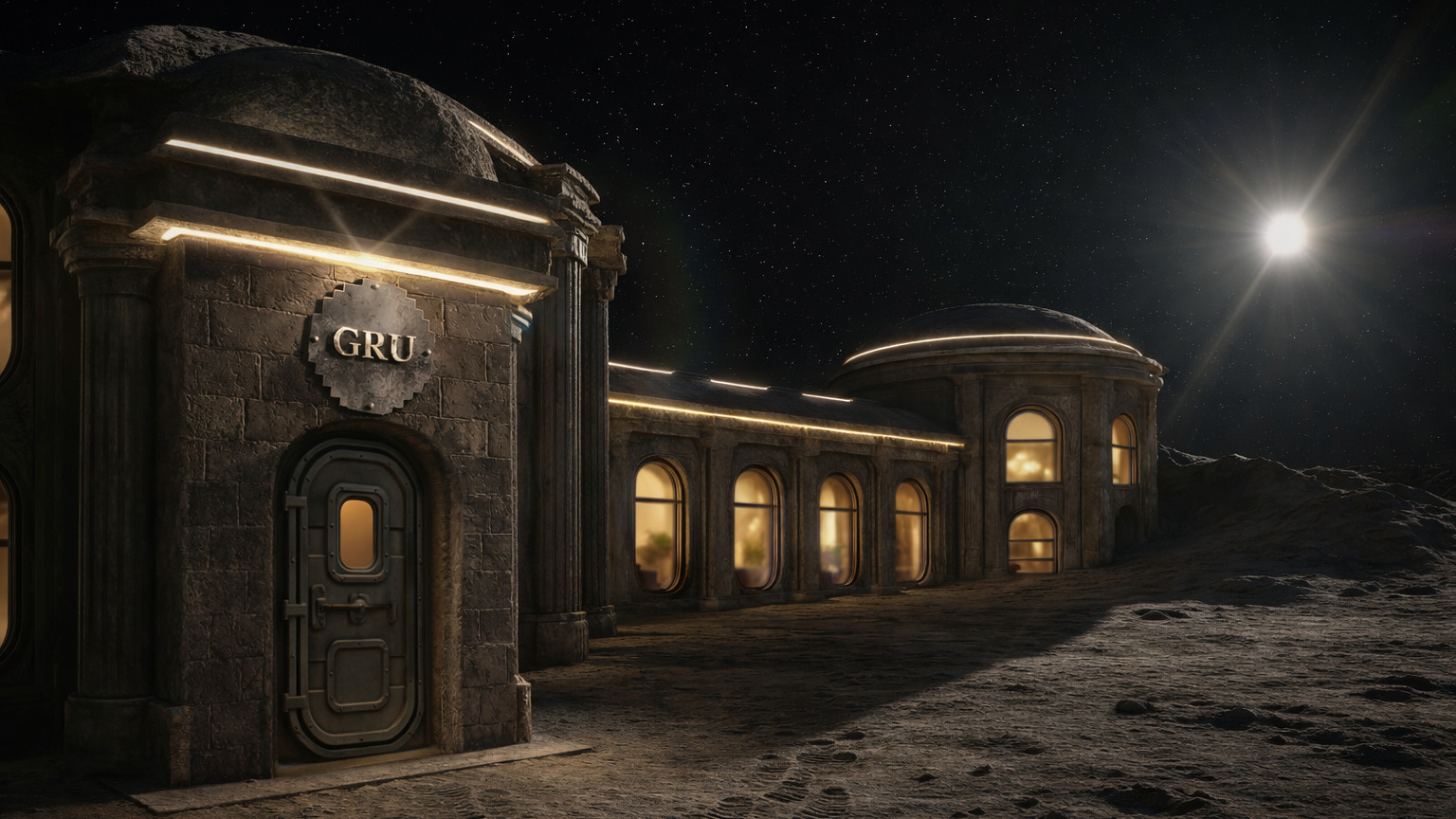
A California-based space startup, Galactic Resource Utilization Space (GRU Space), has announced plans to build and open the world’s first hotel on the Moon by 2032. The company revealed its project publicly in January 2026, sharing details about reservations, technology development, and its long-term lunar vision.
The plan, if completed on schedule, would mark the first time private guests stay overnight on another celestial body.
Company Background
GRU Space is headquartered in California and focuses on building infrastructure that supports long-term human activity on the Moon. The company was founded by Skyler Chan, a University of California, Berkeley graduate.
The company’s name reflects its mission. “Resource Utilization” refers to using materials already available on the Moon, such as lunar soil, to build structures instead of transporting everything from Earth.

Official Announcement in January 2026
In January 2026, GRU Space officially introduced its lunar hotel concept. At the same time, the company opened early reservations for individuals interested in becoming future guests.
Reports from January 2026 confirmed that reservation deposits range from $250,000 to $1 million, depending on the package selected. The total cost of a full lunar trip is expected to exceed $10 million per person, based on early estimates shared by the company.
Applicants must complete an application process and pass medical and safety screenings before being considered.
Project Timeline and Key Dates
GRU Space has outlined a development roadmap leading up to the planned 2032 opening.
2026 – Design and Funding Phase
Throughout 2026, the company is focusing on refining engineering designs and securing investment. Technical partnerships with launch providers and aerospace companies are also being explored.
2029 – First Demonstration Mission
In 2029, GRU Space plans to send a technology demonstration mission to the Moon. This mission is expected to test an inflatable structure and experiment with converting lunar regolith into construction material. The purpose is to prove that lunar soil can be used to build protective structures.
2031 – Expanded Lunar Payload
In 2031, a larger payload is planned. This mission would further test construction systems and prepare for the full hotel deployment.
2032 – Planned Hotel Opening
GRU Space aims to deploy and open the first operational lunar hotel in 2032. The initial version is expected to host up to four guests at a time. Future expansion could increase capacity to around ten guests, depending on successful construction and safety verification.
Design and Structure of the Moon Hotel
The first Moon hotel will likely be an inflatable habitat module. The structure will be compact during launch and expand once it reaches the lunar surface.
The habitat will include sleeping quarters, shared living space, oxygen generation systems, water recycling technology, temperature control systems, and communication equipment connected to Earth. Solar panels will provide electricity.
To protect guests from radiation and micrometeorites, robotic systems are expected to cover parts of the structure with lunar soil. This method is known as in-situ resource utilization, which means using materials found directly on the Moon.
Guest Experience
Guests will travel from Earth aboard a spacecraft, enter lunar orbit, and then descend to the surface using a specialized lunar lander.
Visitors will experience gravity that is about one-sixth of Earth’s gravity. They may take guided moonwalks, operate lunar rovers, and observe Earth rising above the lunar horizon.
Each stay is expected to last several days, depending on mission planning and safety considerations.
Technical and Environmental Challenges
The Moon presents extreme environmental challenges. It has no atmosphere, which means higher radiation exposure. Temperatures can exceed 120°C during the lunar day and drop below –170°C during the lunar night. Lunar dust is fine and abrasive, which can damage equipment.
The project’s success depends on reliable rocket launches, successful robotic missions, regulatory approvals, and sustained funding.
Importance for the Future
If GRU Space successfully opens its Moon hotel in 2032, it will become the first commercial accommodation beyond Earth. The project could encourage further development of lunar bases, research facilities, and expanded space tourism.
The years between 2026 and 2032 will be critical. Successful technology testing and mission execution will determine whether this historic goal becomes reality. If achieved, the first Moon hotel will represent a major milestone in human exploration and private space enterprise.