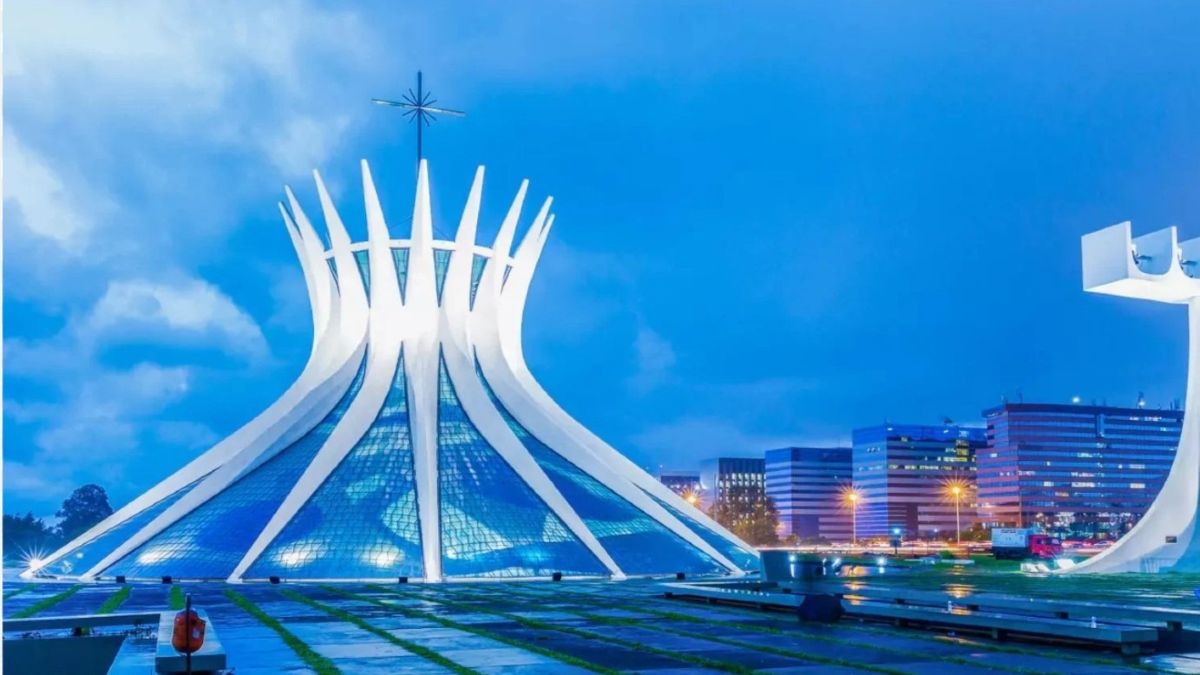
Above: Statue of Christ the Redeemer in Rio de Janeiro, Brazil.
Standing atop the 710 meter Corcovado Mountain, Christ the Redeemer is truly a masterpiece of Art Deco architecture. Completed in 1931, the statue reaches 30 meters in height and spans 28 meters from fingertip to fingertip.
As one of the New Seven Wonders of the World, the monument serves as a bridge between divine inspiration and human technical mastery.
A Global Collaboration Of Visionaries
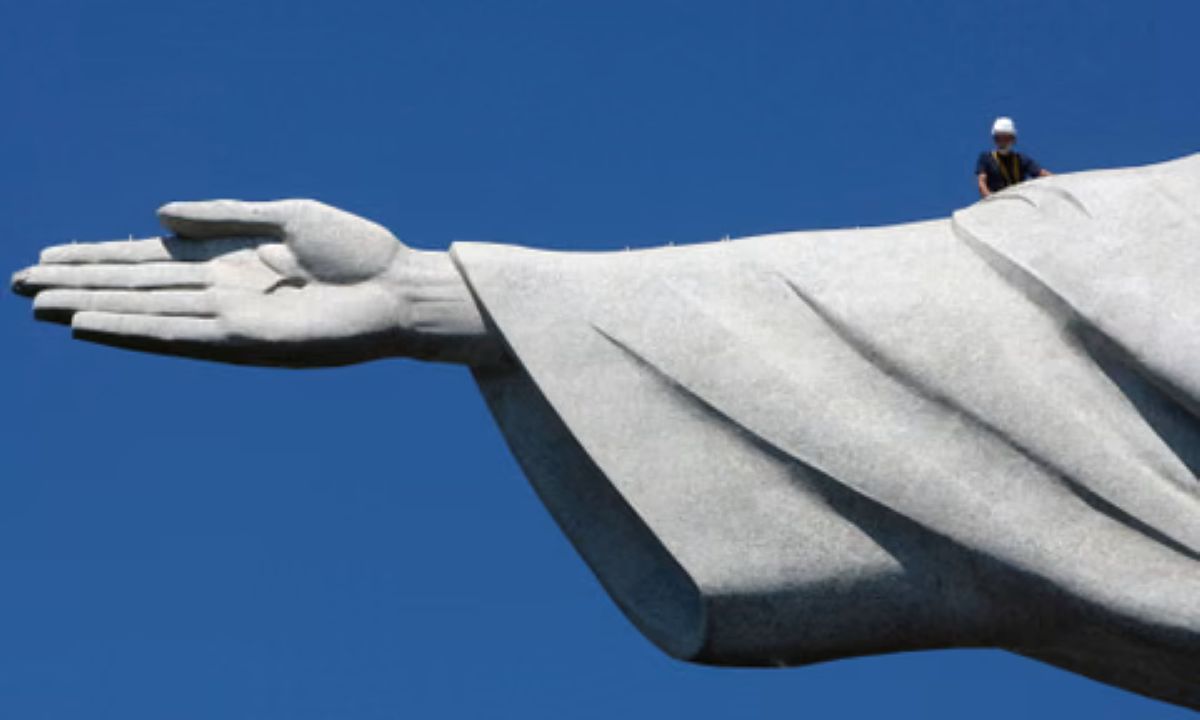
The architectural triumph was the outcome of an international partnership, blending Brazilian soul with European finesse. Heitor da Silva Costa, a Brazilian engineer, envisioned the statue’s open-armed “cross” silhouette. On the other side, a French-Polish sculptor Paul Landowski was commissioned to head the sculpting of the hands and face, to make sure it maintained the elegance and the geometric lines of the Art Deco movement. This unique collaboration ensured that the statue was a sophisticated piece of fine art capable of withstanding a harsh mountaintop environment.
The Expertise Of Reinforced Concrete
At its core level, the Redeemer is an ambitious application of reinforced concrete, a revolutionary material for the early 20th century. Silva Costa chose this particular medium over steel for its durability and resistance to high-velocity winds and lightning strikes. The structure consists of a massive central column acting as a spine, with a complex internal framework supporting the immense weight of the outstretched arms. This specialized engineering choice allowed for a hollow, yet incredibly stable, monument that could endure the tropical climate for centuries.
The Protective Mosaic Of Soapstone
In order to protect the concrete from erosive rain and salt air, the entire exterior is clad in a mosaic of six million triangular soapstone tiles. The reason for selecting this was due to its malleability and high resistance to extreme weather conditions. These tiles were painstakingly applied by hand, with many local workers reportedly writing the names of loved ones on the back of the stones. This outer skin preserves the structure while providing a soft, ethereal glow, reflecting beautifully under city spotlights at night.
Defying The Elements At 2,300 Feet
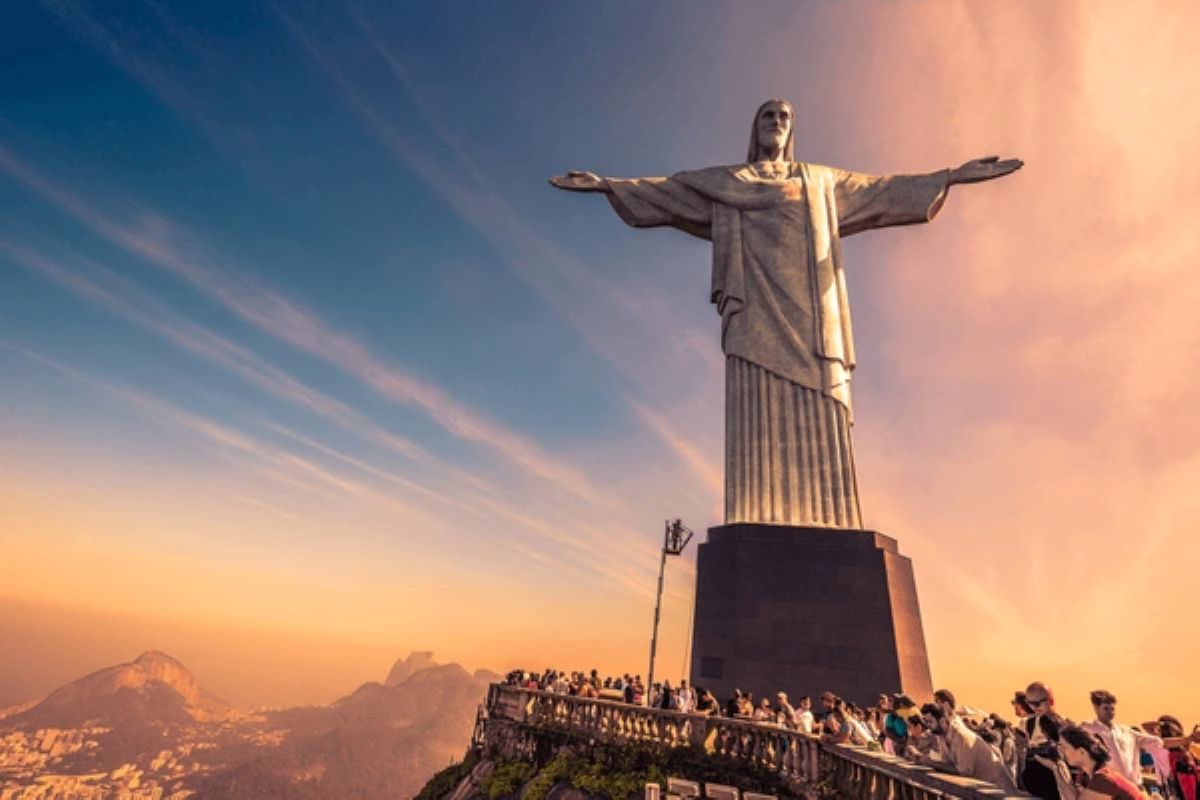
Building a 1,145-ton statue on a narrow peak accessible only by a cog railway caused massive logistical challenges in the 1920s. All the materials had to be transported up the steep incline of the mountain via the Corcovado Railway. Laborers who were involved, worked in harsh conditions, often hanging from scaffolding hundreds of feet in the air with minimal safety precautions. At present, the statue remains a testament to human resilience, standing firm against Atlantic winds as a timeless beacon of architectural ingenuity.