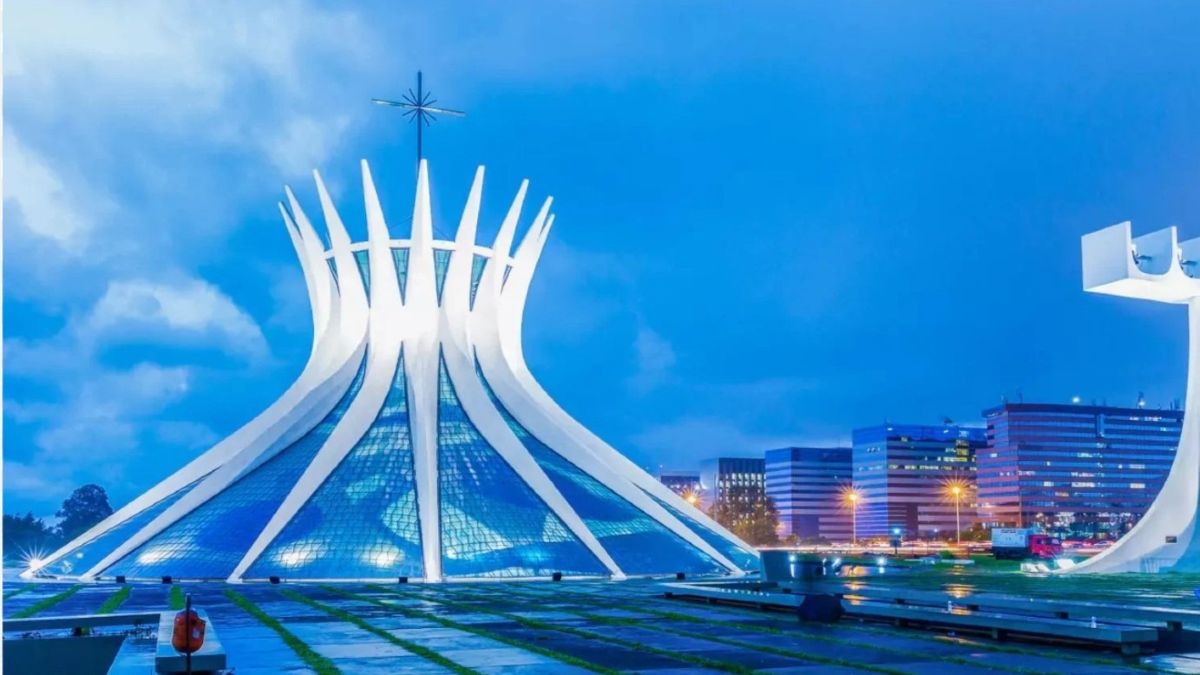
Above: Cathedral De Brasilia, Brazil.
Brasilia is often celebrated for its grand scale and sweeping skylines, but it's true magic stays hidden in the quiet, intentional details that are missed by the casual glance. Though the whole world stares at the “Big Two”: “The Congress” and “The Cathedral,” the city is actually a dense tapestry of symbolic textures and structural “magic tricks” designed by Oscar Niemeyer and Roberto Burle Marx. While you visit here, look closely at the weathered concrete and the shadows cast by the equatorial sun, as you will discover a city that speaks in whispers.
The Floating Illusion Of The Pilotis
While every local residing over there is aware of the fact that the “Pilotis” (pillars) lifts the residential blocks off the ground to create an open communal space. Only a few people who visit there as a tourist, notice the minor tapering that makes the buildings appear to weightlessly hover around. In the Superquadras, many of these columns are not uniform cylinders; they are sculpted with a slight inward curve or a narrowing base that mimics the grace and style similar to that of a ballet dancer. This structural design was Niemeyer’s way of defying the brutal weight of reinforced concrete, ensuring that the massive apartment wings felt like they were floating on a breeze rather than remaining anchored to the red earth.
Tile Art as a Secret Navigating System
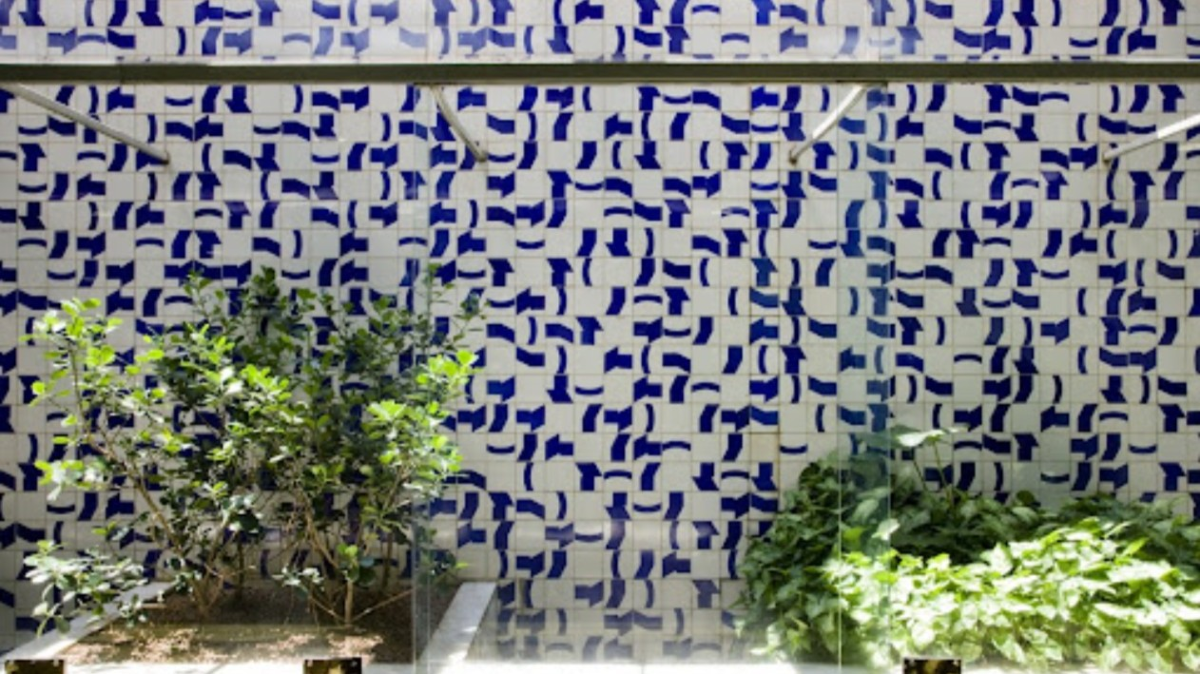
While you will be wandering through the shared hallways of the residential wings, you’ll encounter the brightened “azulejos” (ceramic tiles) of Athos Bulcão, a Brazilian painter and sculptor. These ceramic tiles were far more than just decoration, the geometric patterns were often designed with a "randomized" logic by Bulcão, who would provide the tiles and allow the construction workers to place them as they saw fit, creating a unique visual fingerprint for different blocks. If you keenly observe, you will find out that these files act as a tactile GPS; the specific rhythm of blues, whites and yellows tells you exactly which “wing” of the city you were in before looking at the street signs to locate yourself.
The Acoustic Mystery of the Cathedral’s Mystery
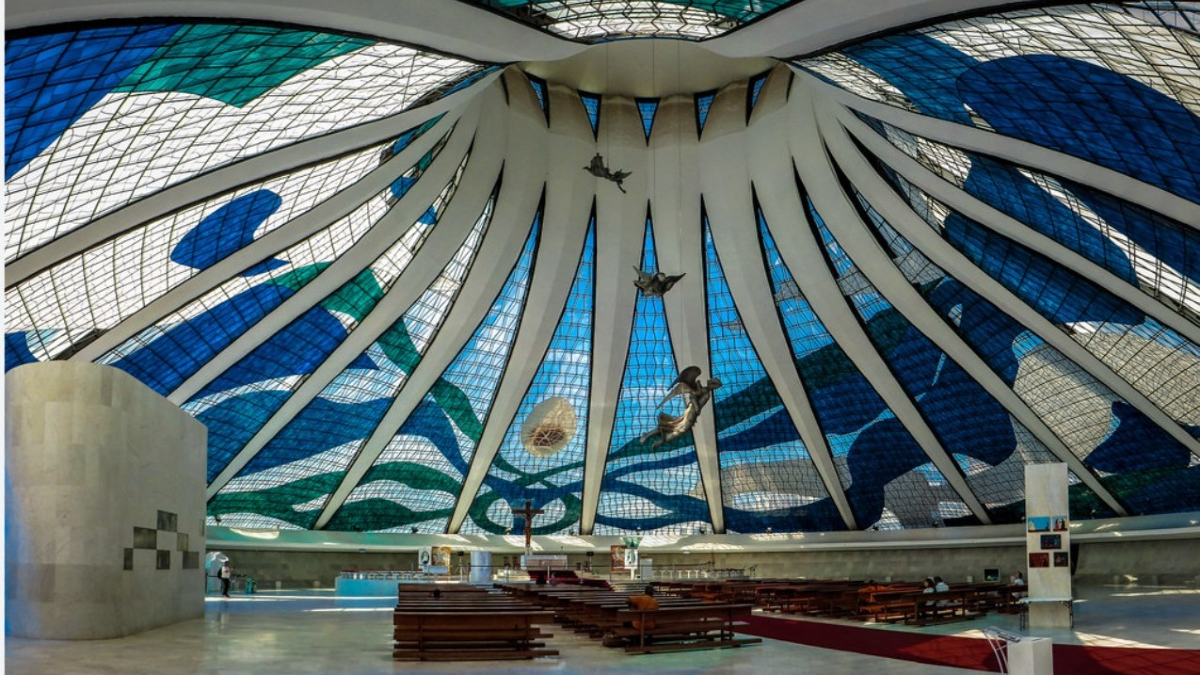
The Metropolitan Cathedral is famous for its crown of glass, but its most sophisticated architectural details are hidden in the dark, underground tunnel that leads you inside. As you are walking through the dim entryways, the concrete walls are angled in a way that creates a unique acoustic compression. This “sonic transition” was designed to strip away the noise of the bustling city outside, using the density of the concrete to reset your ears for the ethereal silence of the nave. It can be considered as a psychological threshold where the architecture literally prepares your senses for a spiritual experience.
Burle Marx’s Living “Green Architecture”
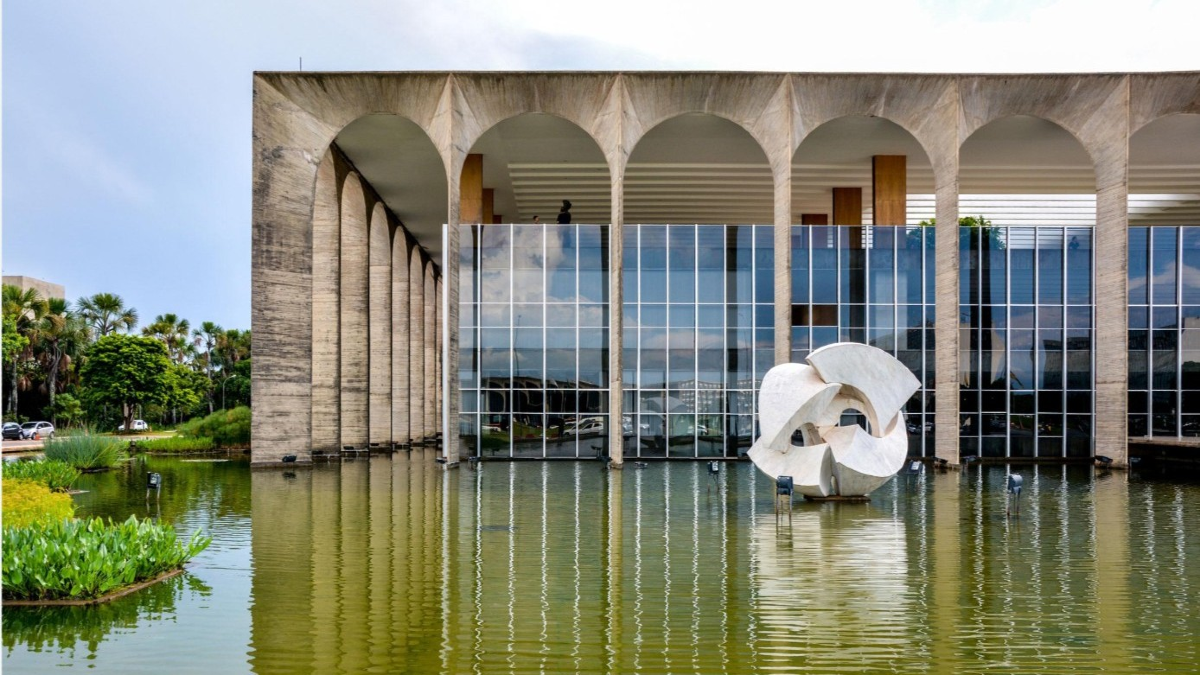
In the gardens of Itamaraty Palace, the architecture does not stop where the concrete ends; it continues into the water and soil through the genius work of Roberto Burle Marx. Locals residing there often missed out this fact that the water gardens are designed as a horizontal mirror, specifically calculated to reflect the underside of the building’s arches at a precise angle. These aren't just the ponds; they are the “liquid foundations” that use native aquatic plants to soften the hard edges of the brutalist slabs, creating a symbiotic relationship where the greenery is just as structural as the steel.
The Shadow Play of the Brise-Soleil
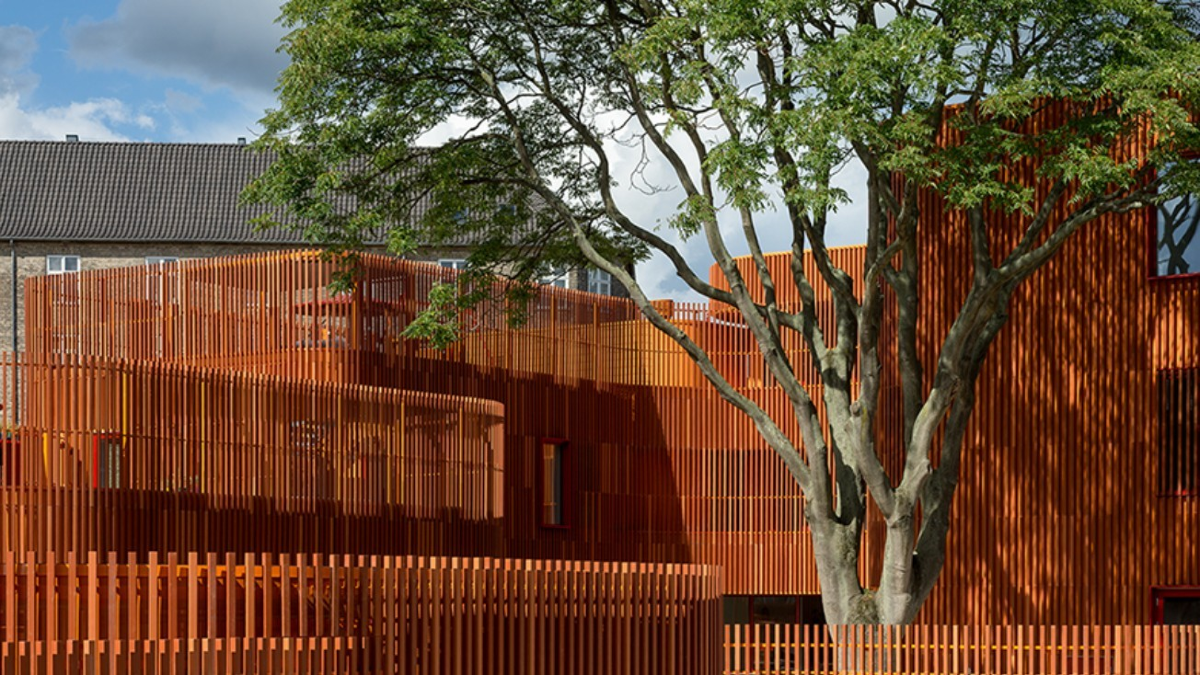
On the façades of the ministerial buildings, the “Brise-Soleil” (sun-shades) does more than just lessen the air conditioning bill; they can be regarded as a masterpiece in kinetic art. Depending largely on the hour of the day, these concrete slabs cast evolving geometric shadows across the interior hallways, turning the walls into a shifting sundial. Even a hasty government worker might miss out the depth and angle of these slats which were mathematically tuned to the sun’s path over the Brazilian’s Highlands, ensuring that even in the height of summer, the “geometry of light” keeps the interior of the building cool and naturally illuminated.