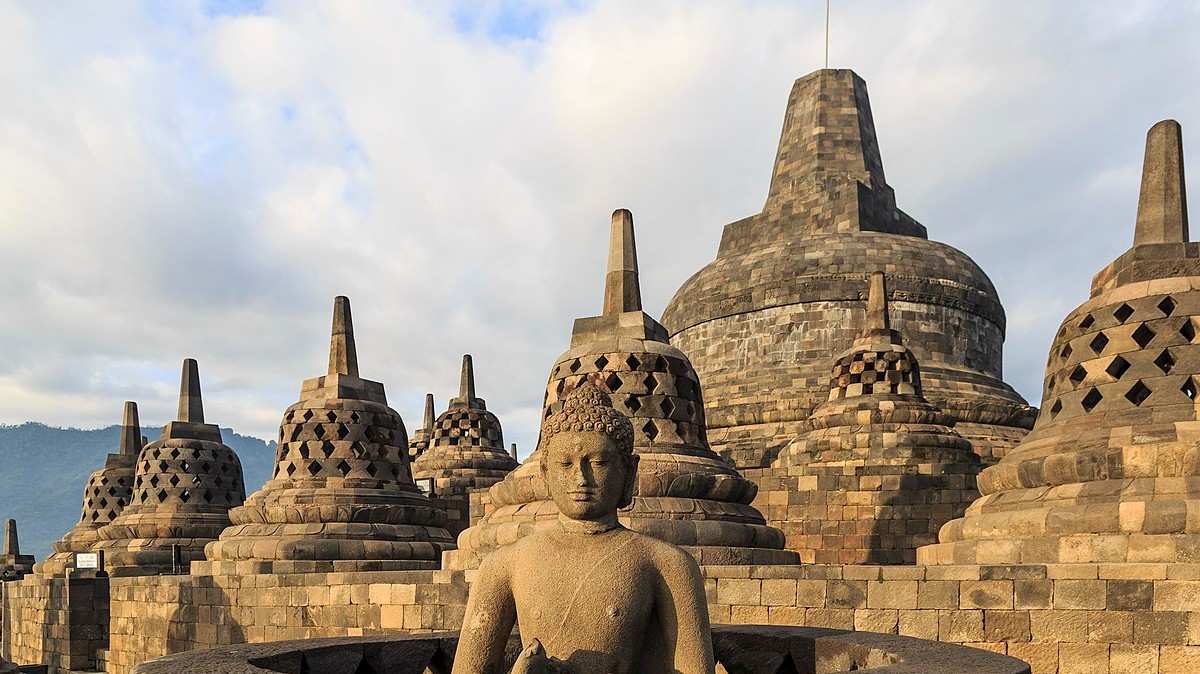
Above: Borobudur Temple In Java, Indonesia.
Borobudur is more than just a monument; it is a massive stone prayer and a masterpiece of human ingenuity. Situated in the heart of Central Java, Indonesia, this UNESCO World Heritage site attracts thousands of visitors annually. However, behind its iconic stupas and beautiful Buddha statues lies centuries of mystery and architectural brilliance.
Here are 8 fascinating facts about Borobudur that every traveller and history enthusiast must know!
1. Largest Buddhist Temple In The World
Borobudur holds the title of the largest Buddhist temple on Earth. Constructed in the 9th century during the Sailendra Dynasty, it predates Cambodia’s Angkor Wat by roughly 300 years. The massive structure is shaped like a giant “Mandala” when viewed from above, representing the Buddhist universe.
2. Built Without Cement
The most mind-blowing fact about this architecture is that it was constructed without mortar or adhesive. Around two million blocks of volcanic stone were carved to interlock like a “giant 3D jigsaw puzzle.” This unique “interlocking” technique is largely the reason behind why the temple has survived for more than 1,200 years despite being located in a high-seismic zone.
3. Laying Hidden Under Volcanic Ash
For nearly 500 years, Borobudur was termed as “lost” to the entire world. After the decline of the Hindu-Buddhist kingdoms in Java and a series of volcanic eruptions from nearby Mount Merapi, the temple was completely abandoned and eventually swallowed by layers of ash. It was in 1814 when Sir Thomas Stamford Raffles, the British Governor of Java, ordered the “rediscovery” of the temple.
4. Tales Of History On The Walls
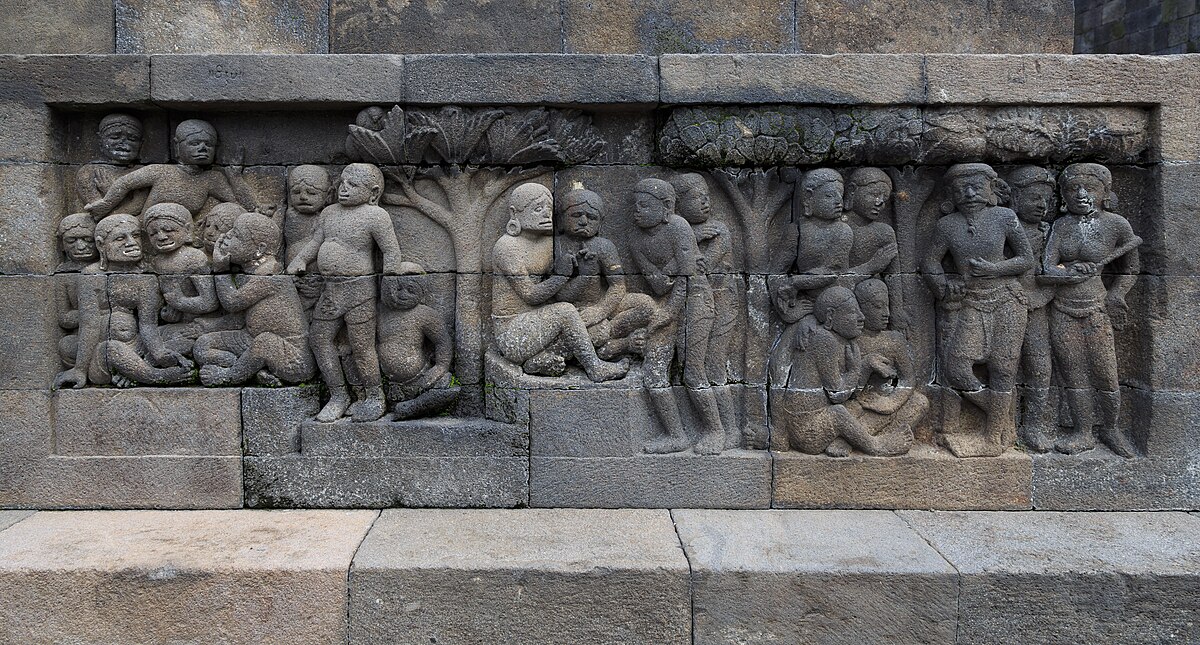
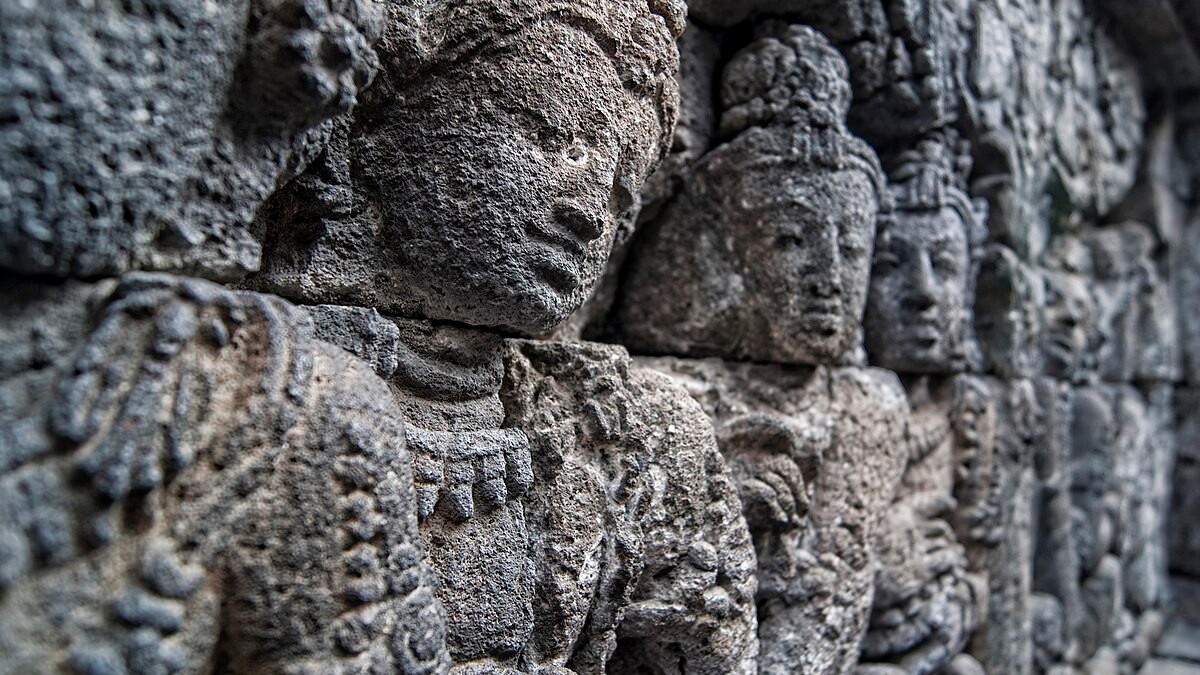
The Temple’s walls are adorned with 2,672 exquisite relief panels that, if laid end-to-end, would stretch for over 5 kilometers. These unique carvings depict tales of everything from the life of the Buddha and ancient Javanese folklore to daily 9th-century scenes featuring ships, marketplaces and musicians.
5. The Mystery Of The Headless Buddhas
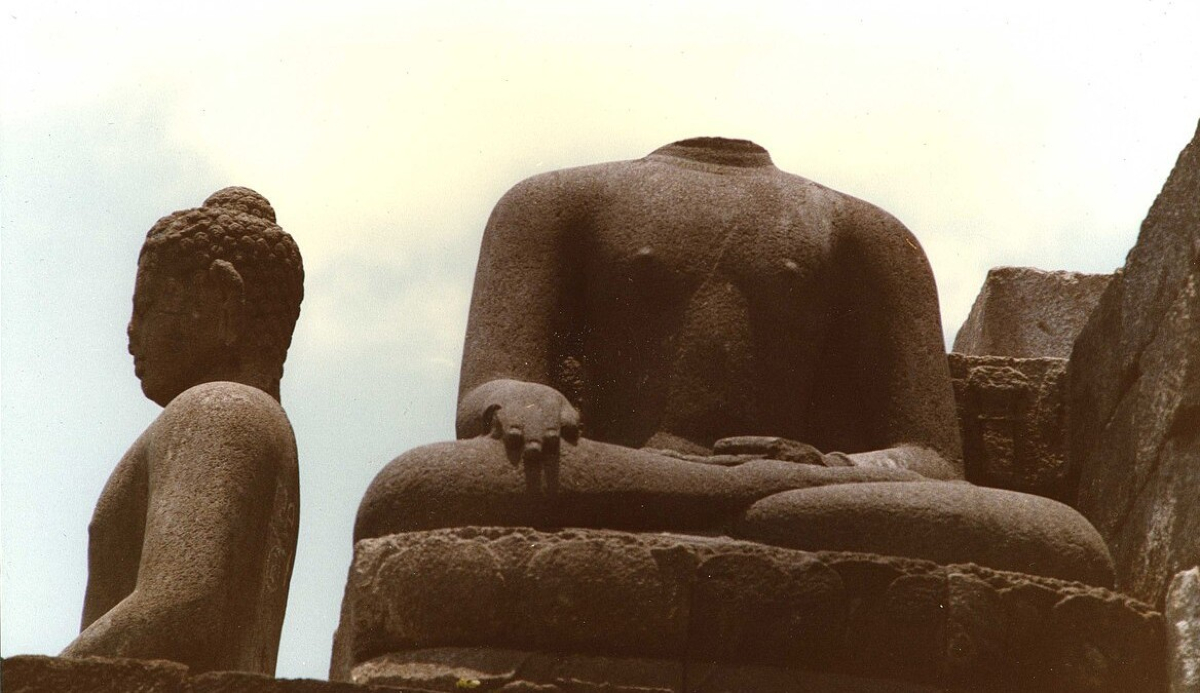
While you walk through the terraces, you will notice that many of the 504 Buddha statues are missing their heads. While some were damaged by natural calamities like earthquakes, many were victims of 19th century looters as well, who sold the heads to private collectors and museums in Europe and Asia.
6. Representative Of Three Levels Of Enlightenment
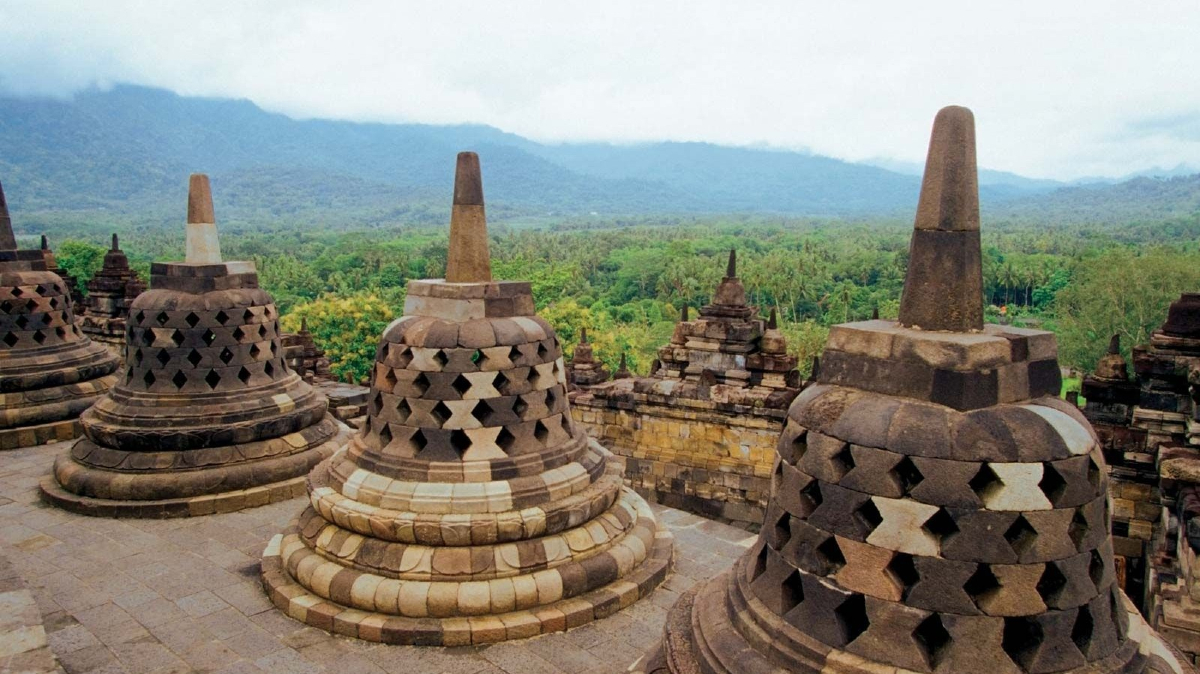
The massive architecture of Borobudur is a physical manifestation of Buddhist cosmology. It is primarily divided into three zones, namely:
• Kamadhatu: It is the base, representing the world of desire.
• Rupadhatu: It is the five middle square terraces, representing the world of forms.
• Arupadhatu: The three circular upper platforms, representing the formless world of “nirvana” or liberation from worldly affairs.
7. The “Upanat” Sandals
The Indonesian government now requires all its tourists climbing the structure to wear "Upanat." These are specially woven bamboo sandals provided on-site, designed specifically to minimize impact on the temple’s surface.

8. A Global Symbol Of Peace & Vesak
Every year, especially during the full moon in May or June, Borobudur becomes the heart-throb of the Vesak Festival. Thousands of Buddhist monks and pilgrims from around the globe come here during that time to celebrate the birth, enlightenment and death of Lord Buddha. The ceremony concludes with the breathtaking release of thousands of lanterns into the night sky over the temple.
Best Time To Visit Borobudur For Perfect Experience
If you have made up your mind to plan a visit to this ancient temple in Java, the best time to visit here will be during the months of July to August. During these weeks, the landscape is still lush and green from the previous rains, but the heavy monsoons have faded, giving you a more peaceful, intimate experience with the stupas.