
Do you get fascinated by skyscrapers, glass buildings, and designs that make buildings look beautiful, unique, yet highly pragmatic? If yes, learning architecture might be a thing to satisfy your creative juices. Architecture is undoubtedly one of the most impactful yet underrated fields of study. To become an exceptional architect, you not only learn architectural theories but also live with them.
An Architecture or Design school is where creativity thrives, and ideas become plans. However, the academic rigor is far beyond the realities of the profession. You not only have to be good at visualization and design, but also must have endurance and knowledge of economics, collaboration, and technology to stay relevant in the market. Here, we will talk about the informal truths your architecture school might have missed.
Also read || The Terracotta Revival: Why 'Earth Tech' Is The Future Of The Global Skyline!
Endurance over Talent.

If you are a highly creative person with strong visual thinking, you may be well-suited to become a successful architect. However, your originality and talent may become secondary if you don't have the stamina for the profession. You must be ready to give it all, whether it's long hours or repeated client revisions.
Students are not taught how vital persistence is. You might be as good as Zaha Hadid, but your ability to work without burning out is what makes you irreplaceable. Think of an architecture career as a marathon and not a sprint, so you stay prepared for a longer run.
Also read || The End Of The Solo Architect: The Rise Of AI Human Co-Design!
Negotiation

It is not the drawings but the people who build buildings. At school, drawings are treated as end products, with a focus on precision, presentation, and aesthetics. The difficult task is to execute your ideas with people involved. Contracts interpret your drawings, clients question them, and site conditions are dynamic. Thus, it is a challenge to manage all the stakeholders and achieve something that satisfies them all.
Schools don't prepare students for people coordination. The outcomes of your products depend heavily on service consultants, vendors, site teams, and structural engineers. Your design decisions need to be negotiated and not imposed. Thus, communication and negotiation skills are critical for architects. That is how you make complex yet perfect systems that work for all.
Economic reality

One of the critical gaps in architectural education is the lack of financial literacy. Many beginner architects ignore aspects such as fees, billing structures, salaries, and project economics, which may lead to the failure of small-sized architectural firms. Young grads are unprepared for the initial workload.
You might make a lot of money in the long run, but the entry-level pay is usually peanuts compared to the hours you put in. To grow in this career, you must understand business fundamentals, negotiation, compensation, and explore related roles in project management, visualization, or real estate for better prosperity. Otherwise, you have to be very patient with your growth.
Construction sites

You may become an academic wonder, but the studio environment does not prepare students for construction sites. Unpredictability hits hard when you visit a construction site. Whether it is labor shortage, weather conditions, material availability, or budget constraints, everything matters. The construction environment demands humility.
Site engineers and contractors often have more practical knowledge than designs or drawings may suggest. If you are not an adaptable professional and do not listen to them, your project will be challenging. When you put your ego aside and work collaboratively with teams, it's not only professional development but also makes you a better partner to work with.
AI Integration
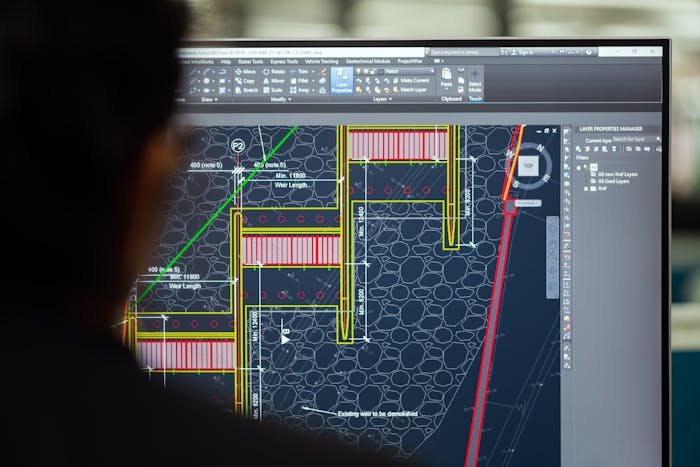
Will AI replace architects? The short answer is no. However, it will change architecture workflows. As a new-age architect, you must be proficient in generative design tools, automated layouts, rendering, documentation, and cost estimation. With AI in the picture, students and young professionals are concerned about their future.
However, AI only replaces repetitive and time-intensive tasks, not critical thinking. Your design judgement, ethical responsibility, communication techniques, and contextual responsibility will remain unique and human-driven. If you are someone who only relies on drafting skills, AI can be a threat to you, and you must evolve before it's too late.
Also read || The Death Of The “Starchitect” Hotel: Why 2026 Belongs To The Contextual Studio!
Should you blame your architecture school?
You can blame your architecture school, but it would be a hollow exercise. Whether in architecture, engineering, or political science, there is always a gap between academic theory and the grit of professional practice. We cannot say that theories are useless, but the real world demands proactive approaches, technical skills, an understanding of economics, and emotional stamina to succeed.
Architecture schools may improve your design skills and creative abilities, but the business and industry aspect of the profession can only be understood by working on the site. The syllabus might stay static; it is you who has to be a dynamic learner and rely only on yourself. In the end, growth is where comfort dies, and no degree can guarantee you a super successful career.