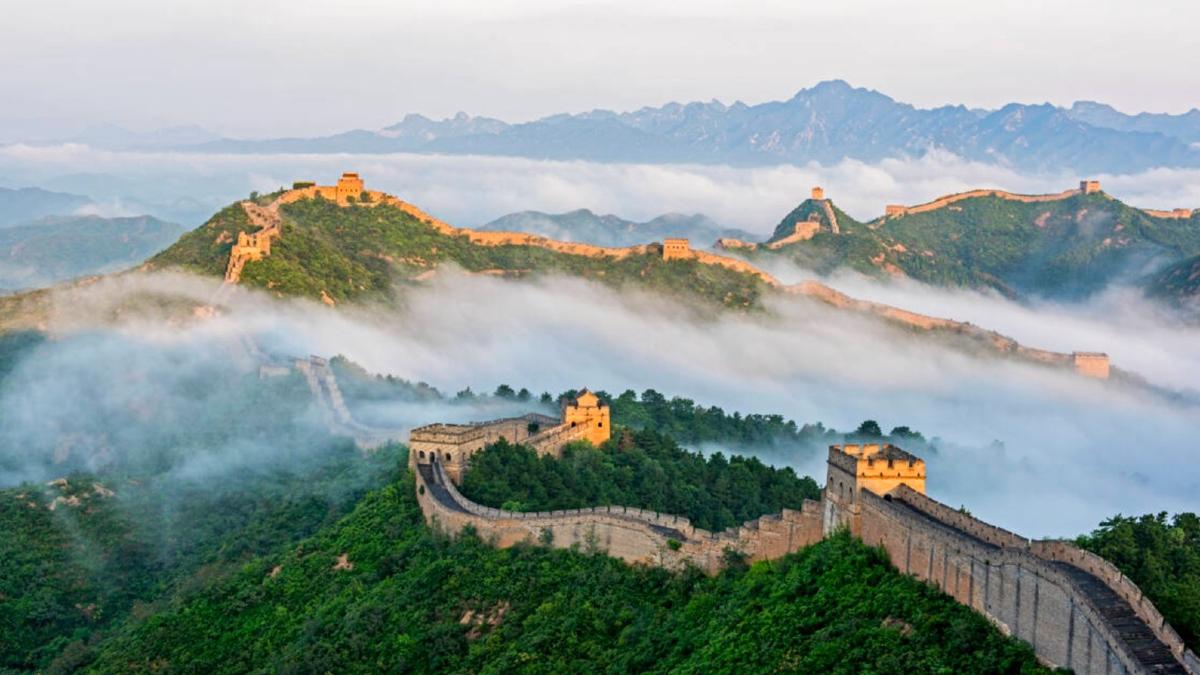
The Great Wall of China is more than just a monument; it is a sprawling proof of brilliant engineering, human ambition and unwavering persistence. This UNESCO World Heritage site attracts millions of visitors every year. Well, apart from being an architectural wonder, there are few interesting facts surrounding this architecture as discussed below:
1. Not A Continuous Wall
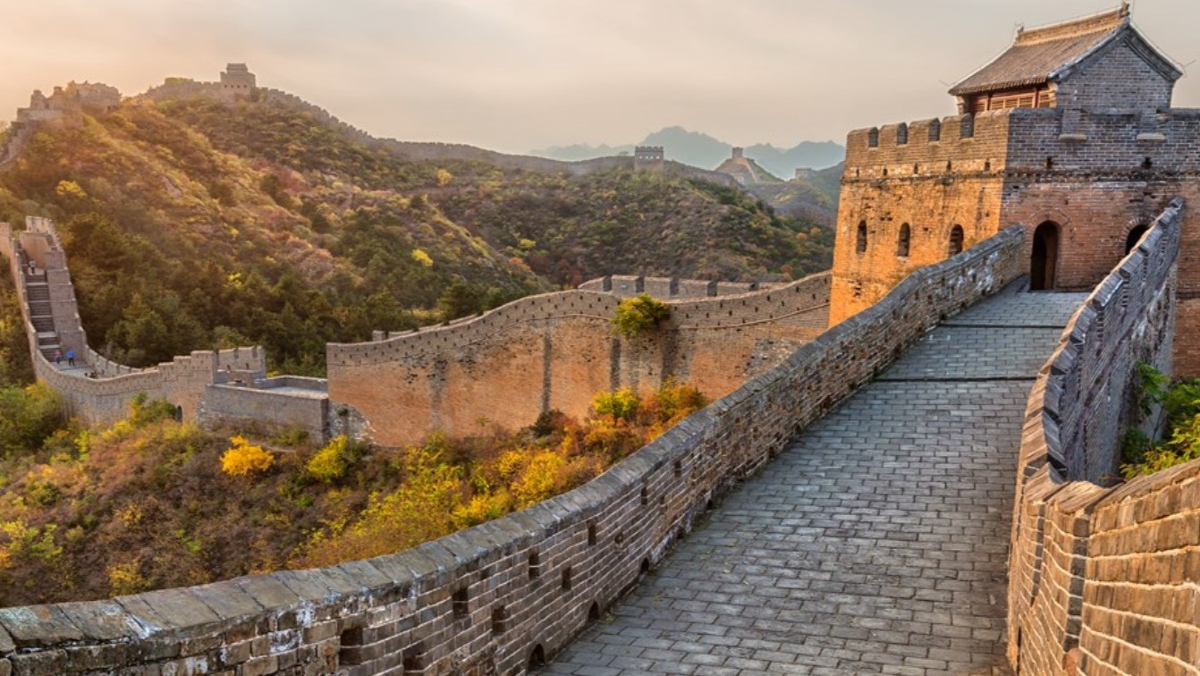
One of the common misconceptions about this architecture is that the Great Wall is one long, unbroken line of stone. However, in reality, it is just a complex network of fortifications. The "wall" consists of various sections built by different dynasties over two millennia. These include circular walls, parallel walls and even areas where no wall exists as high mountains or deep rivers provide sufficient reason to act as a natural barrier.
2. No Cement, "Sticky Rice"
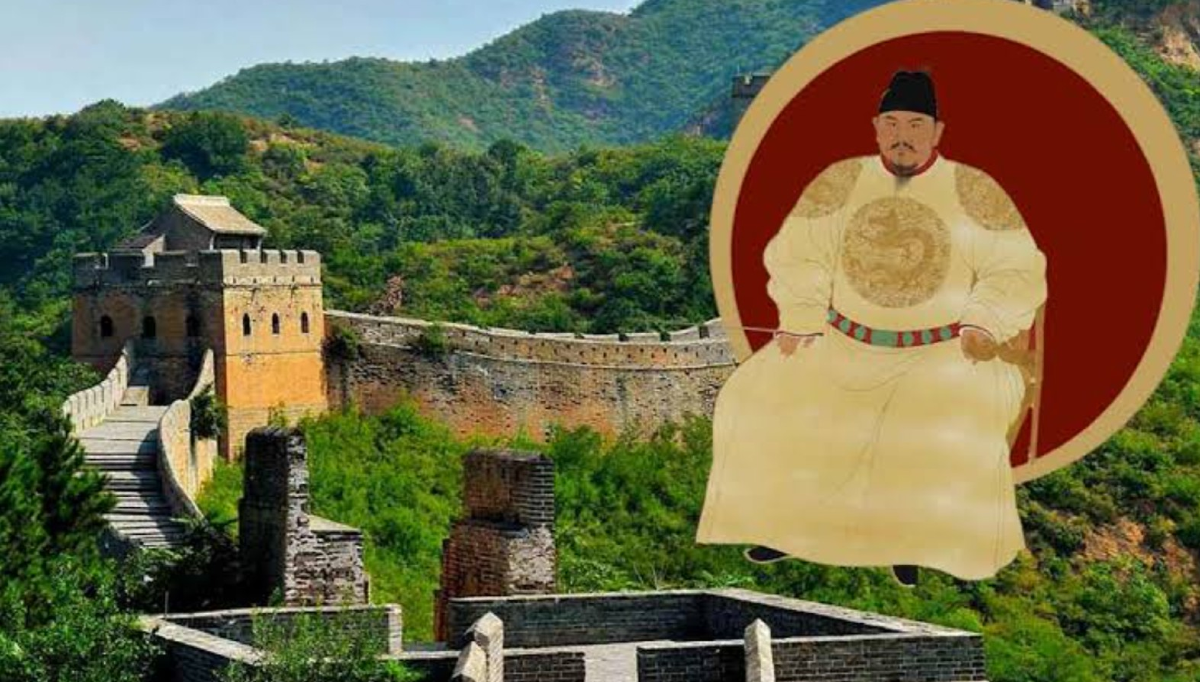
It is usual for the builders to use cement for construction purposes, the Ming Dynasty (1368-1644), took a different path. The builders of this dynasty used "glutinous rice flour." Workers used to make a powerful mortar by mixing sticky rice soup with slaked lime. This organic-inorganic hybrid mortar binds the bricks so tightly that many sections remain incredibly sturdy today, even resisting weeds and erosion better than standard lime mortar.
3. "Visibility from Space"- A Myth
For decades together, textbooks have been claiming that the Great Wall was the only man-made structure visible from the Moon. But, this claim is truly false. At its widest point, the walk is only about 30 feet (9 meters) wide, making it nearly impossible to see from the low Earth orbit without any aid, let alone from the Moon. Back in 2003, Yang Liwei, a Chinese astronaut, confirmed that while he was in orbit, he couldn't see the structure of the Great Wall.
4. Longest Cemetery On Earth
It is estimated that over one million people died during the time of its construction, across various dynasties. Because of this reason and the harsh working conditions of the laborers, it earned a somber nickname "the longest cemetery on Earth." While legends have suggested that workers involved in this construction were buried inside the wall itself, the archaeologists have found no solid evidence in respect to this claim yet.
5. Served As a High-Tech Communication Highway
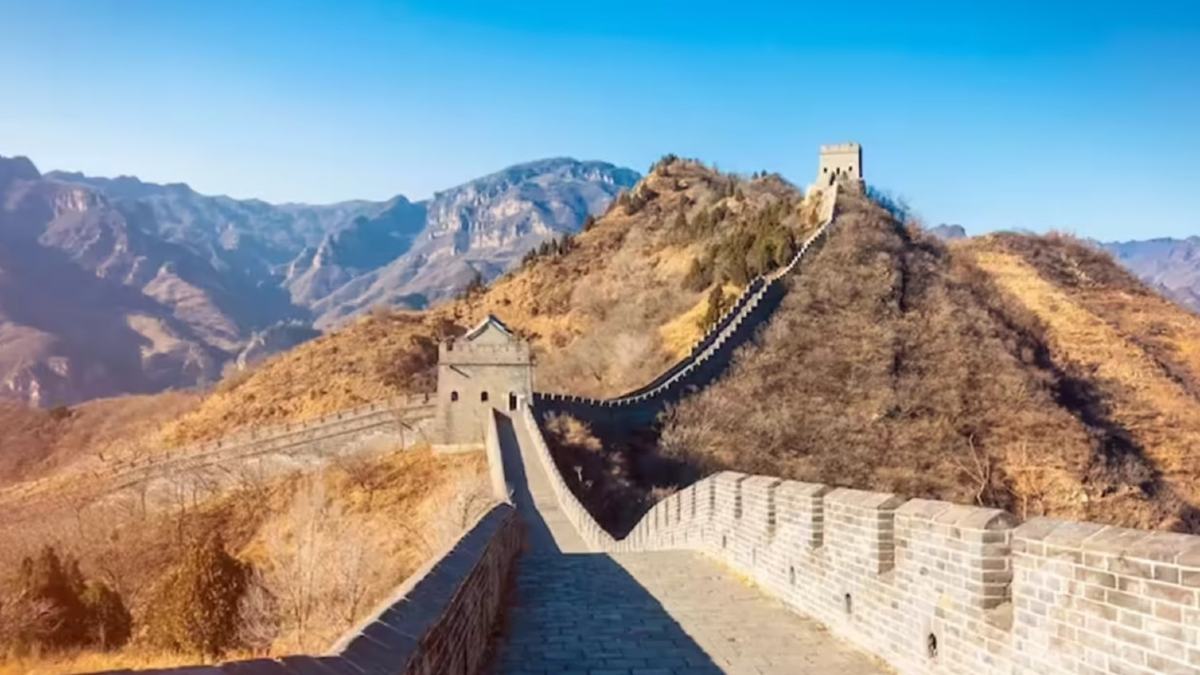
The Great Wall was never just a physical barrier; it was a sophisticated way of communication. Beacon towers were built at regular intervals to send signals using smoke (by day) and fire (by night). This allowed military units to transmit messages across the vast frontier at speeds that were revolutionary in nature for the time, helping the empire to respond back to the threats long before the invader could even reach the gates of the empire.